> ## Documentation Index
> Fetch the complete documentation index at: https://help.dingtalk.io/llms.txt
> Use this file to discover all available pages before exploring further.
# Alternating week schedule attendance
> Learn how to configure alternating single/double day off (alternating week schedule) attendance: set up rules that cycle between six-day and five-day work weeks, and find answers to common questions about batch and retroactive setup of special dates.
## 1. Overview
If your organization follows an alternating single/double day off (alternating week schedule) attendance pattern—working six days one week and five days the next in a rotating cycle—configure it as described below to manage attendance flexibly.
## 2. Use cases
* Organizations that follow an alternating single/double day off (alternating week schedule) attendance pattern.
* Other attendance scenarios that follow a regular date pattern.
## 3. Steps
### Fixed shift attendance
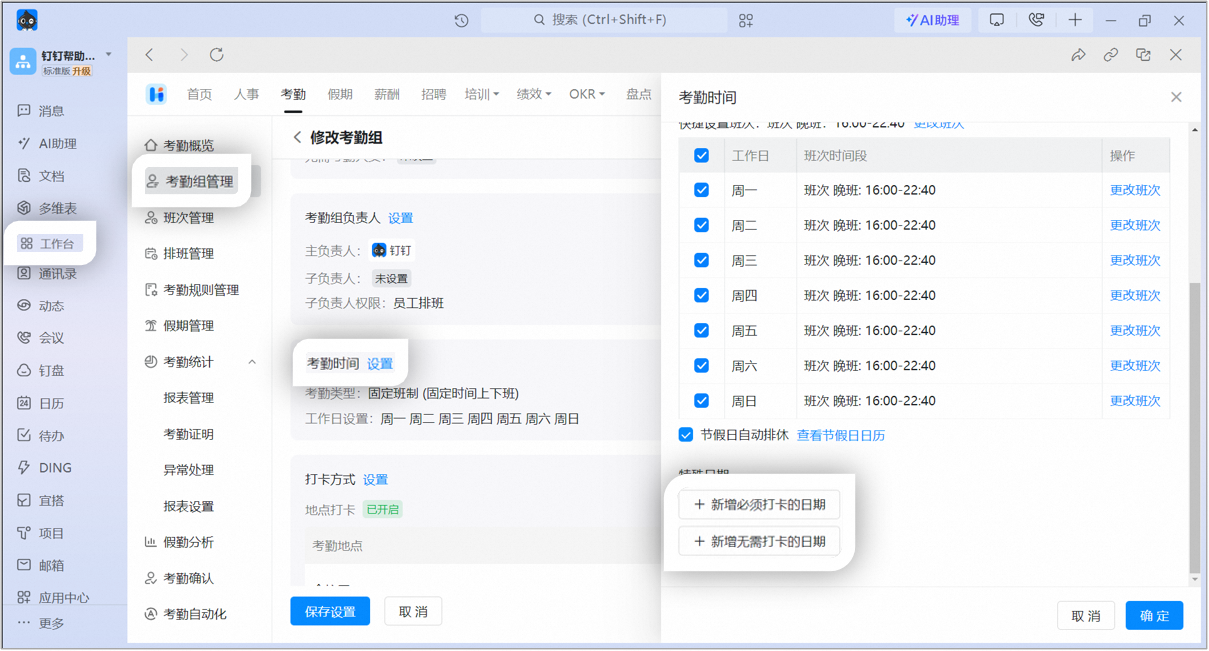
#### Method 1: Set special dates
* **Mobile:** Open **Mobile DingTalk > Workbench > Attendance > Settings >** enter the **Fixed shift attendance** attendance group **> Attendance hours > Special dates >** add **Mandatory clock-in dates / No clock-in dates required**.

* **Desktop:** Open **Desktop DingTalk > Workbench > Attendance > Attendance group management >** select the target **attendance group > Edit > Attendance hours settings > Special dates >** add **Mandatory clock-in dates / No clock-in dates required**.
#### Method 2: Enable biweekly cycle
**Notes:**
The biweekly cycle requires the DingTalk Attendance Enterprise plan.
* **Mobile:** Open **Mobile DingTalk > Workbench > Attendance > Settings >** enter the fixed shift attendance group **> Attendance hours >** turn on **Biweekly cycle**.

* **Desktop:** Open **Desktop DingTalk > Workbench > Attendance > Attendance group management >** select the target attendance group **> Edit > Attendance hours settings >** turn on **Biweekly cycle**.

### 2. Shift-based attendance
#### Method 1: Set a scheduling cycle
**Notes:**
Add a new scheduling cycle, set **Days per cycle** to 14, and configure the shifts for the two weeks as needed (for example, work on days 1–5, rest on days 6 and 7, work on days 8–13, and rest on day 14). After clicking Confirm, open the scheduling table, click the scheduling start date of the target employee, select **Schedule by cycle**, and choose the cycle. This applies the alternating single/double day off (alternating week schedule) schedule from that date through the last day of the current month.
* **Mobile:** Open **Mobile DingTalk > Workbench > Attendance > Settings >** enter the shift-based attendance group **> Scheduling > Scheduling settings > Scheduling cycle**.
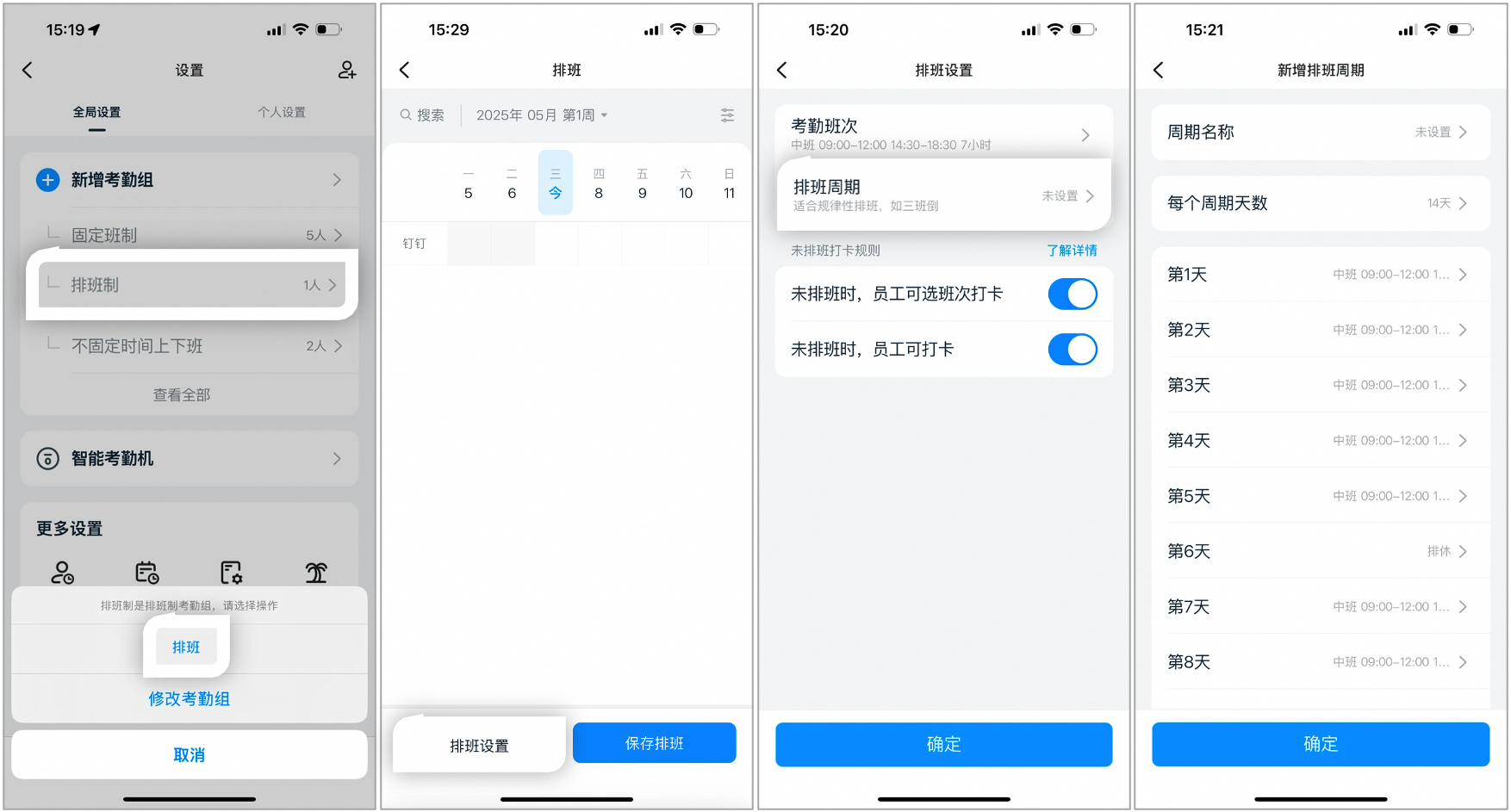
* **Desktop:** Open **Desktop DingTalk > Workbench > Attendance > Attendance group management >** select the **Shift-based attendance** group **> Edit > Attendance hours settings > Add scheduling cycle**.

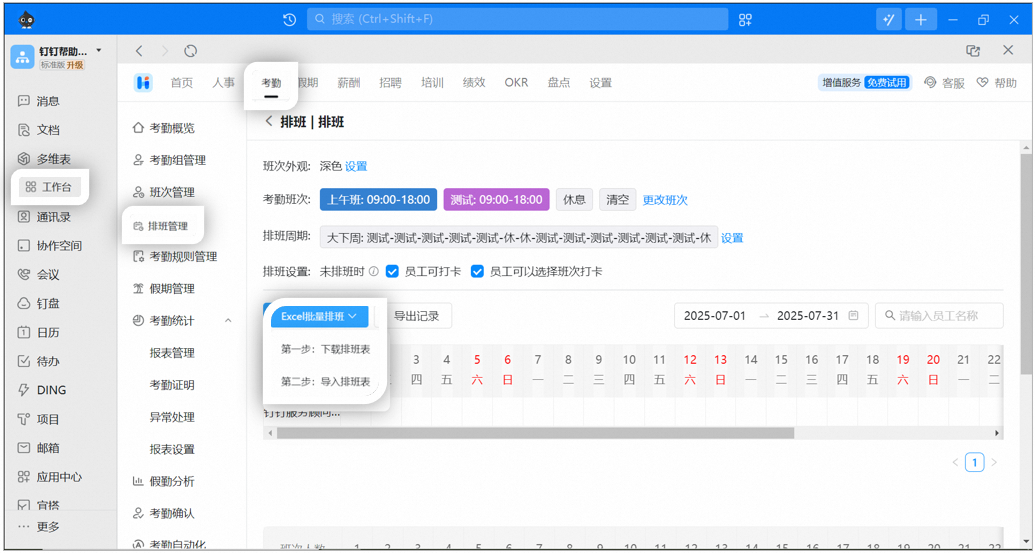
#### Method 2: Import a scheduling table
**Notes:**
1. You can schedule employees manually in batches. For details on configuring a shift-based attendance group, refer to **Admin sets up a shift-based attendance group**.
2. Add attendance shifts first, so the downloaded Excel file includes the corresponding shift options.
* **Desktop:** Open **Desktop DingTalk > Workbench > Attendance > Scheduling management >** click the target attendance group **Edit scheduling > Batch schedule via Excel > Download scheduling table > Edit the downloaded scheduling table** to schedule employees **> Import scheduling table**, and save.
## 4. FAQ
Mandatory clock-in dates cannot be set in batches and must be added one day at a time. No clock-in dates required can be set in batches only on desktop, where you can add them by selecting a date range.
Yes. Special dates can be set retroactively.
Deleting special dates within 180 days after they are set will affect attendance data. Deleting them after 180 days will not affect attendance data.