

 Chats
Chats Calendar
 Meetings
 Contacts
 Mail
Mail Docs
Docs Drive
Drive AI Table
 AI Minutes
 Attendance
 Approval
 YiDA
YiDA Admin Console
1. Feature overview
To meet developers’ needs for personalized app development, DingTalk OA Approval has been rolling out a set of exclusive OpenAPIs for Smart OA customers since September 1, 2024. These exclusive OpenAPIs deliver richer capabilities, address more personalized business requirements, and support internal app development across a wide range of scenarios. We encourage developers to use these OpenAPIs effectively to build a healthier DingTalk open ecosystem.2. Applicable scenarios
DingTalk may add, modify, or remove the scope or specific features of the following APIs to comply with laws, regulations, policy adjustments, or regulatory directives, or to safeguard the security of DingTalk services. The APIs actually available to customers are subject to the content published on the DingTalk Open Platform at the time.
1. Self-hosted Approval Center
An organization has multiple business systems (either self-developed or third-party) whose approval tasks are already integrated with the DingTalk Approval Center. The organization wants to leverage DingTalk OA Approval’s open capabilities to build its own Approval Center with features such as filtering by source and batch approval: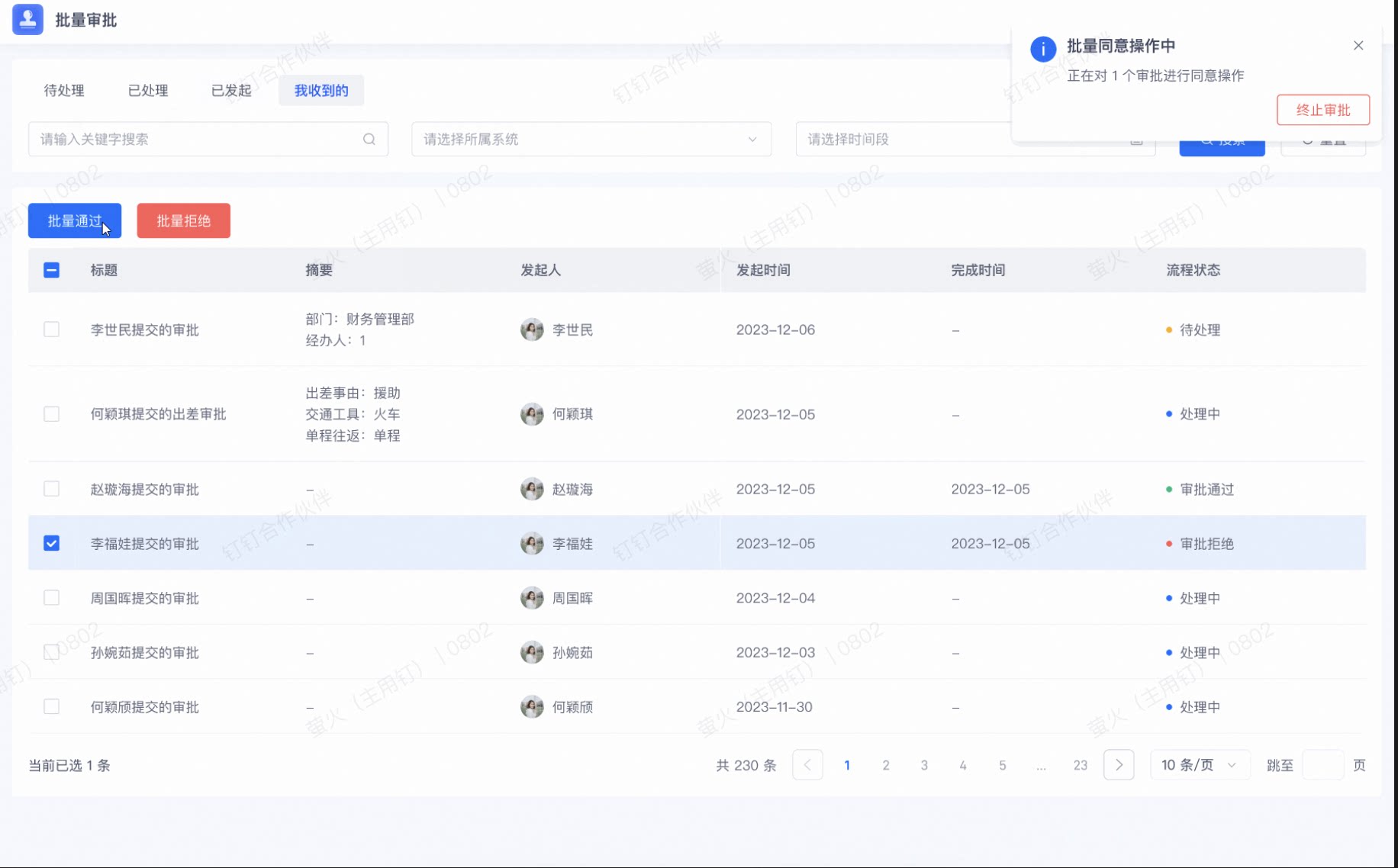
2. Process handover solution
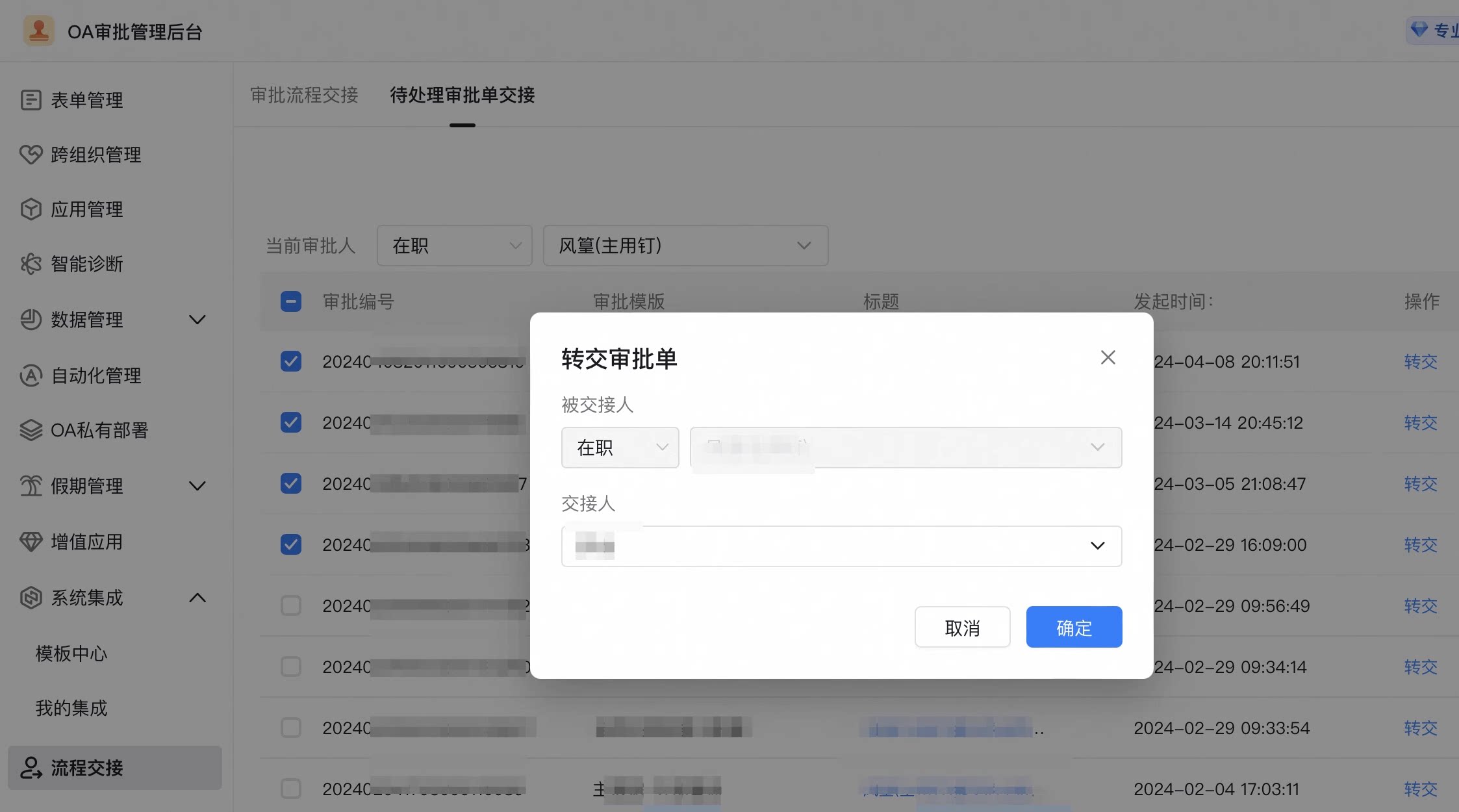
For organizations that want to leverage DingTalk OA Approval’s open capabilities to implement DingTalk official OA approval process handover within their own business systems. This enables admins to batch transfer approval tasks to other users in the organization. Admin queries the pending task list for a specified employee: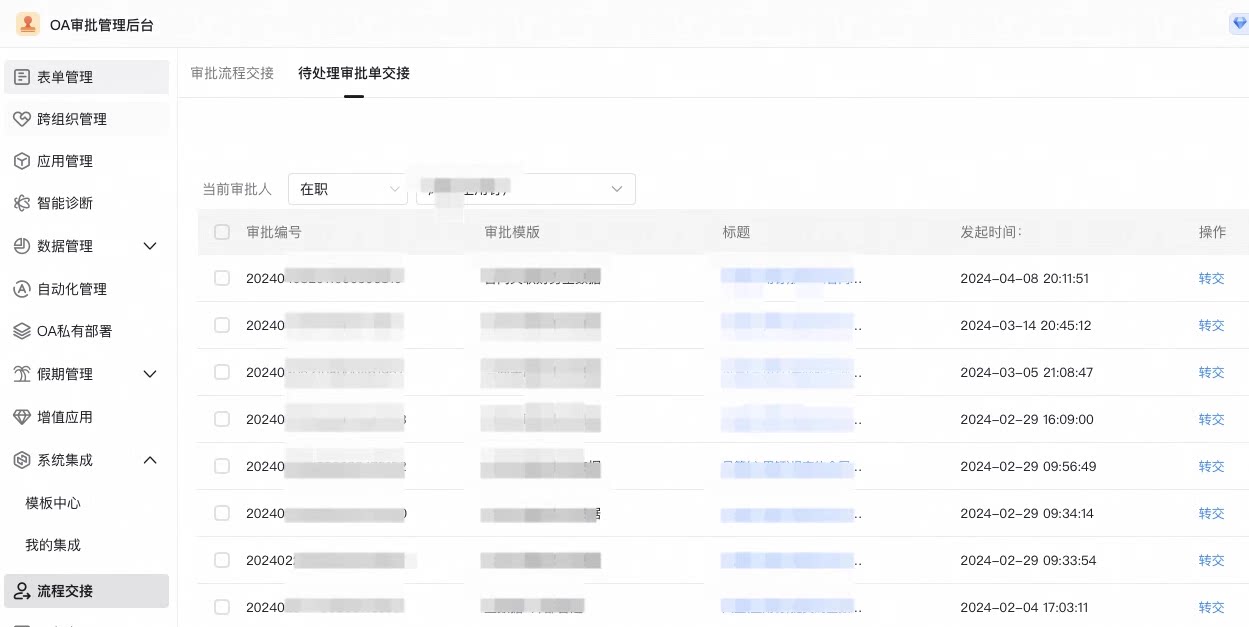
3. Process center integration (custom business groups)
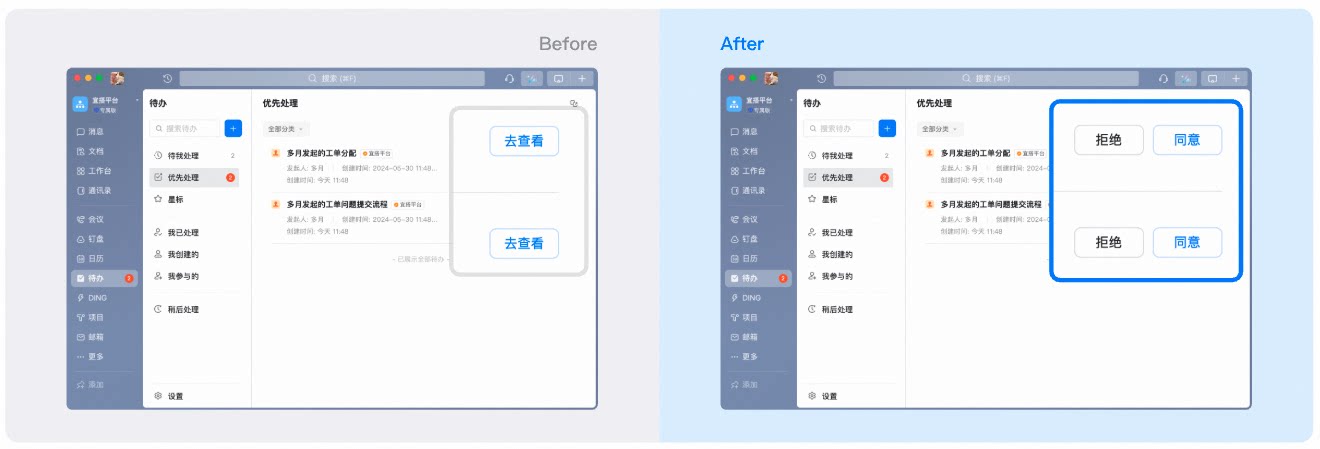
For organizations that want to centralize approval tasks from multiple third-party systems in the DingTalk Approval Center for a one-stop, immersive approval experience. They also want DingTalk To-Do to support custom business categories and one-click approval on the list page, delivering a superior experience for users—especially management with heavy approval workloads. Custom business categories in the To-Do Center make it easier to review to-dos sourced from third-party business systems: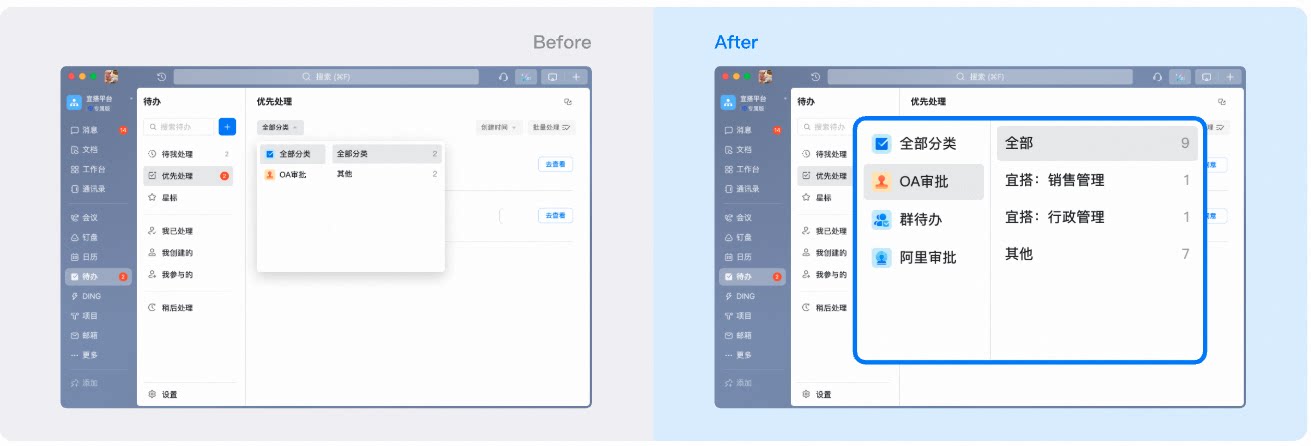
4. Process center integration (approval page hosting mode)
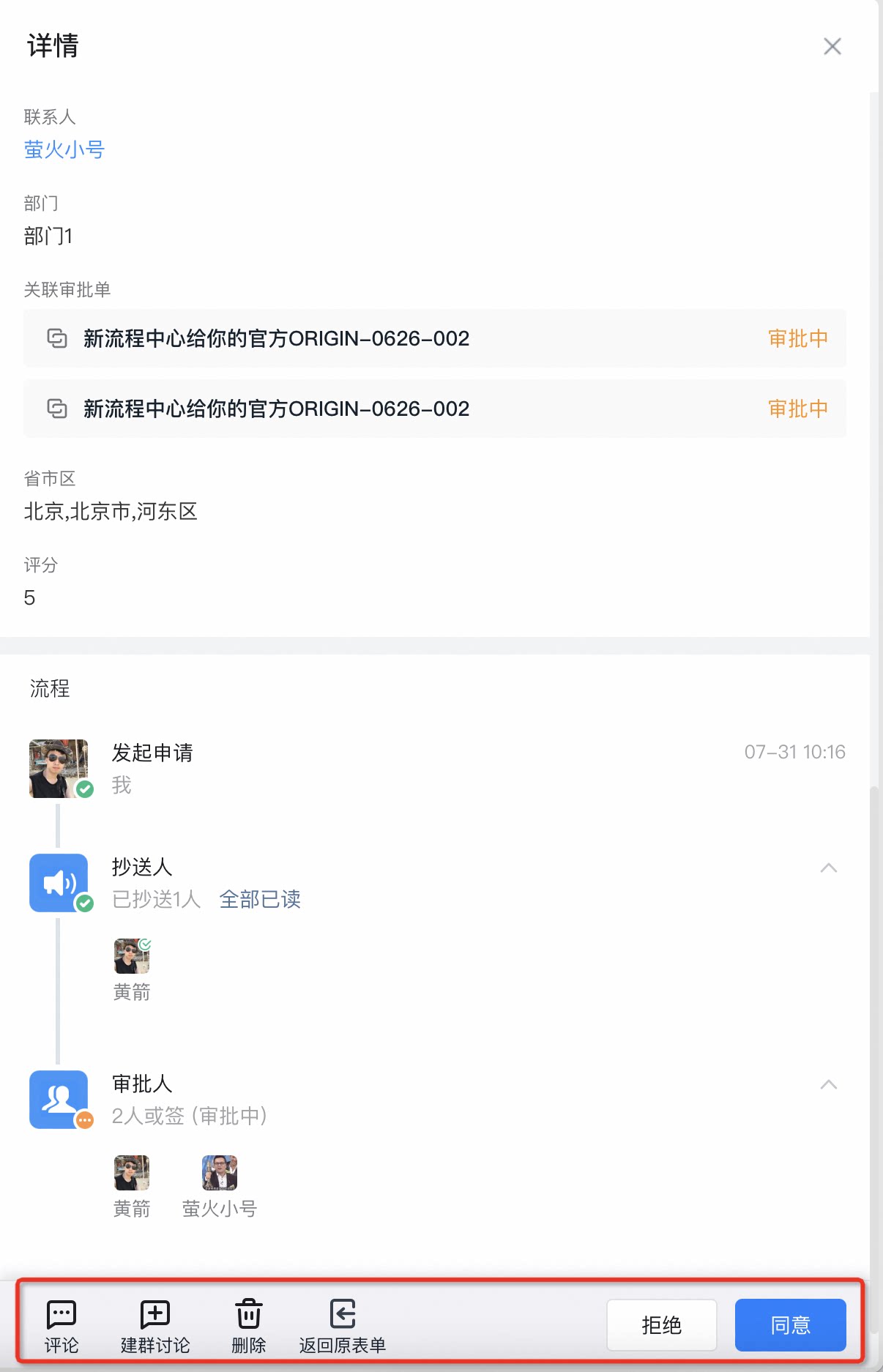
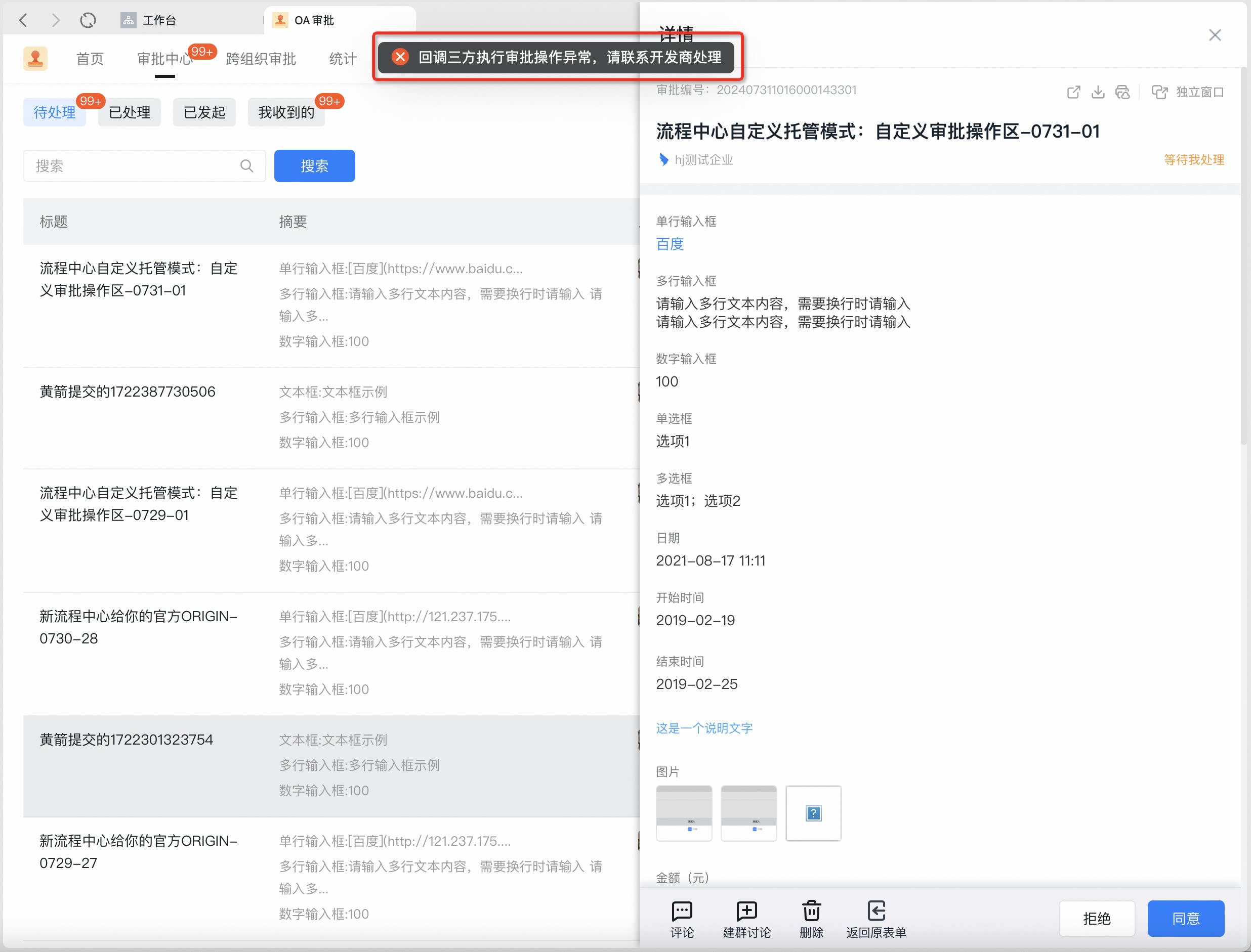
An organization has its own process engine in its business system and wants to integrate using its proprietary OA approval model. However, it lacks an H5 details page and wants to reuse DingTalk’s official OA approval details page while customizing the approval action area. This unifies approval form structure and styling across different business systems, providing users with a consistent experience across mobile, PC, and tablet. The buttons in the approval action area can be customized (Accept, Decline, transfer, Print, and more). Third-party proprietary OA approvals can use the official details page style: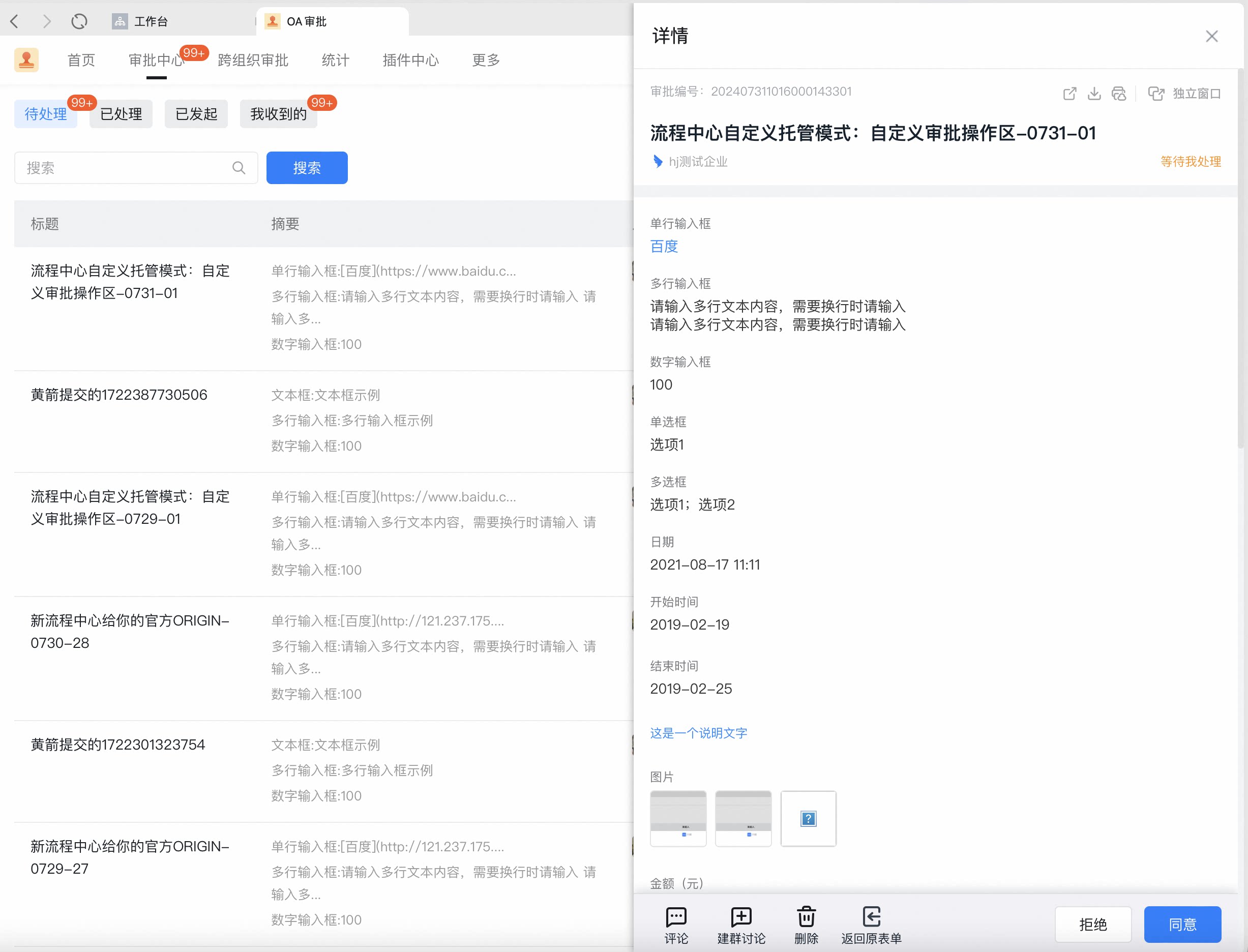
3. Steps
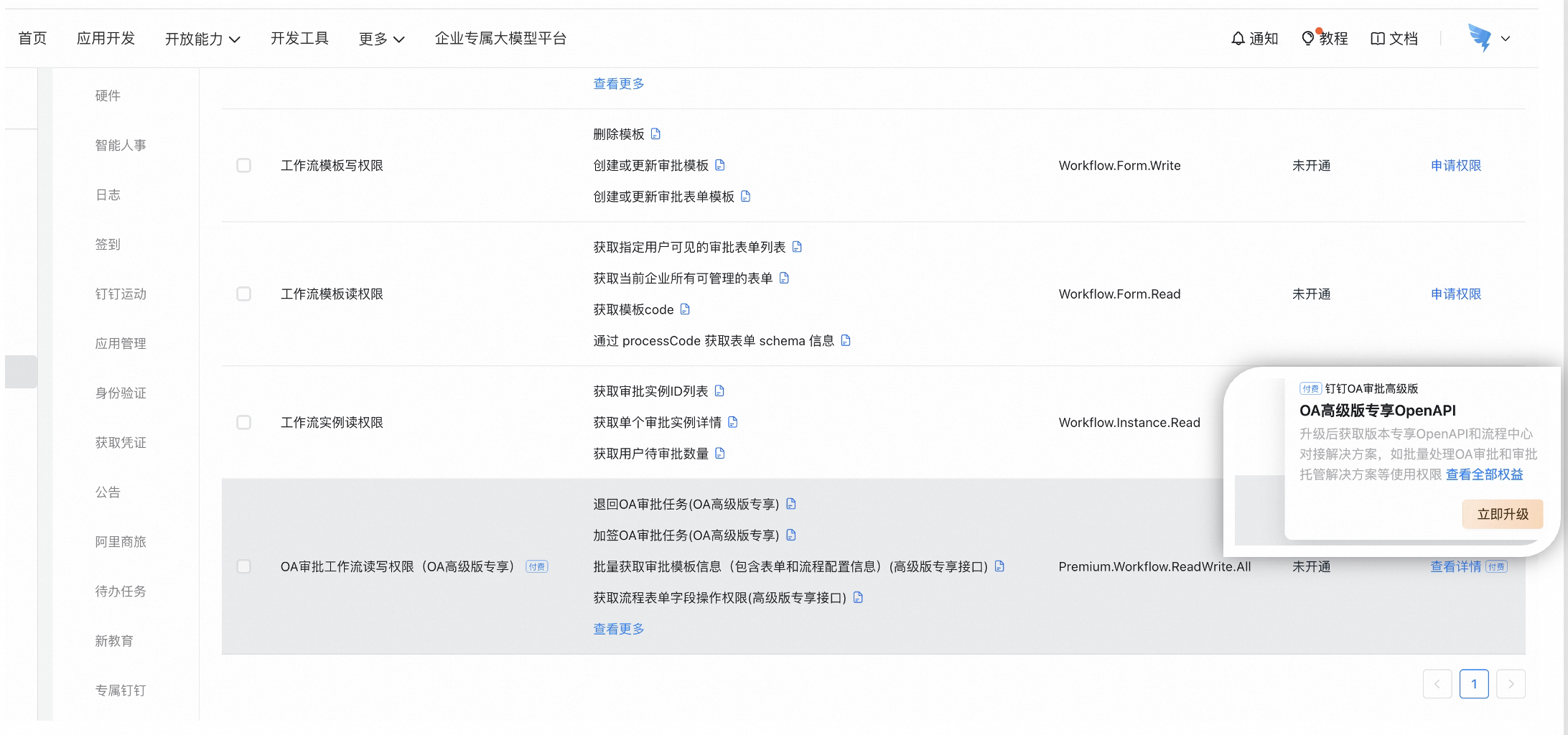
For the exclusive OpenAPIs above, Standard Edition customers must upgrade to Smart OA before they can apply to use them. Some customers who joined the public beta before September 1, 2024, already have access to call these OpenAPIs. The rules are as follows:
Permission application path: Developer Backend > App Development > DingTalk App > Create a new app or select an existing app > Click the app > [Manage permissions] > [OA Approval], then select the required permissions:
4. FAQ
What are the billing rules for exclusive OpenAPIs?
What are the billing rules for exclusive OpenAPIs?
Standard Edition DingTalk customers cannot use Smart OA’s exclusive OpenAPIs. You must first upgrade to Smart OA before you can call these APIs. Calling exclusive OpenAPIs consumes your Smart OA OpenAPI quota.
Can Standard Edition customers see these exclusive OpenAPIs?
Can Standard Edition customers see these exclusive OpenAPIs?
Starting September 1, 2024, developers can view the newly launched exclusive OpenAPIs in the Open Platform developer documentation and the Developer Backend.
5. Related documents
Process center open solution
Overview of four solutions for integrating enterprise business systems with DingTalk OA Approval
Third-party process page integration
Initiated by the business system, with the business system details page opened for approval within DingTalk