

 Chats
Chats Calendar
 Meetings
 Contacts
 Mail
Mail Docs
Docs Drive
Drive AI Table
 AI Minutes
 Attendance
 Approval
 YiDA
YiDA Admin Console
- Intra-group collaboration: Deep collaboration between headquarters and overseas branches, where members from both sides are visible to each other and share contact directories.
- Parent-subsidiary collaboration: Establishing collaborative relationships between a parent company and multiple subsidiaries to achieve unified management and information sharing.
- Cross-enterprise collaboration: Establishing lightweight collaboration with external partners, allowing members within specified scopes to view and contact each other.
Admin Guide
Establishing Collaboration
PrerequisitesBefore using the Partner Organization feature, please confirm that the following conditions are met:
- Entitlement requirements: Both organizations must have Partner Organization-related entitlements or seats.
- Administrator permissions: The operator must be the primary administrator of the organization or a sub-administrator with relevant permissions.
1
Step 1: Send Invitation (Organization A Administrator)
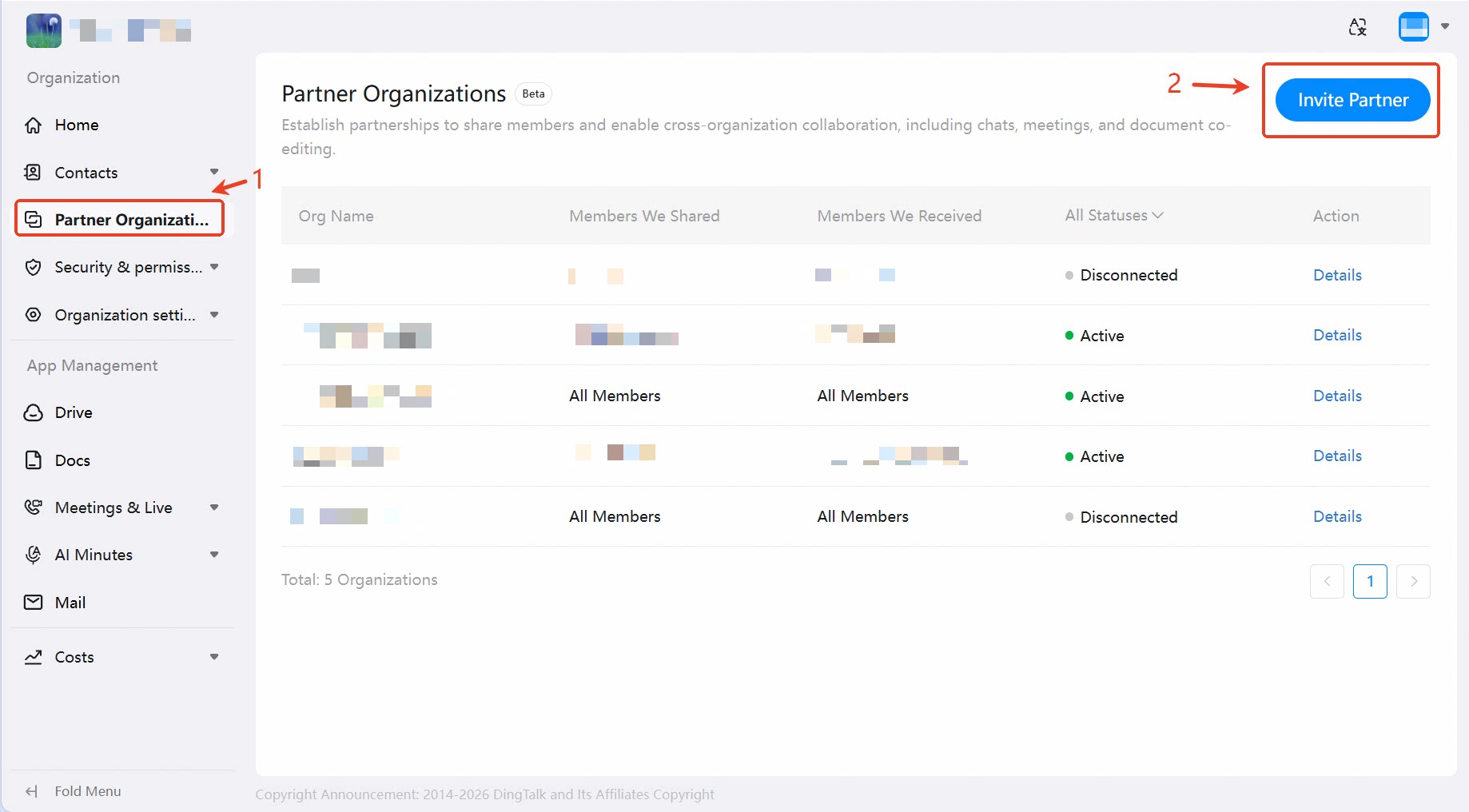
- Log in to the Admin Console and click Partner Organizations (Cross-border Partner Organizations) in the navigation bar.
- Click Invite Partner on the page.
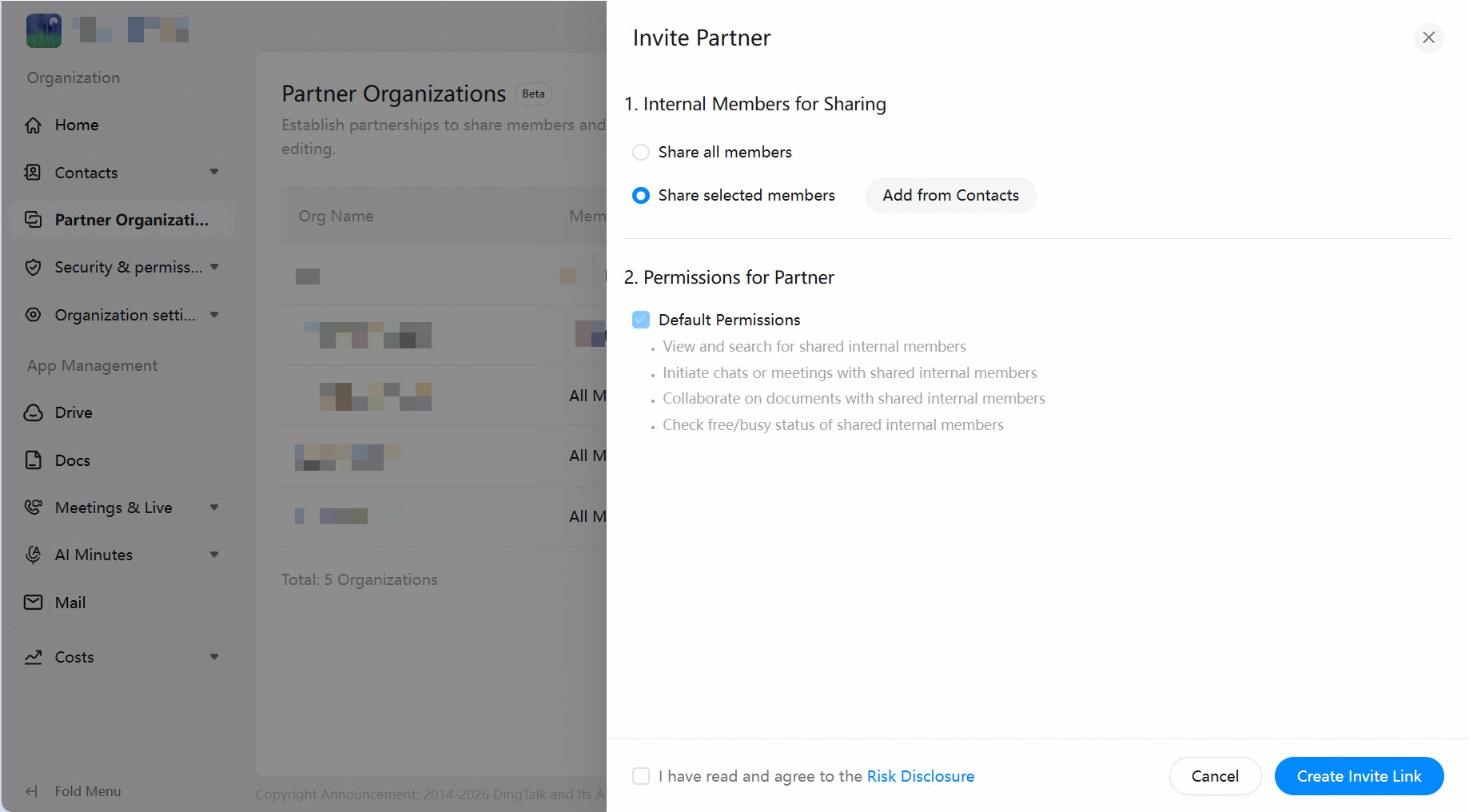
- Select the collaborative members to be shared from your organization (see “Collaboration Settings Instructions” below).
- Read and check the Risk Disclosure.
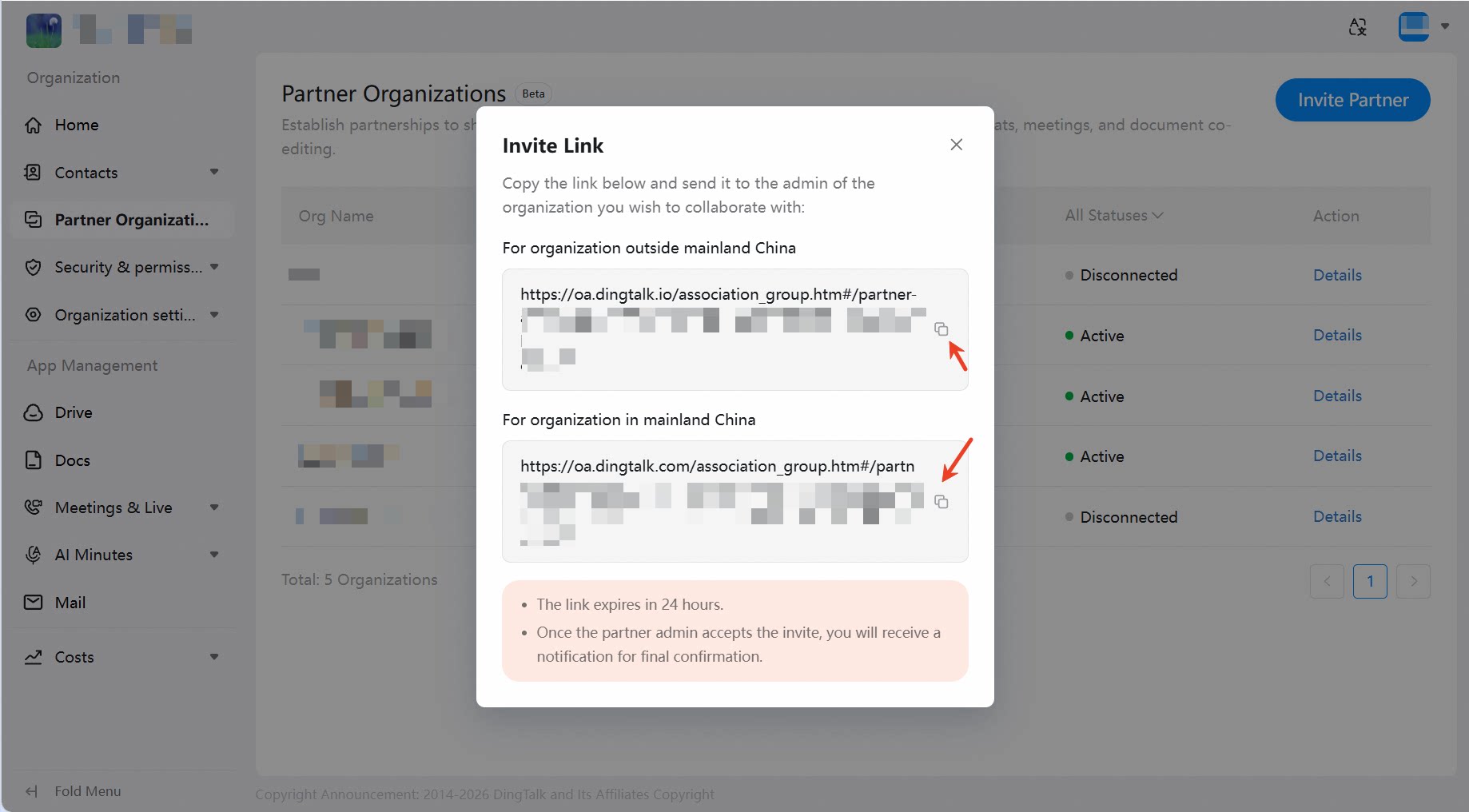
- Click Create Invite Link, and the system will generate an invitation link.
- Copy the link and send it to the other organization’s administrator.
The invitation link is valid for 24 hours from generation and will automatically expire afterward.
2
Step 2: Accept Invitation (Organization B Administrator)
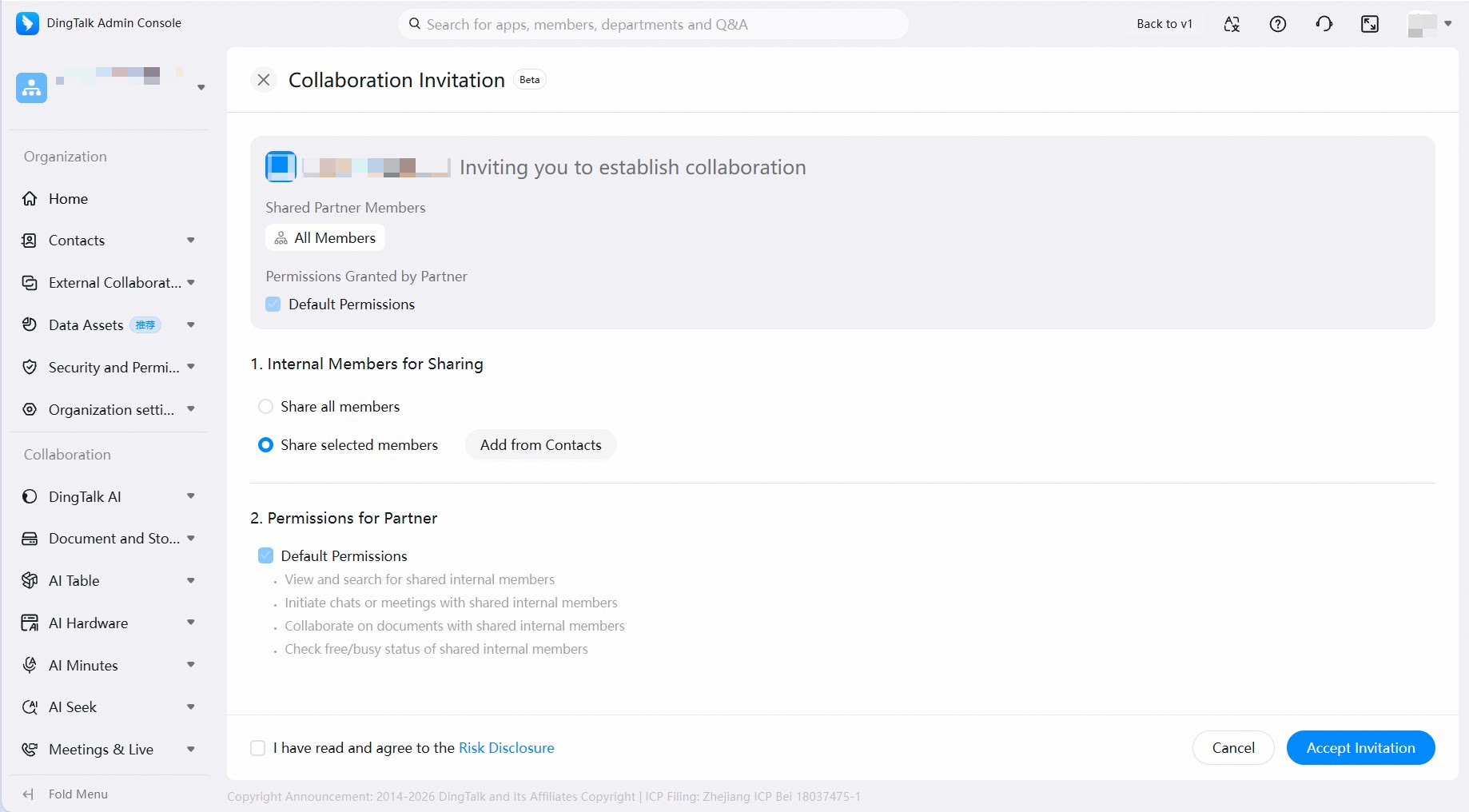
- Click the received invitation link and log in to the Admin Console.
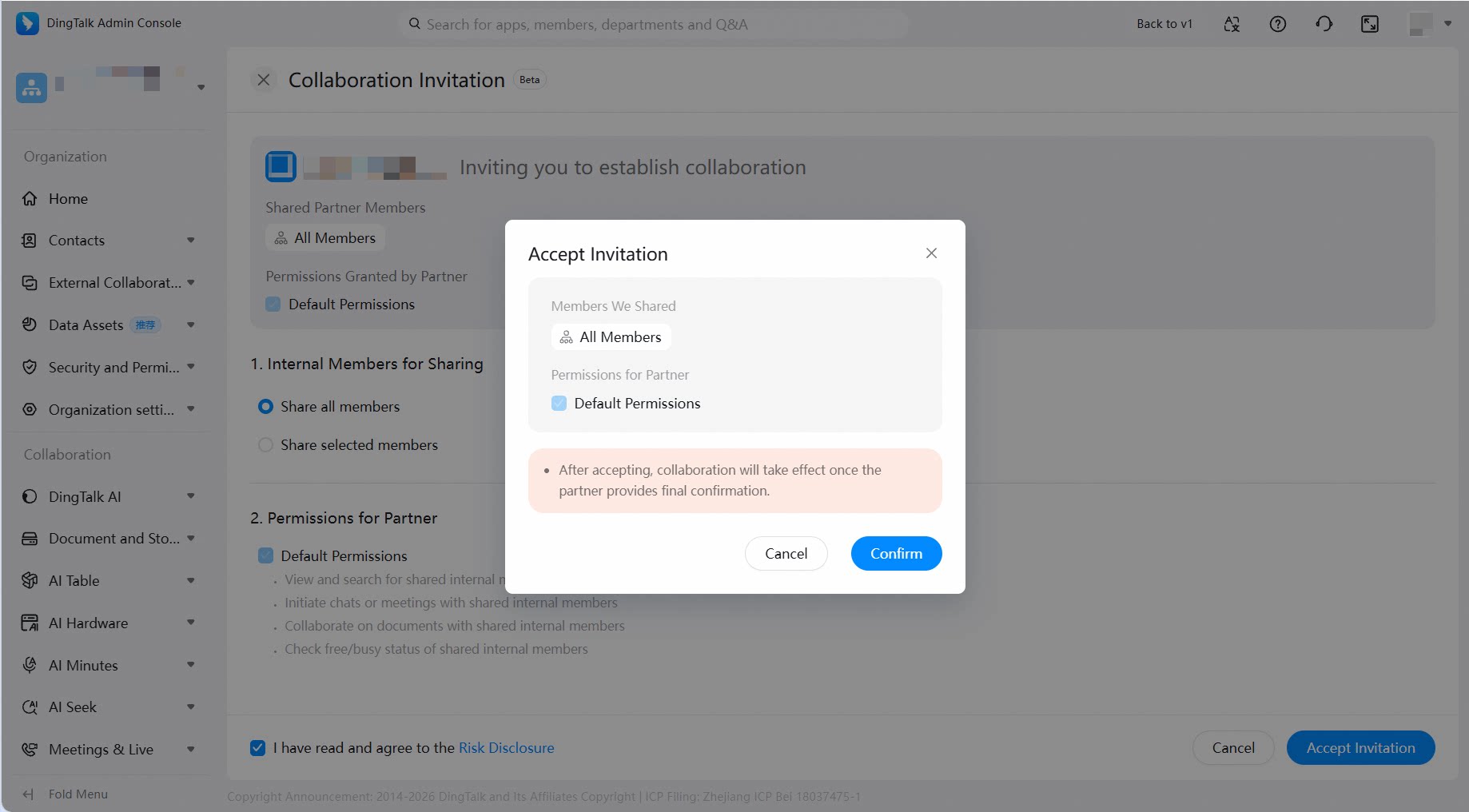
- Confirm the other party’s collaboration settings and fill in your own organization’s collaboration settings.
- Read and check the Risk Disclosure.
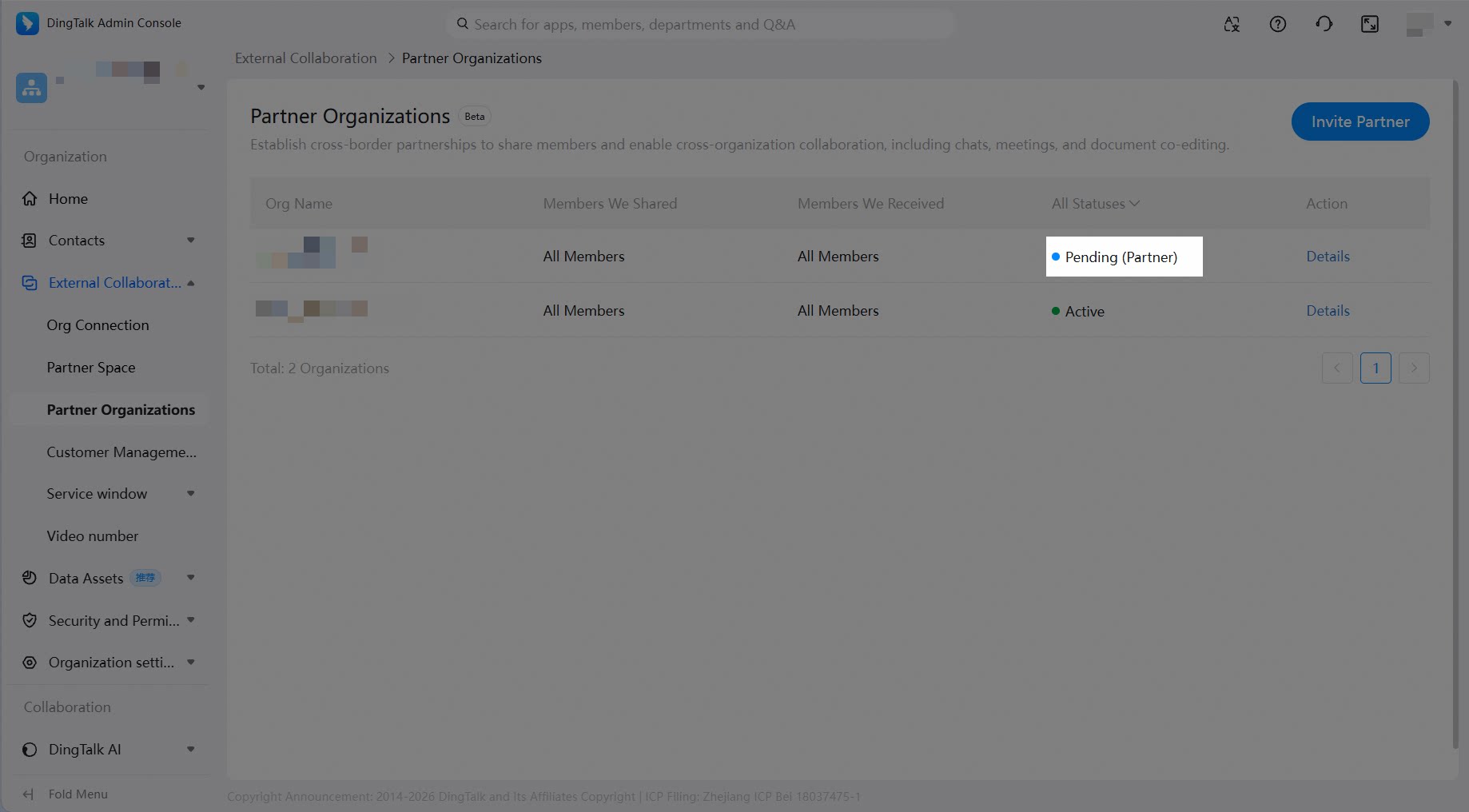
- Click Accept Invitation, confirm the information in the pop-up window, and then click Confirm.
- After acceptance, the status of this organization in your list will be Pending (Partner), and in the other party’s list it will be To Confirm.
3
Step 3: Final Confirmation (Organization A Administrator)
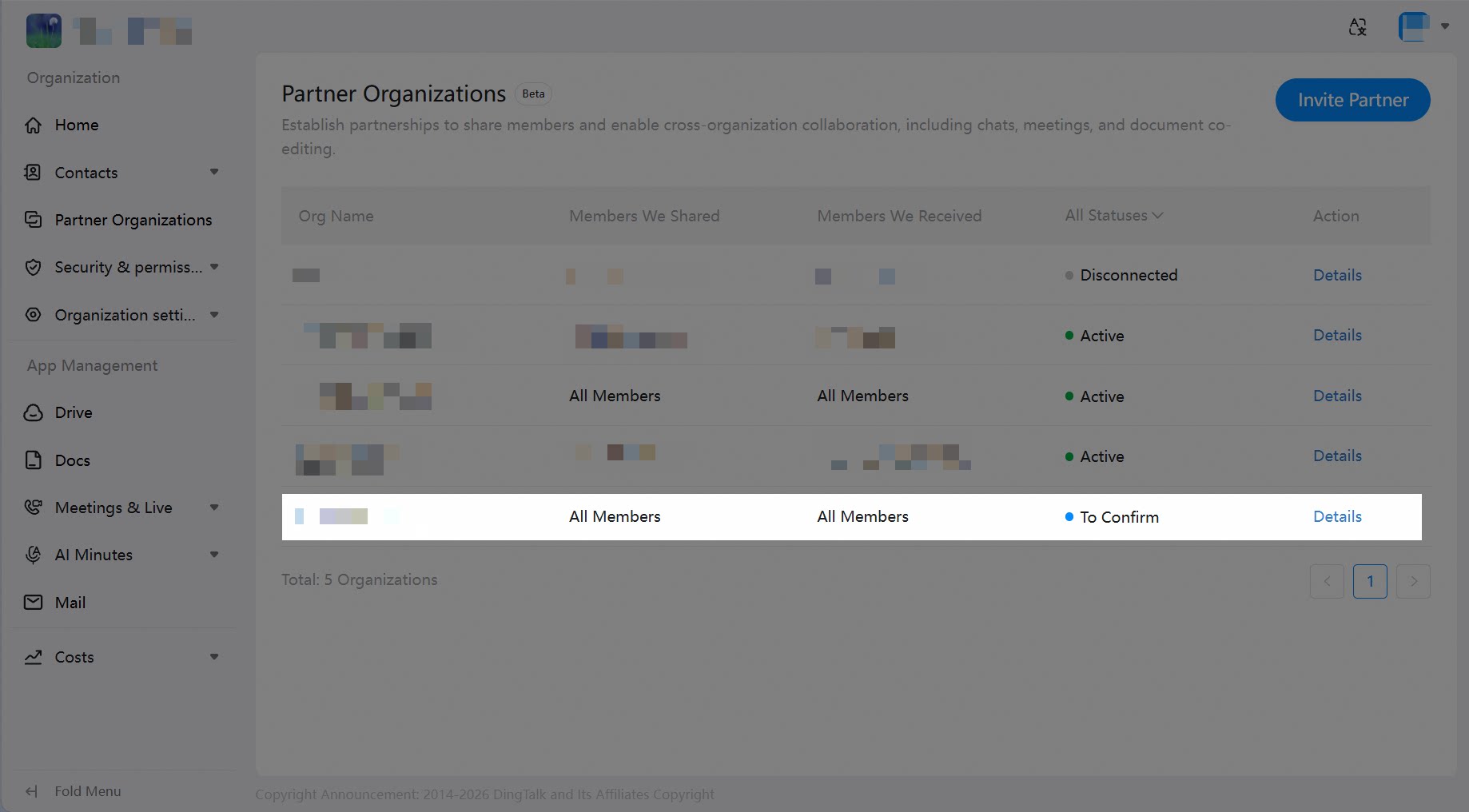
- Log in to the Admin Console, go to Partner Organizations (Cross-border Partner Organizations), and find the organization with status “To Confirm”.
- Click to enter the details page and review the collaboration settings of both parties.
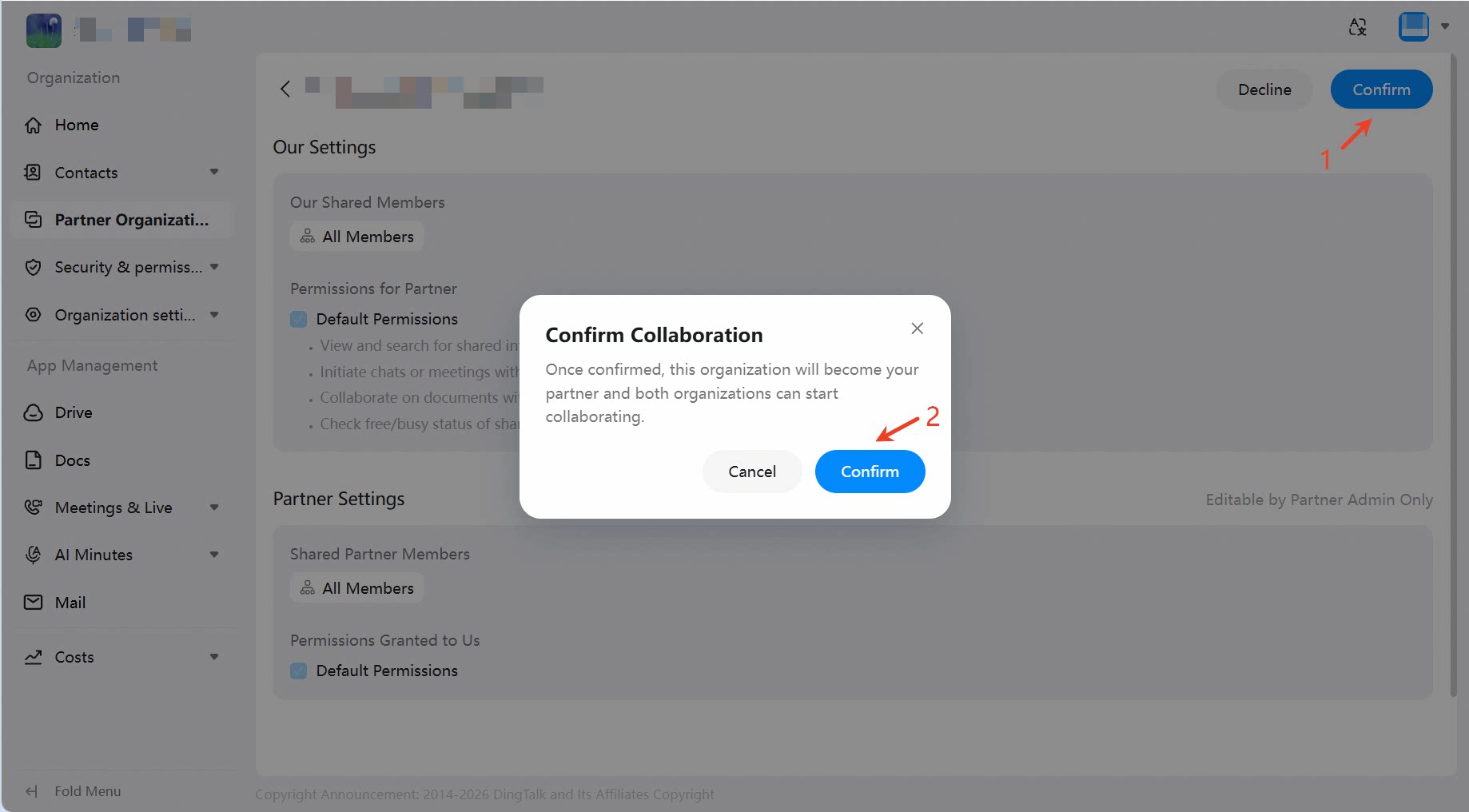
- After confirming everything is correct, click Confirm and complete the final confirmation in the pop-up window.
- The collaborative relationship is officially established, and the status of both organizations changes to Active.
If you do not agree to collaborate, you can click Decline. After decline, you can still re-establish collaboration by sending a new invitation link.
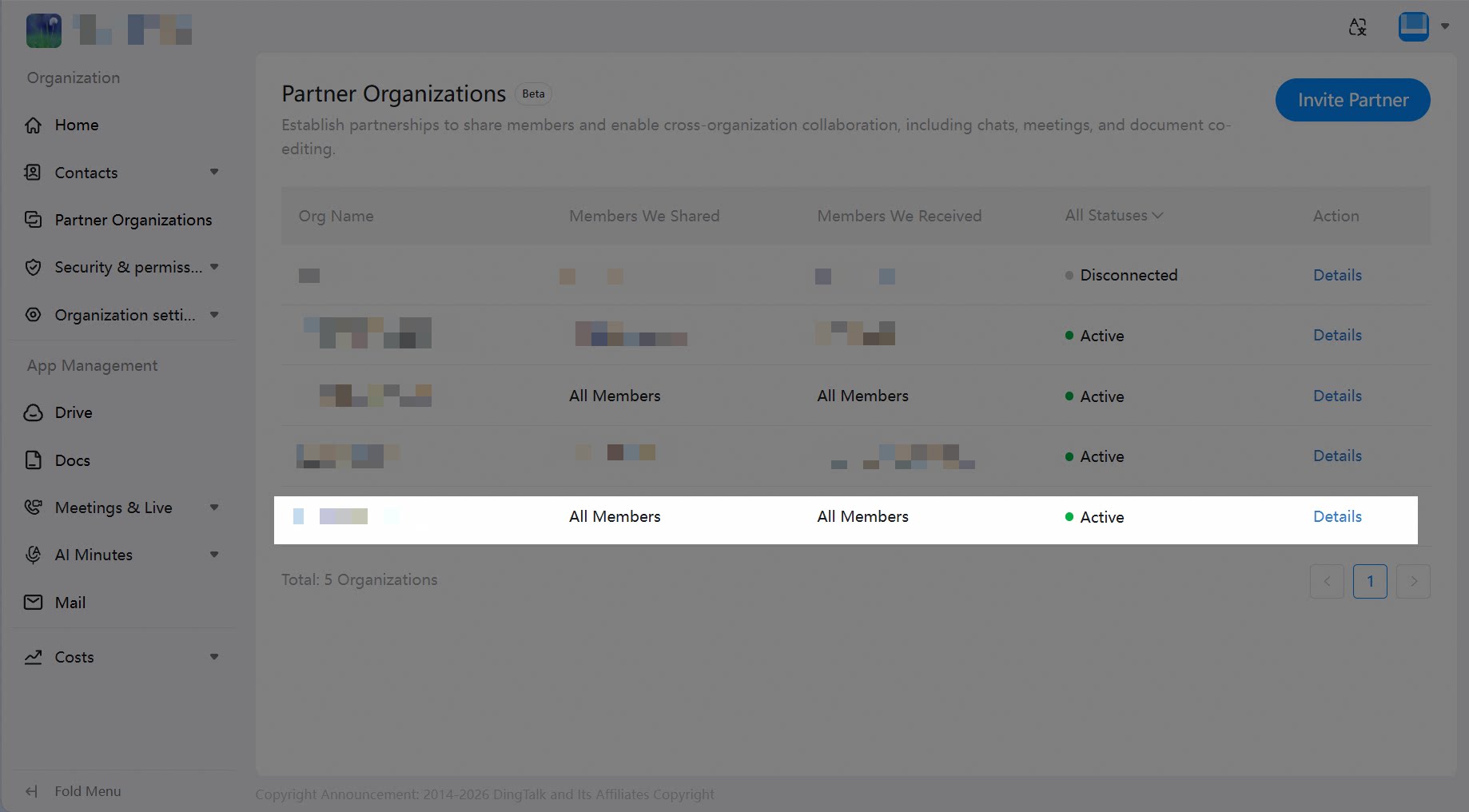
Managing Collaboration
Viewing the Partner Organization List
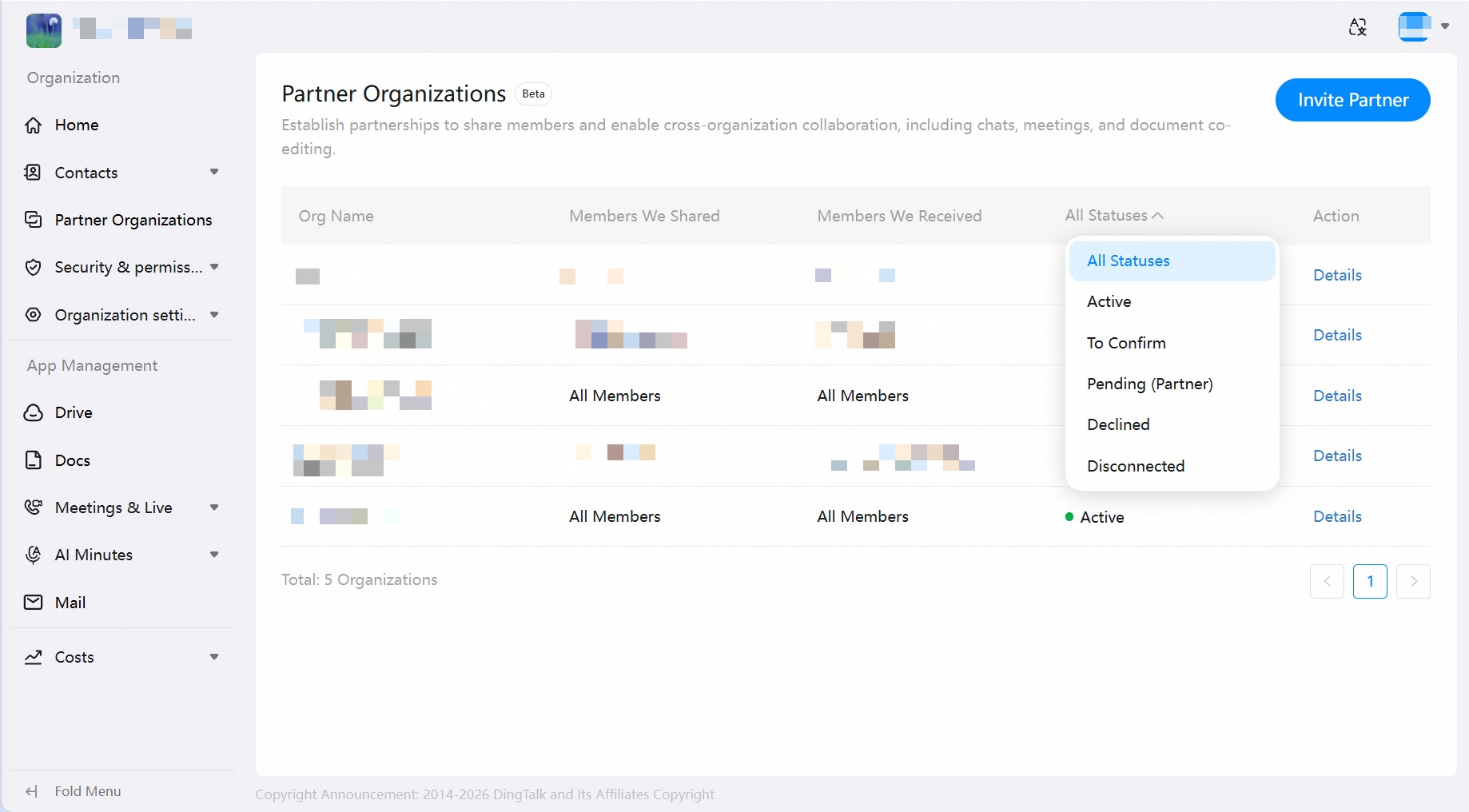
Path: Admin Console > Partner Organization On the Partner Organization list page, you can:- View all collaborative organizations and their current statuses.
- Filter organizations by status using the status filter box. Available statuses include: Active, To Confirm, Pending (Partner), Declined, Disconnected.
- Click on any organization to enter its details page.
Collaboration Settings
When establishing collaboration or editing later, administrators need to configure the following settings:- Collaborative Members Shared from Your Organization
- Permissions Granted to the Other Party
- Editing Method
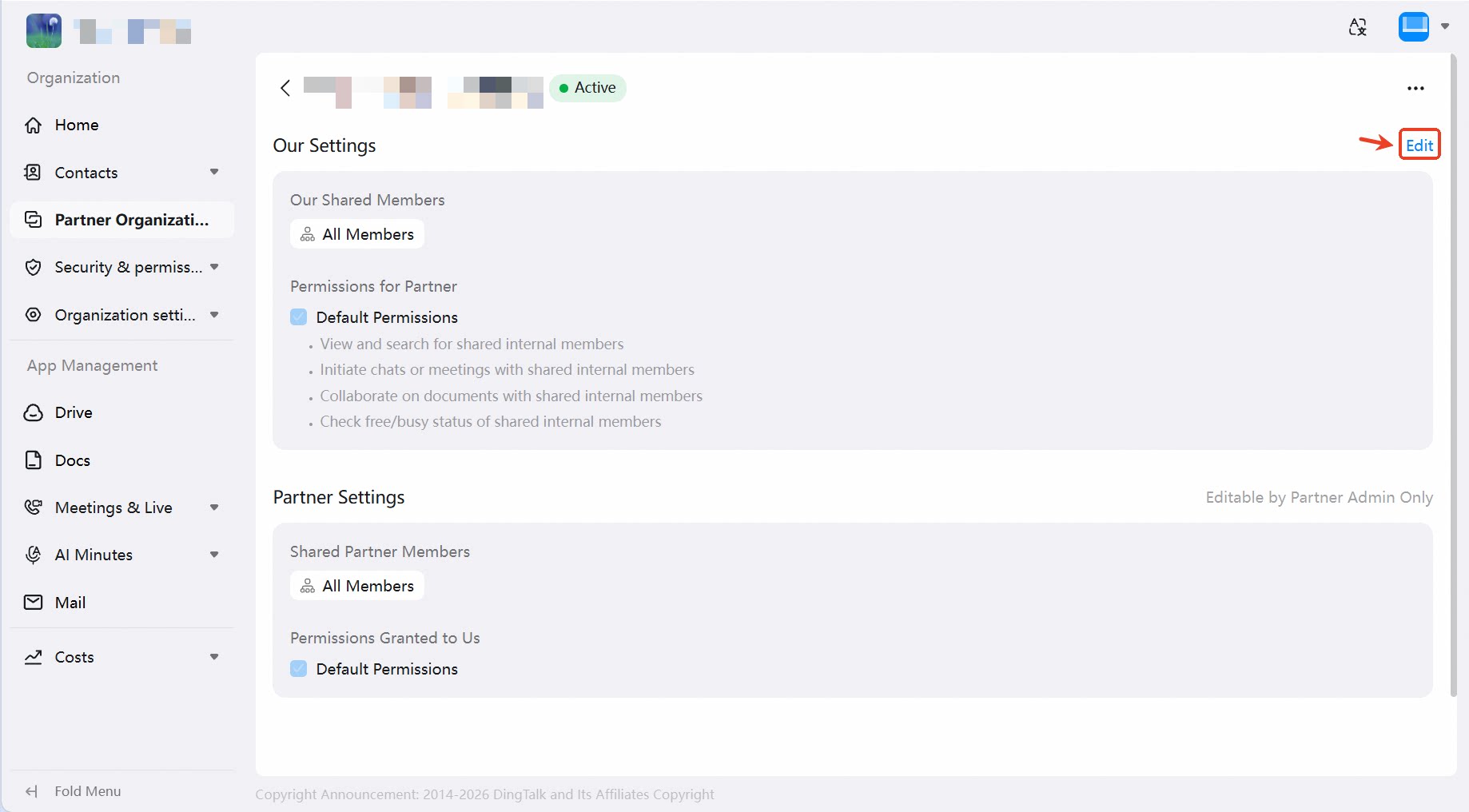
- Enter the Partner Organization details page.
- Click the Edit button, and the “Your Settings” section will become editable.
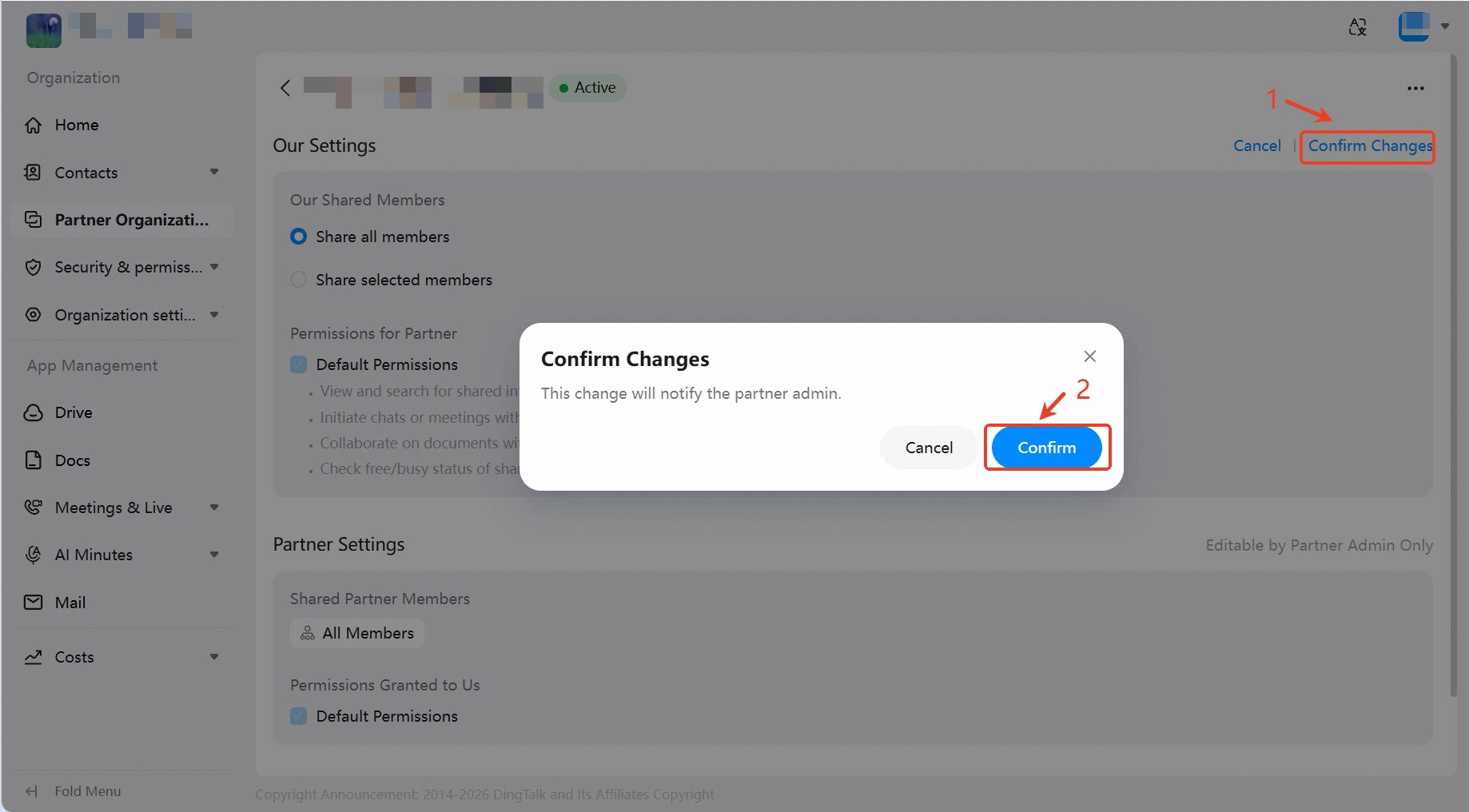
- Modify the relevant settings and click Confirm Changes.
- Complete the save after secondary confirmation.
- You can only edit your own settings; the other party’s settings are read-only.
- After settings are changed, the system will automatically notify the other party’s administrator.
Terminating Collaboration
Termination Method
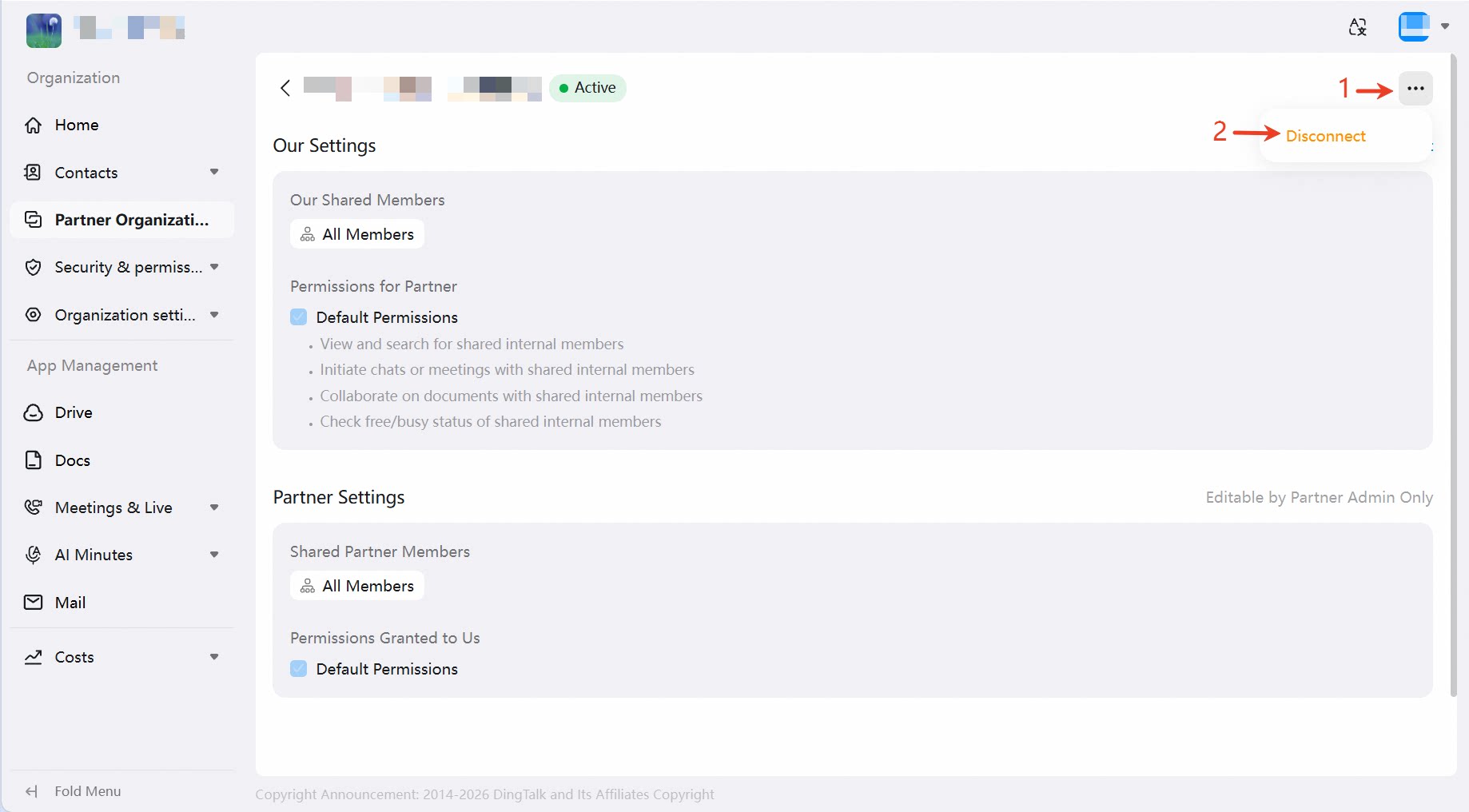
To terminate the collaborative relationship with an organization, follow these steps:- Enter the Partner Organization details page.
- Click the More (three dots) button in the top-right corner and select Disconnect.
- Read the risk description for terminating collaboration in the pop-up window.
- Type “confirm” in the input box to acknowledge the risks.
- Click Confirm Disconnection.
Impact After Termination
Please carefully understand the following impacts before termination:
After termination, both administrators will receive system notifications. To re-establish collaboration after termination, you need to go through the invitation process again.
Member Guide
Once the collaborative relationship is established, organization members can use the following features in the client without any additional setup.Viewing the Partner Organization Contact Directory
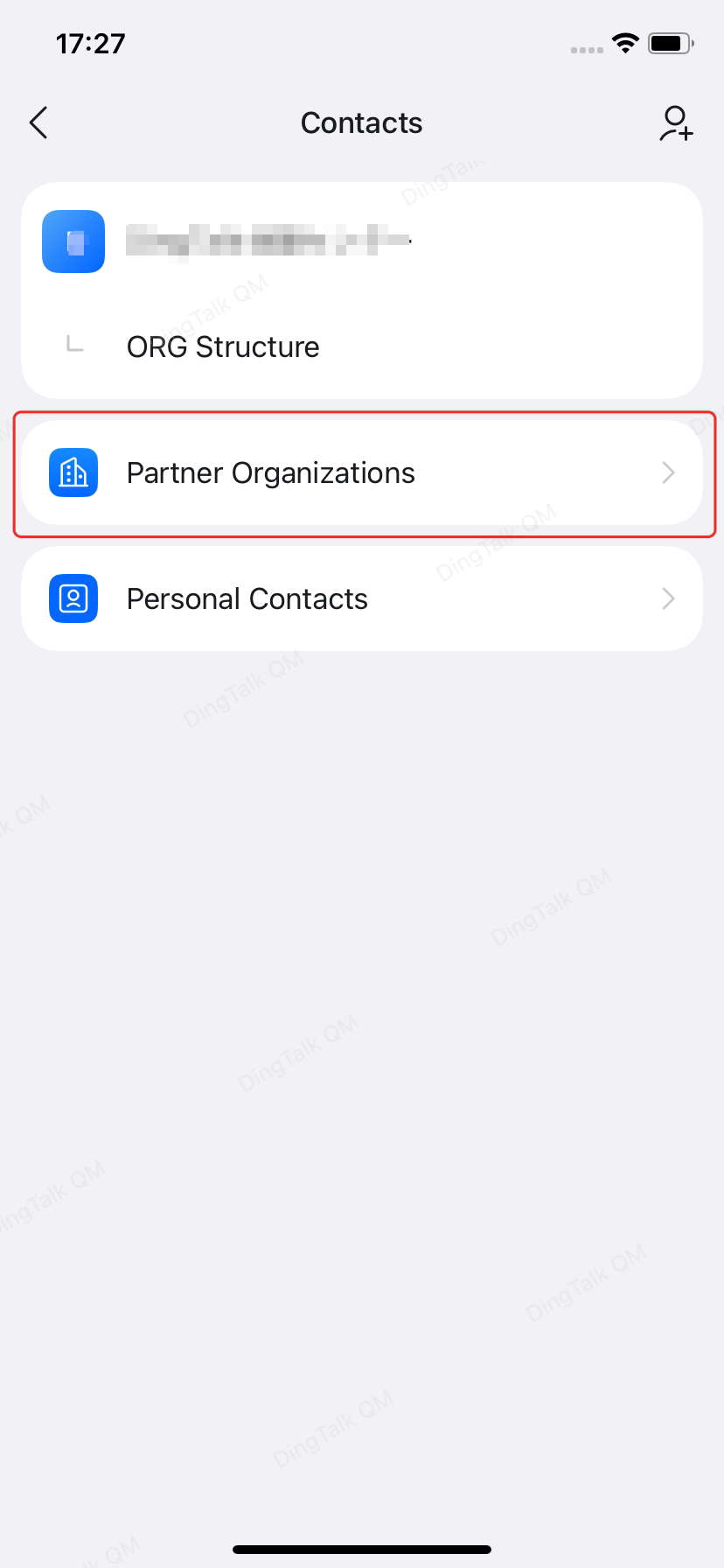
- Mobile
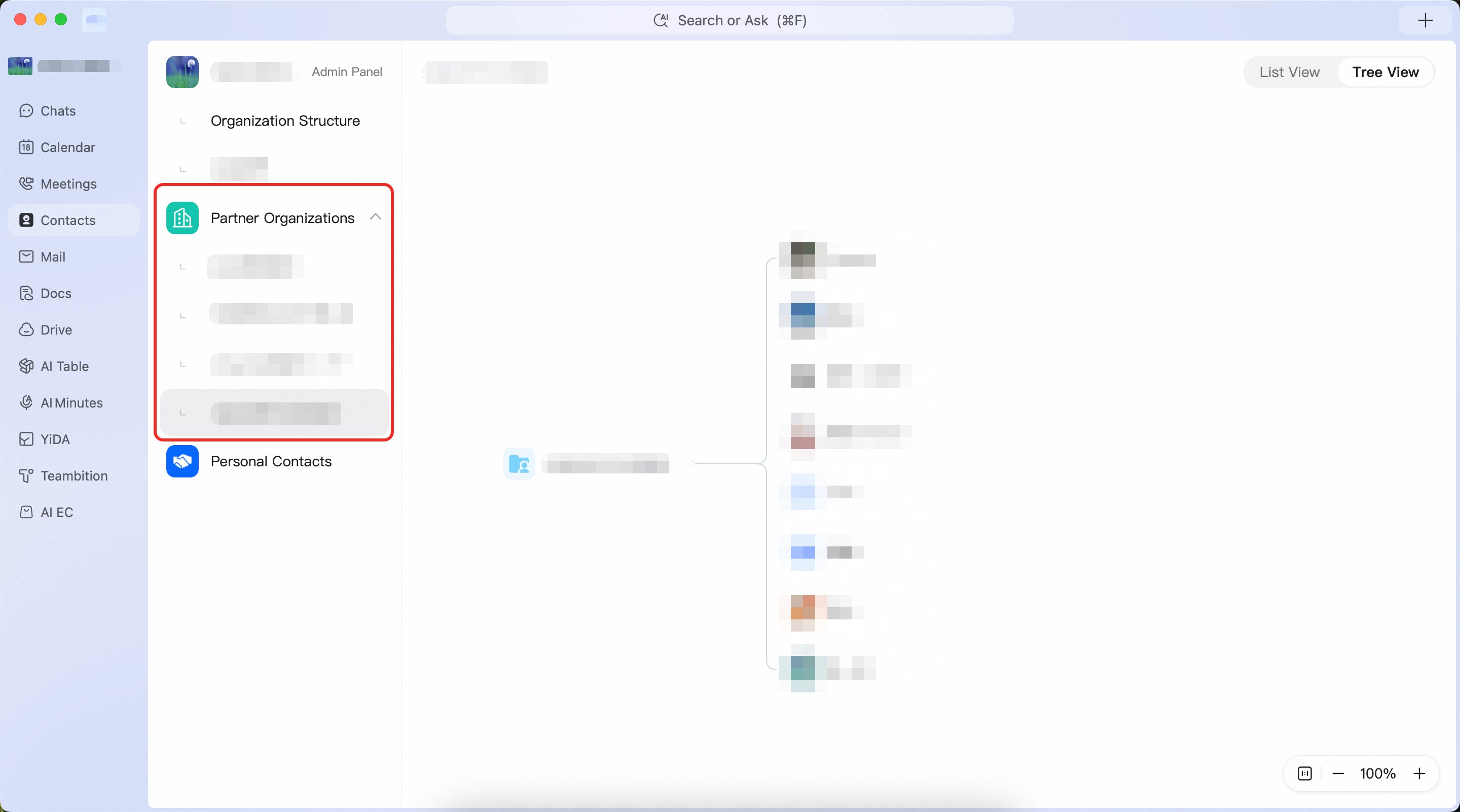
- PC
- Open the Contacts page.
- Click the Partner Organizations entry to enter the collaborative organization list.
- Select the corresponding organization to view its department structure and member list.
- Click on a member to view their personal information.

Collaboration Capabilities Overview
You can perform the following collaborative operations with members from collaborative organizations:- Search Contacts: Search for the other party’s members through the search box on the homepage.
- Start Chats: Conduct one-on-one or group chats with the other party’s members.
- Audio/Video Meetings: Invite the other party’s members to join audio/video meetings.
- Collaborative Documents: @mention or share documents with the other party’s members for co-editing.
- Calendar: View the availability status of the other party’s members, create schedules, and add them as participants.
- Email: Add the other party’s members as recipients or CC recipients.
- AI Transcription: Share AI transcription with the other party’s members.
- DingDrive: Share DingDrive files with the other party’s members.
Frequently Asked Questions
Can one organization establish collaboration with multiple organizations simultaneously?
Can one organization establish collaboration with multiple organizations simultaneously?
Yes. Collaborative organizations form a mesh structure, and one organization can establish collaborative relationships with up to 20 organizations separately, with each collaboration group operating independently.
What should I do if the invitation link expires?
What should I do if the invitation link expires?
The invitation link is valid for 24 hours. After expiration, the initiating administrator needs to generate a new invitation link.
If the other party declines the collaboration invitation, can I invite them again?
If the other party declines the collaboration invitation, can I invite them again?
Yes. After decline, the initiator can re-establish collaboration by sending a new invitation link. The new collaboration settings will overwrite the previous data.
Can collaboration be re-established after termination?
Can collaboration be re-established after termination?
Yes. After termination, you need to go through the invitation process again. After re-establishing collaboration, the new collaboration settings will overwrite the previous data.
Who owns the data generated during collaboration?
Who owns the data generated during collaboration?
Data generated during collaboration (such as group chat data, documents, audio/video meetings, AI transcription, etc.) belongs to the organization of the member who initiated the application. Entitlement usage is also borne by the initiating organization.