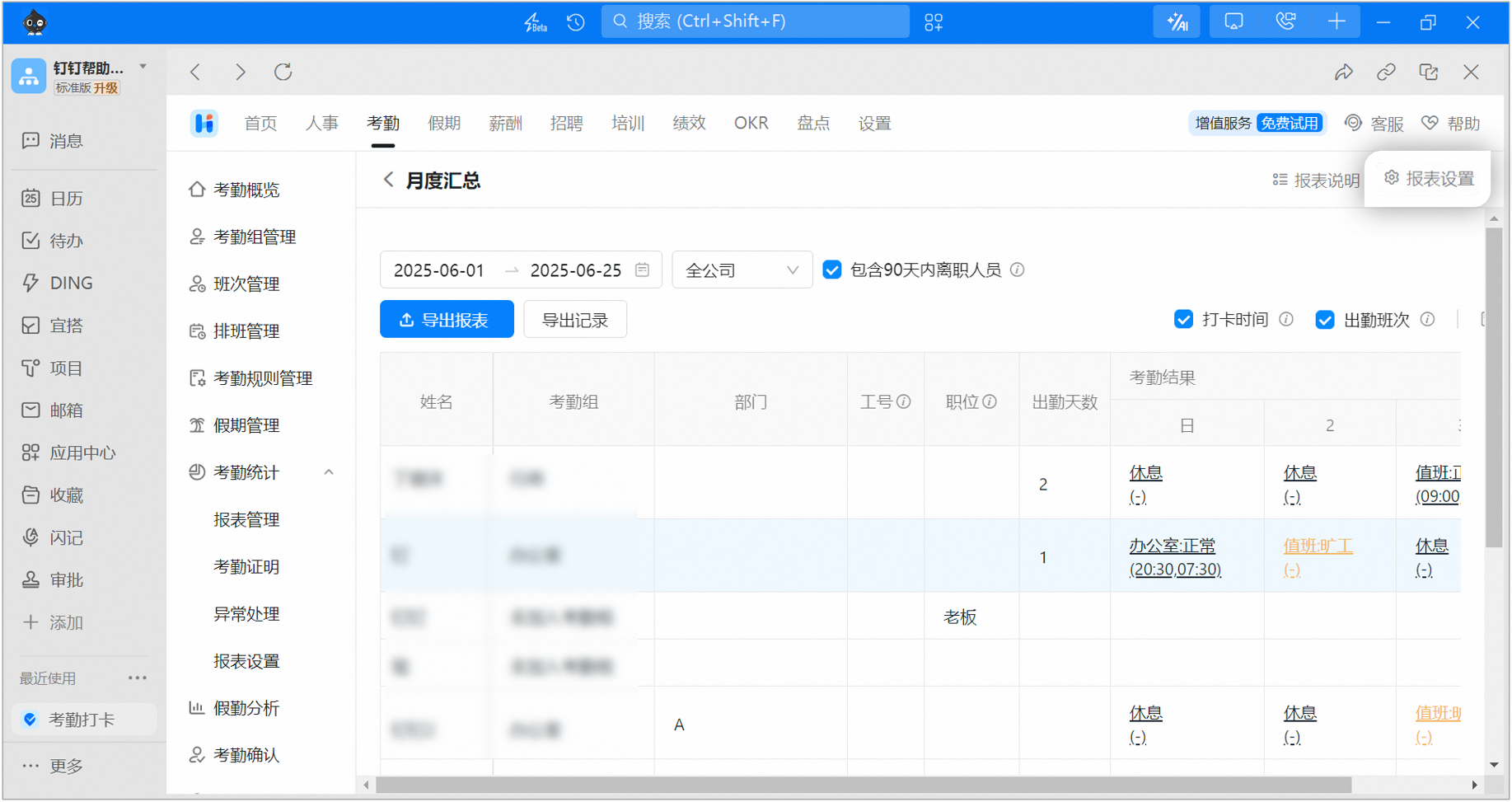
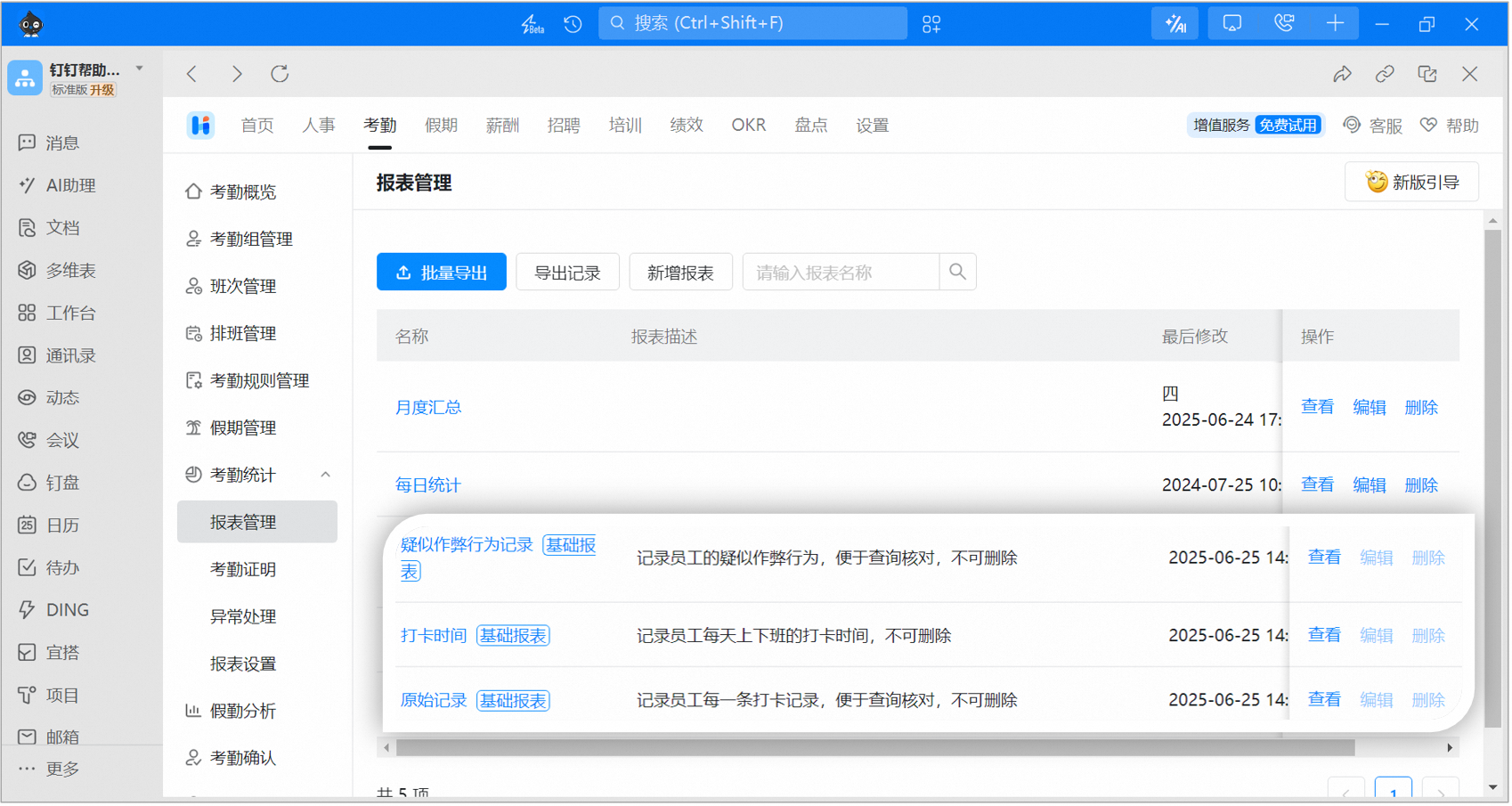
Learn how DingTalk attendance report management collects, processes, analyzes, and displays attendance data to help organizations track attendance, support payroll calculation, and inform management decisions.
Report management is a tool for collecting, processing, analyzing, and displaying data. It helps organizations understand their operations and make informed decisions.
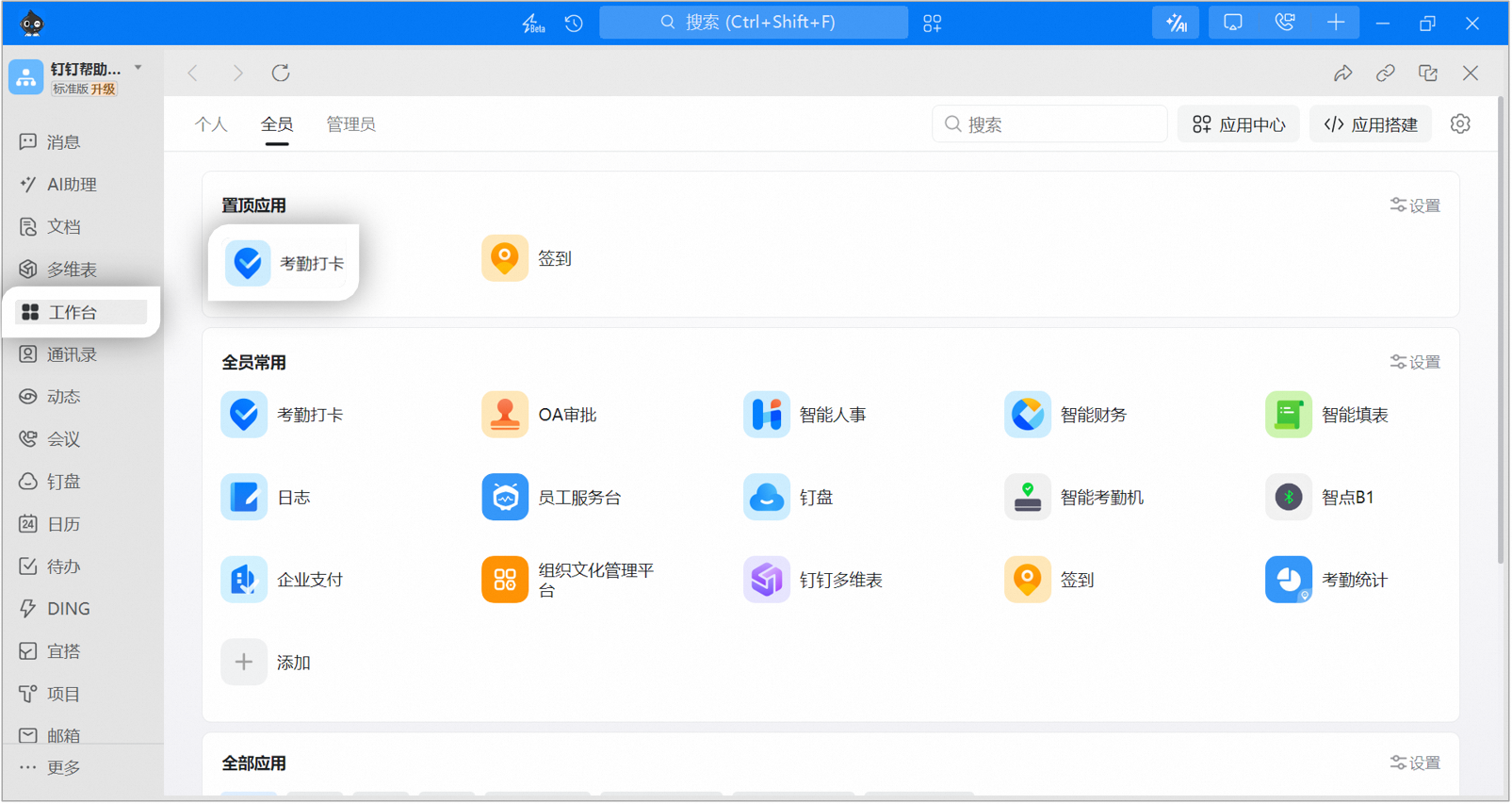
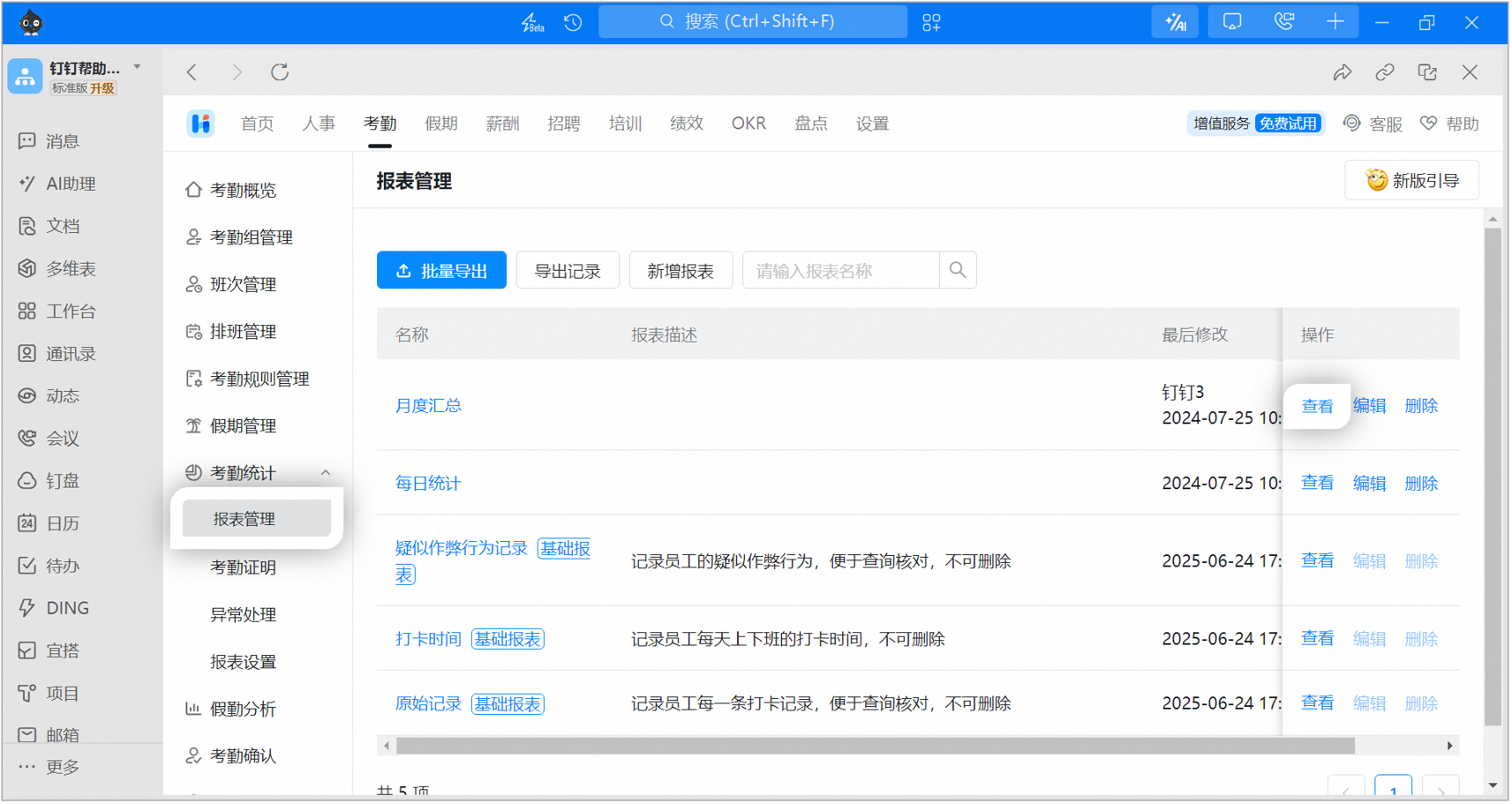
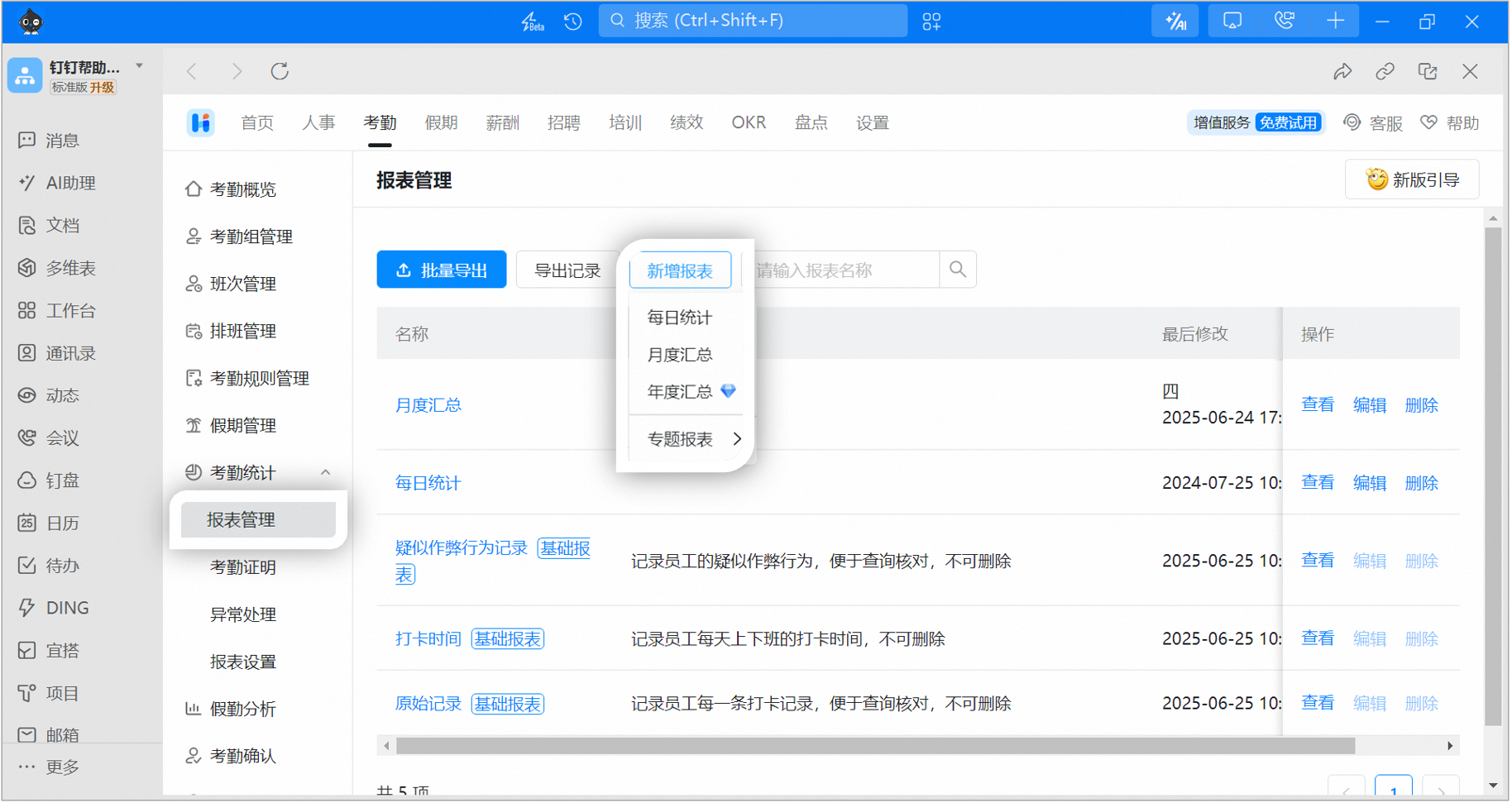
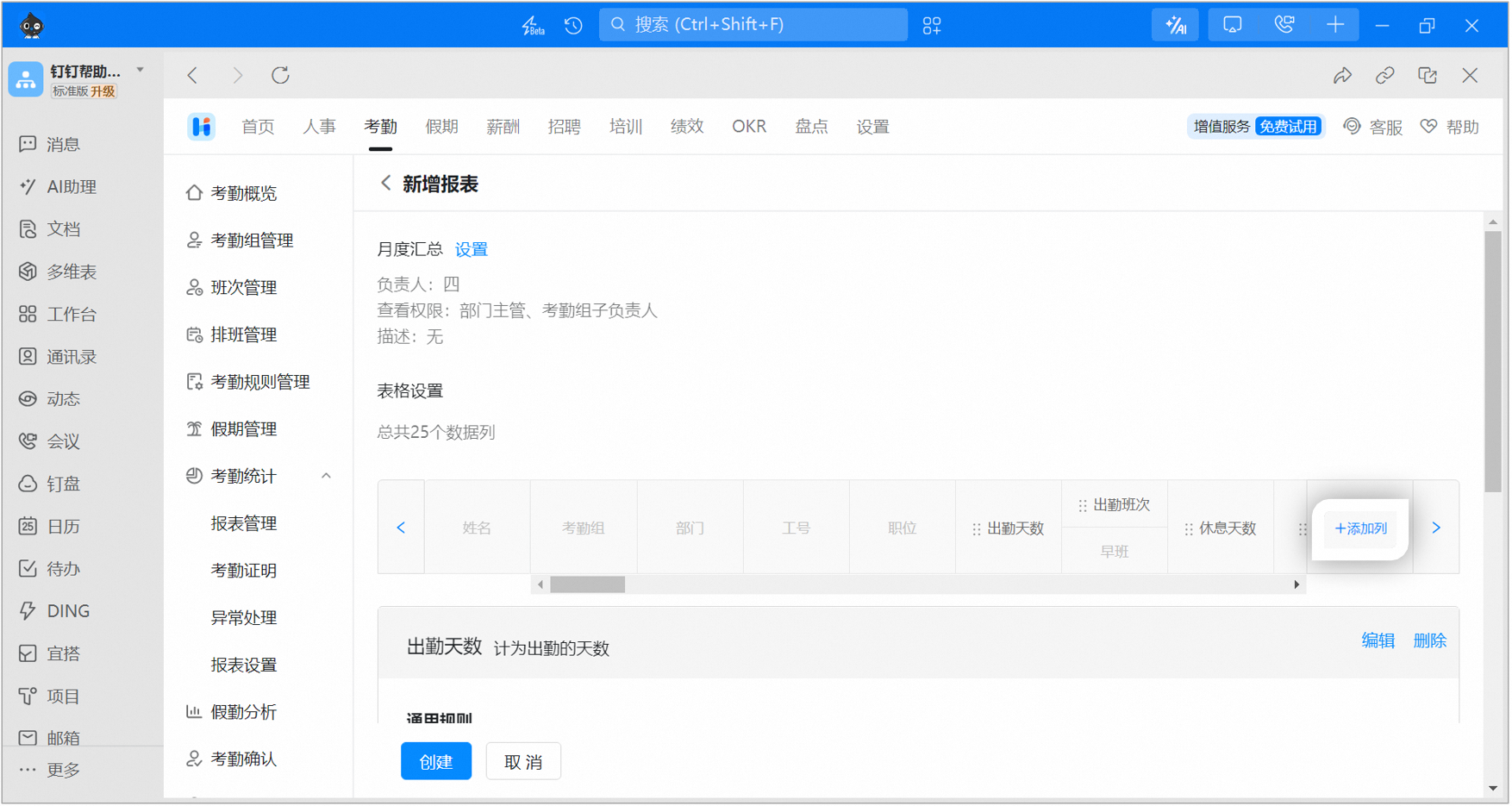
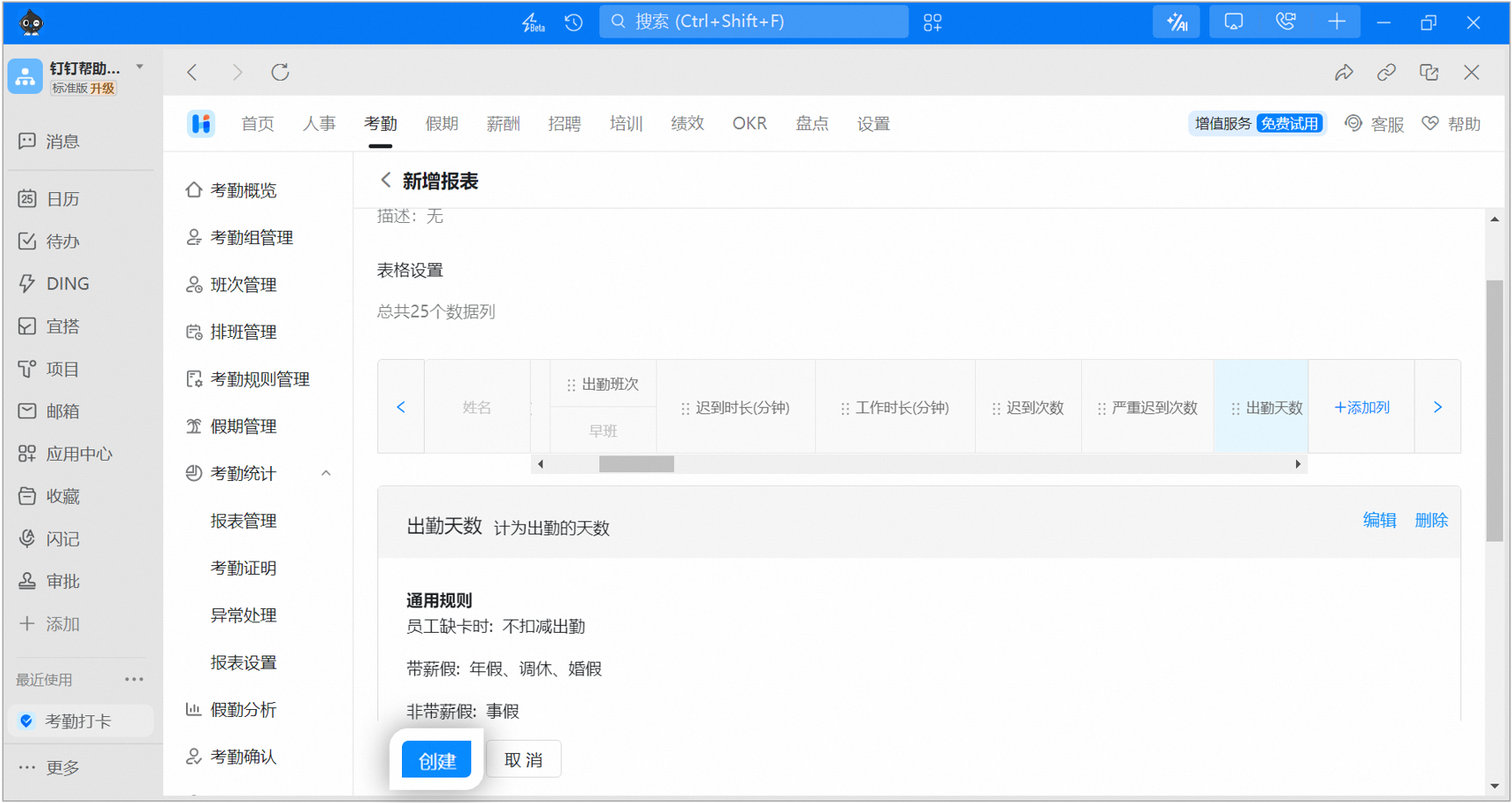
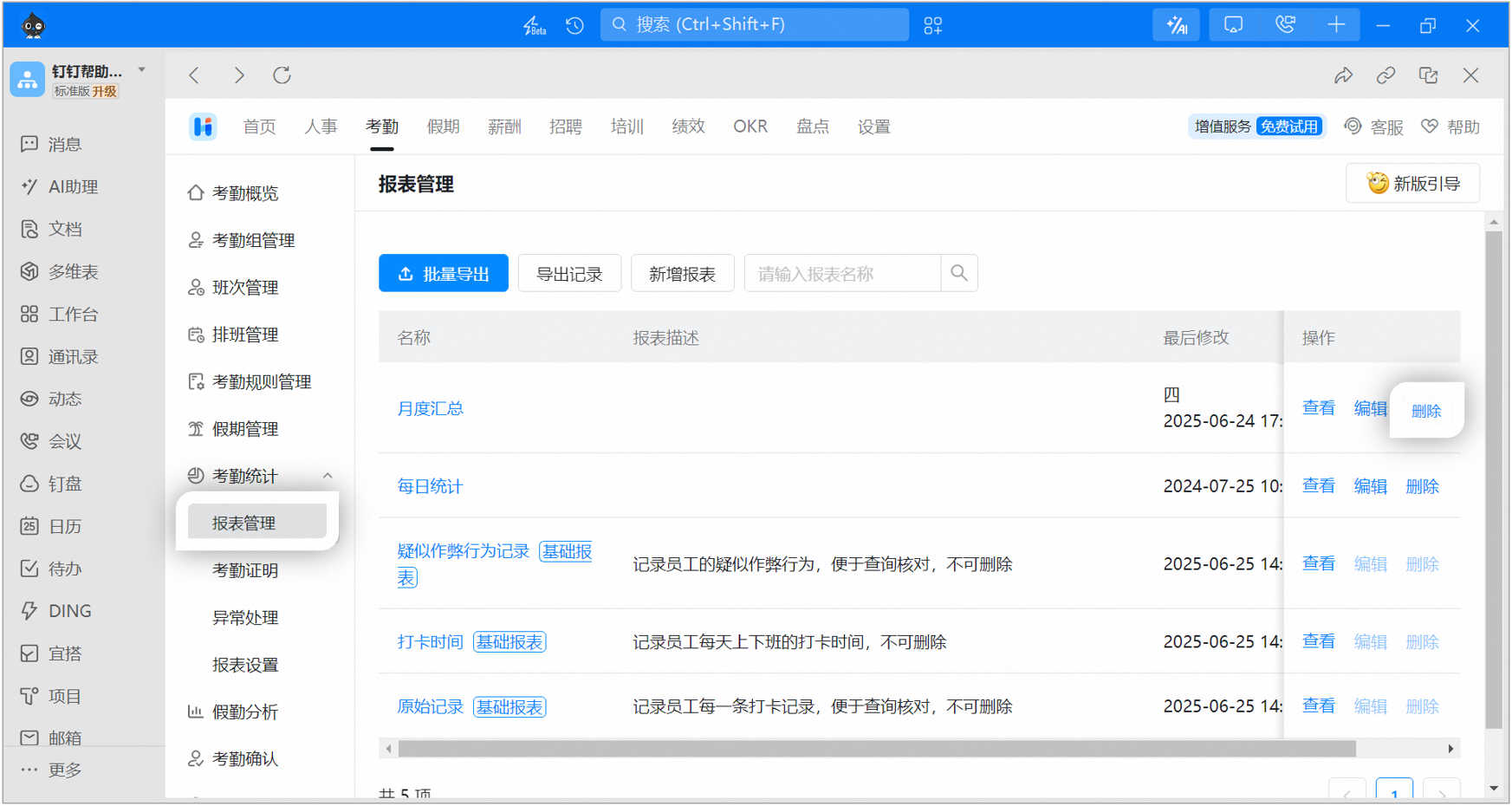
Go to Attendance statistics > Report management > Click Add report > Select the report type.
Create report page example
2
Click Settings > Configure the report name, owner, view permission, and description > Save.
Create report page example
3
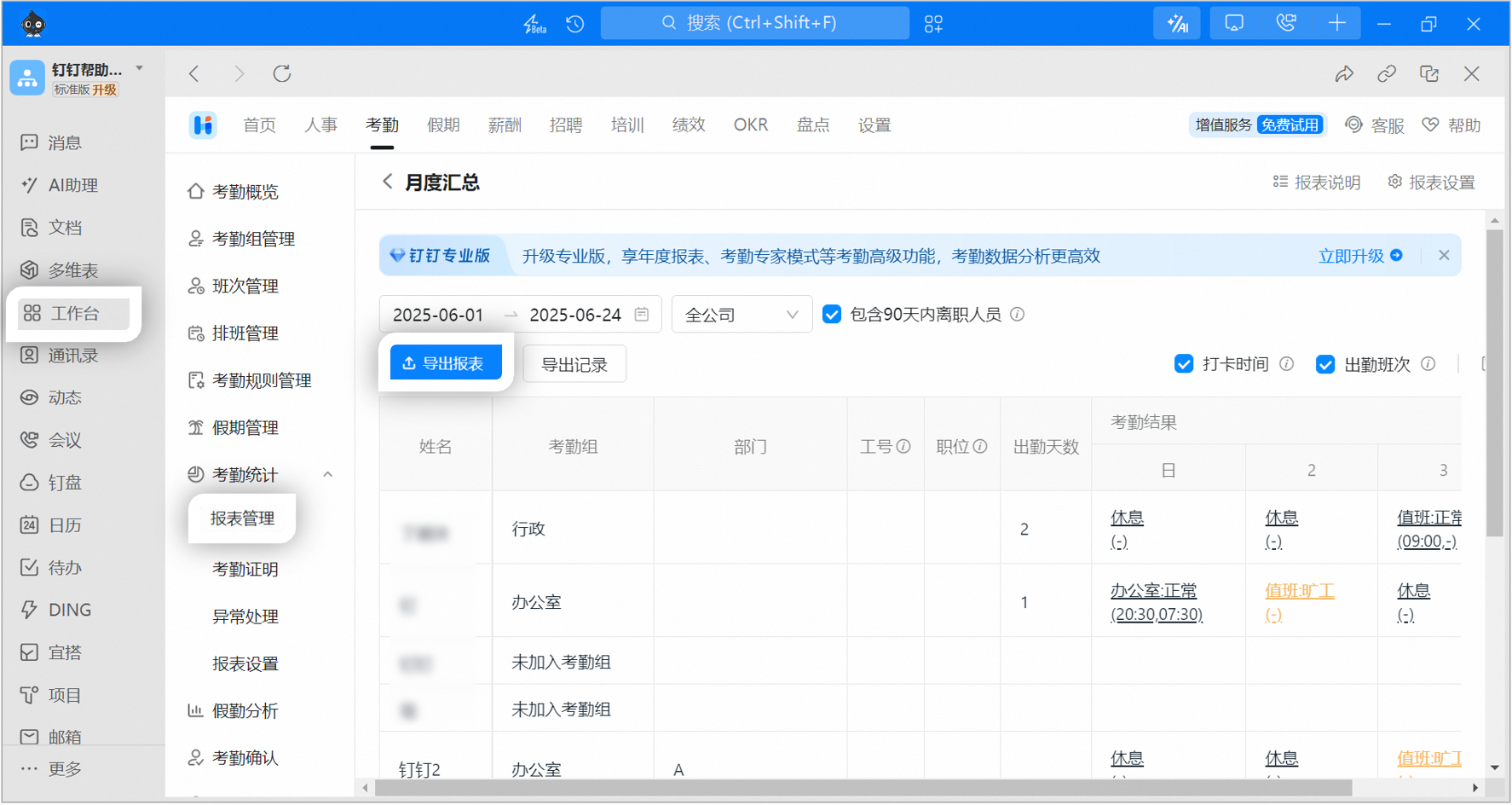
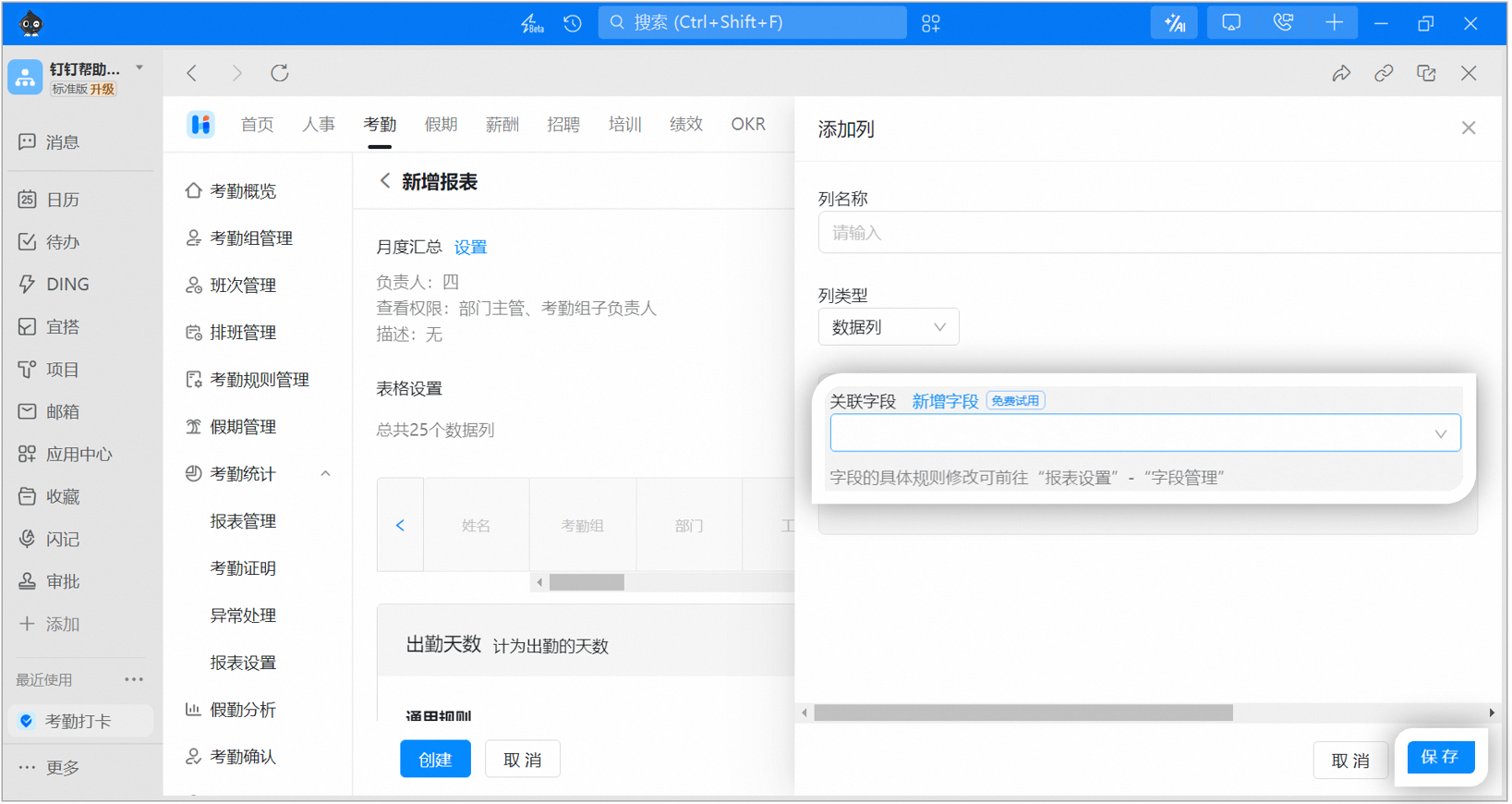
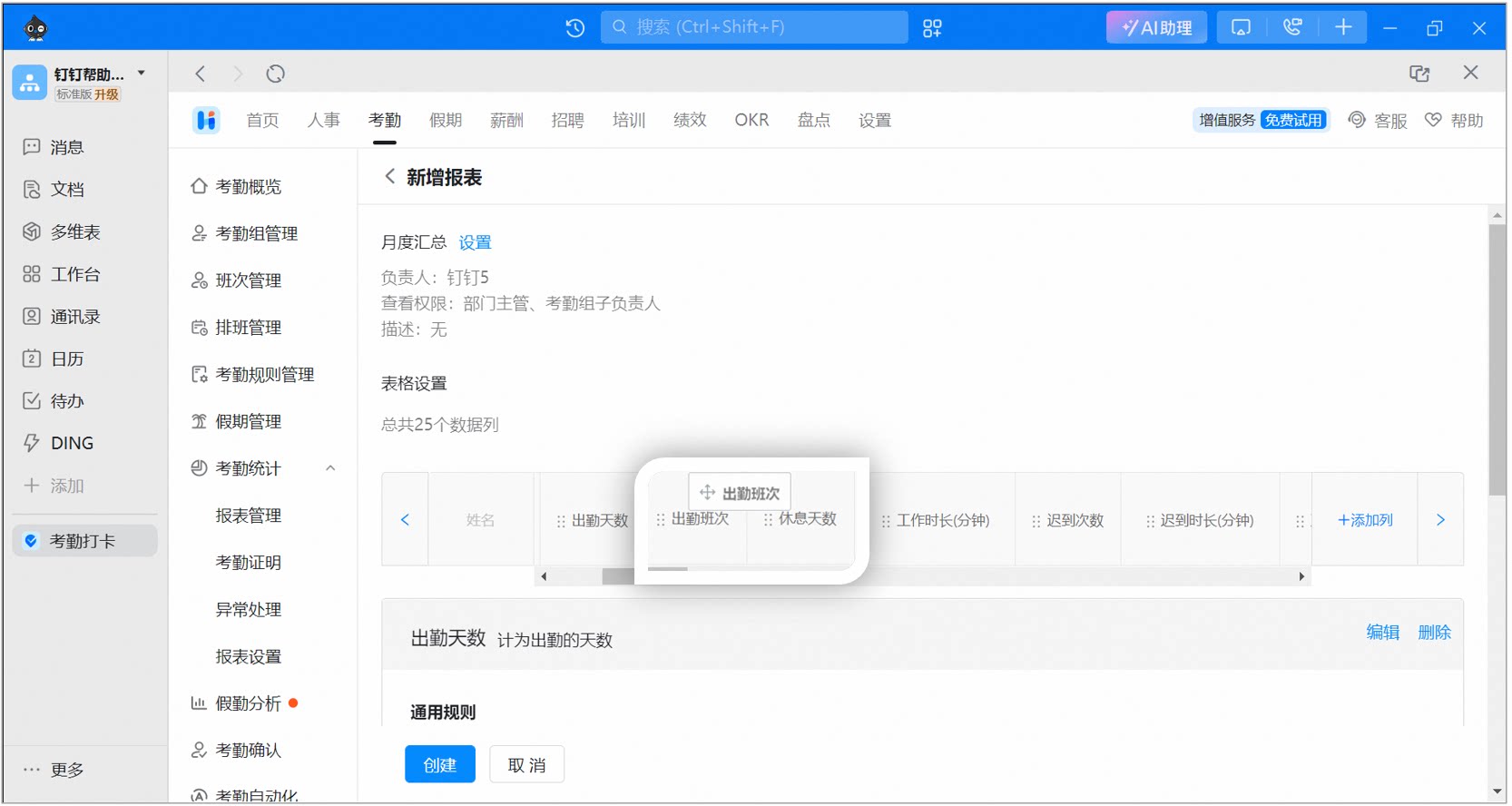
Select Add column > Select the fields to associate > Save.
Create report page example
Create report page example
4
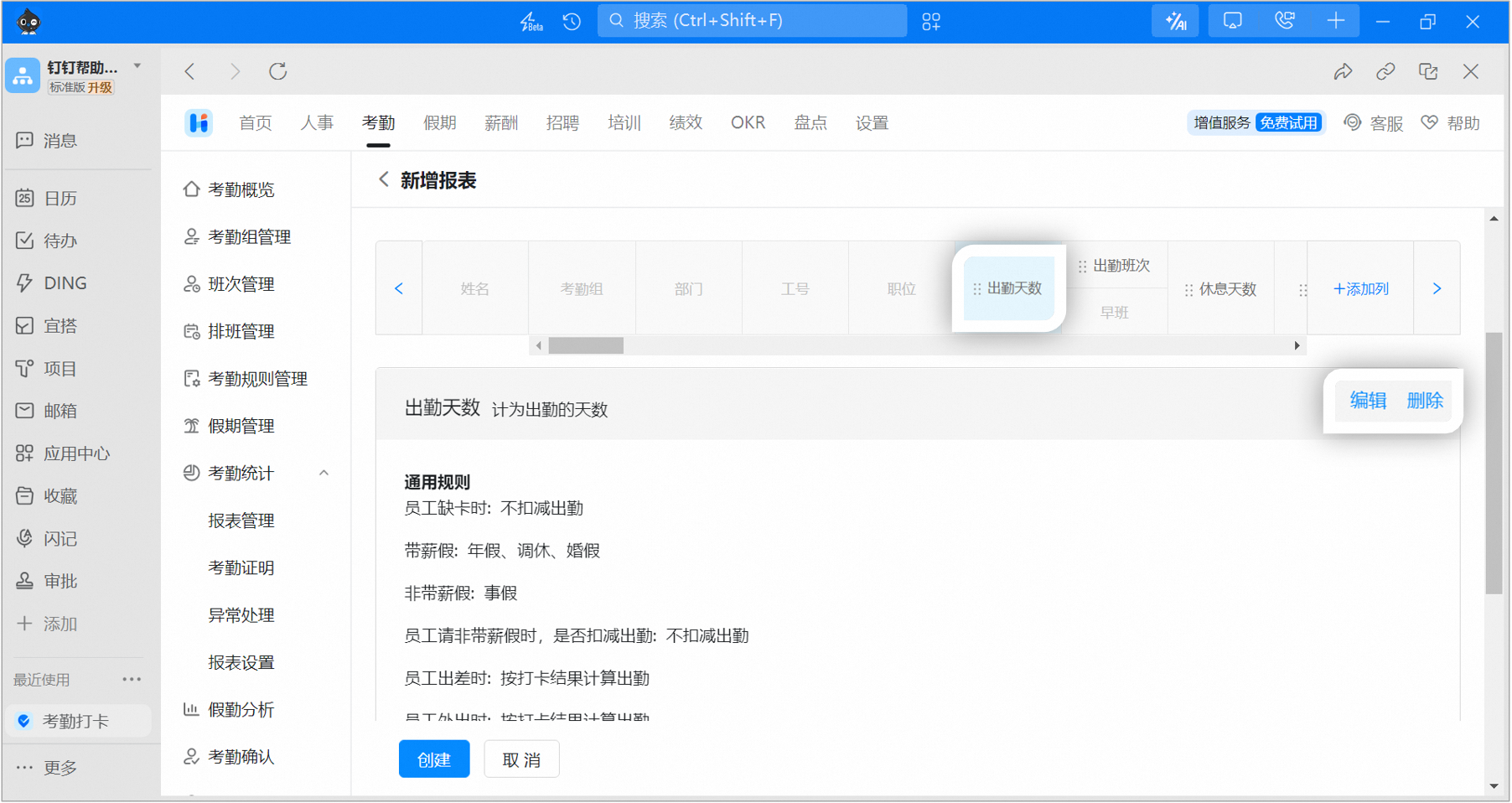
Click the column name to edit or delete it.
General rules (whether a leave type is paid can be set in the leave rules. Path: Admins with the required permissions can open DingTalk desktop > Workbench > Attendance > Leave management > Leave rules > Edit an existing leave type or Create a leave rule):
When an employee has a missed clock-in: do not deduct attendance.
Paid leave: annual leave, compensatory leave, marriage leave.
Unpaid leave: personal leave.
Whether to deduct attendance when an employee takes unpaid leave: do not deduct attendance.
When an employee is on a business trip: attendance is calculated based on clock-in results.
When an employee is out on business: attendance is calculated based on clock-in results.
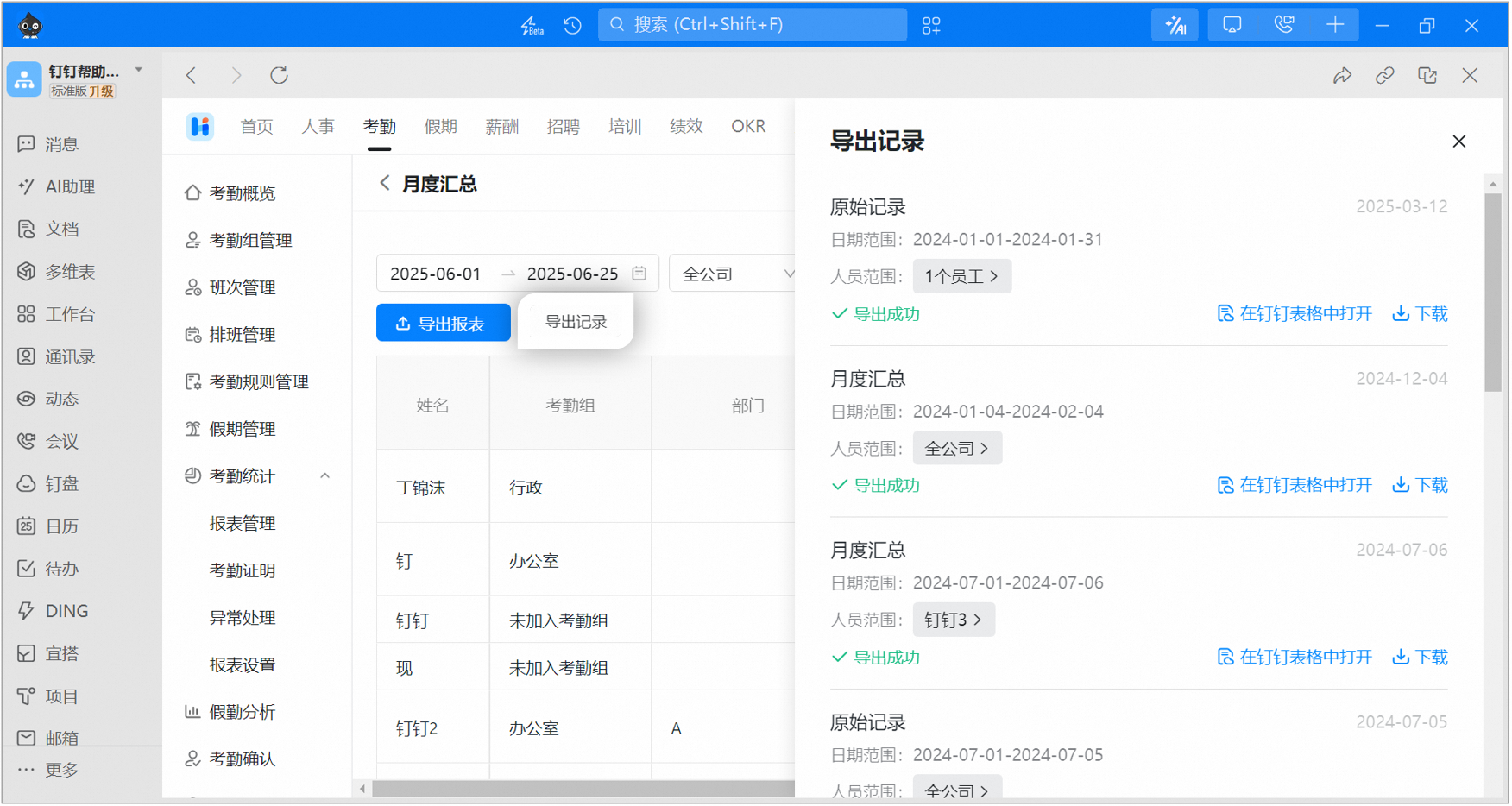
The system provides preset reports—Suspected cheating records, Clock-in time, and Original records—that cannot be edited or deleted. You can export these reports and view their export records.
Report descriptions:
Suspected cheating records (basic report): records employees’ suspected cheating behavior for review. Cannot be deleted.
Clock-in time (basic report): records employees’ daily clock-in and clock-out times. Cannot be deleted.
Original records (basic report): records every clock-in entry from employees for review. Cannot be deleted.


 Chats
Chats Calendar
 Meetings
 Contacts
 Mail
Mail Docs
Docs Drive
Drive AI Table
 AI Minutes
 Attendance
 Approval
 YiDA
YiDA Admin Console