Learn how to set up shift-based attendance with support for daily, cyclical, batch, and Excel-based scheduling. Employees can select their own shift for clock-in when no shift is assigned. Ideal for organizations with multiple rotating shifts.
If your organization uses shift-based attendance, meaning employees start and end work at different times based on different shifts, you can easily manage it in DingTalk Attendance. DingTalk Attendance supports multiple scheduling methods, including daily, cyclical, batch, and Excel-based scheduling. It also lets employees select their own shift for clock-in and flexible clock-in when the Admin has not assigned a shift.
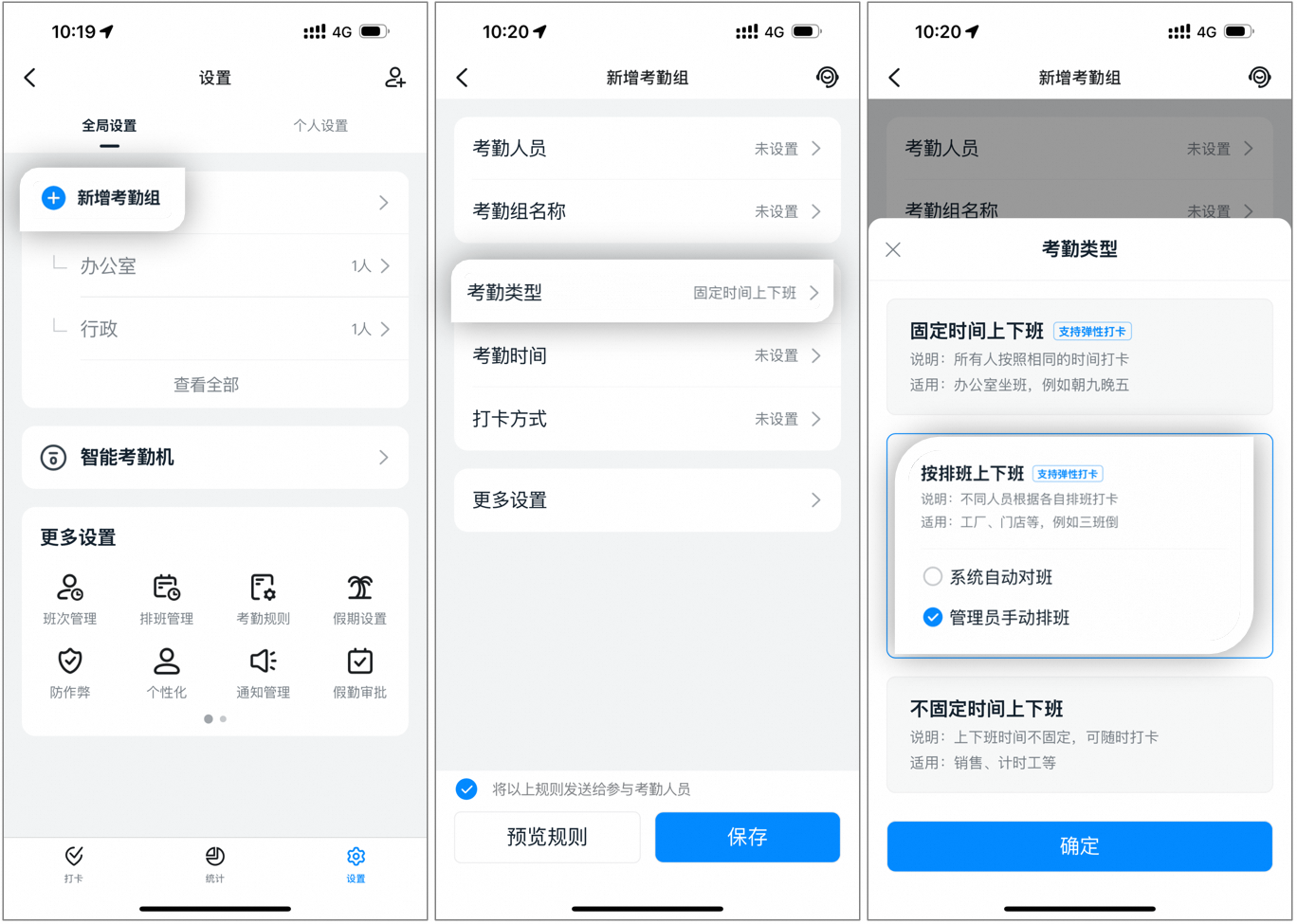
Open Mobile DingTalk and go to Workbench > Attendance > Settings > Global Settings > Create attendance group > Attendance type > Scheduled shifts. Complete the setup as prompted, then tap Save.
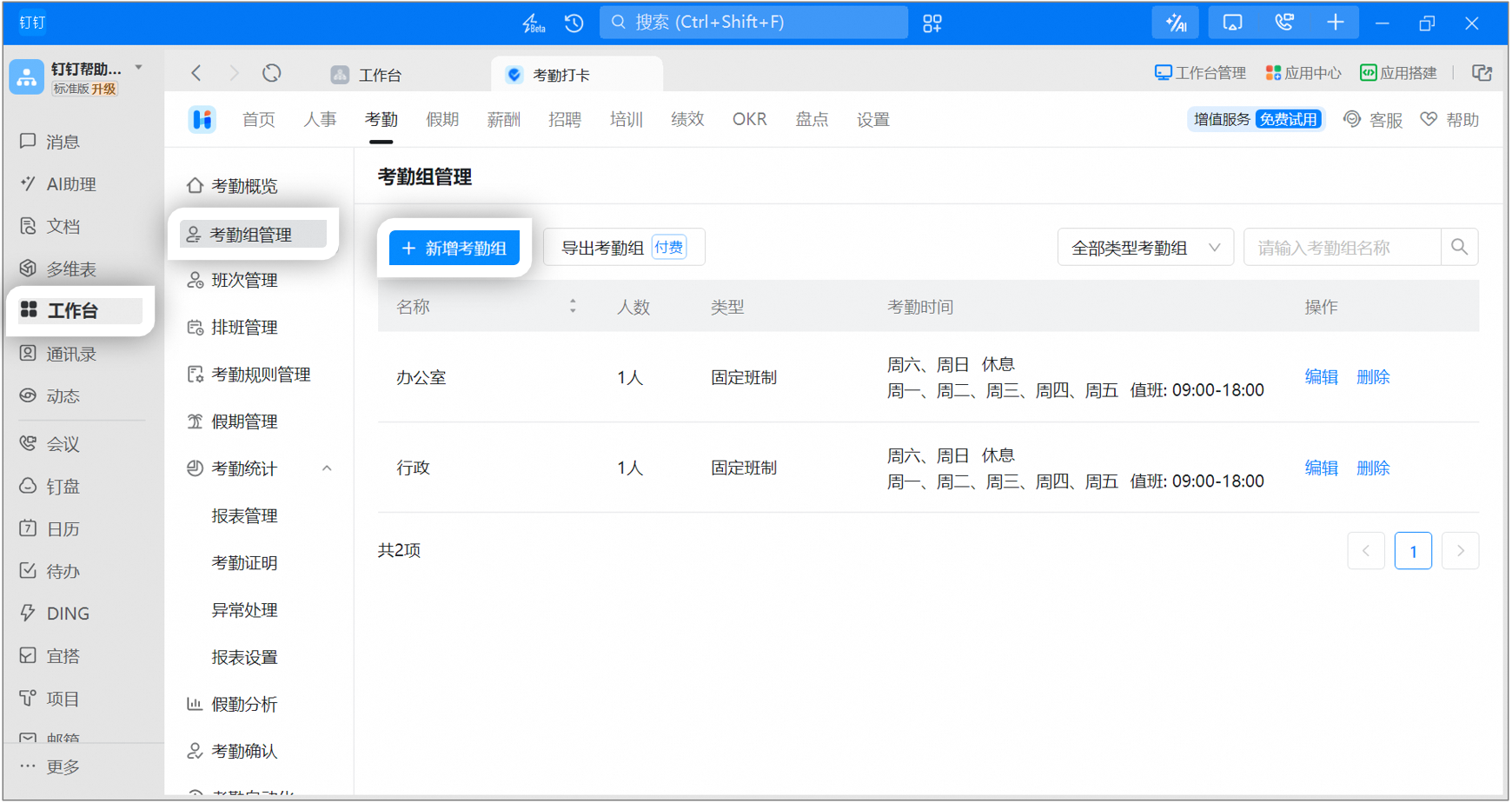
Open Desktop DingTalk and click Workbench > Attendance > Attendance Group Management > Create attendance group.
Page example
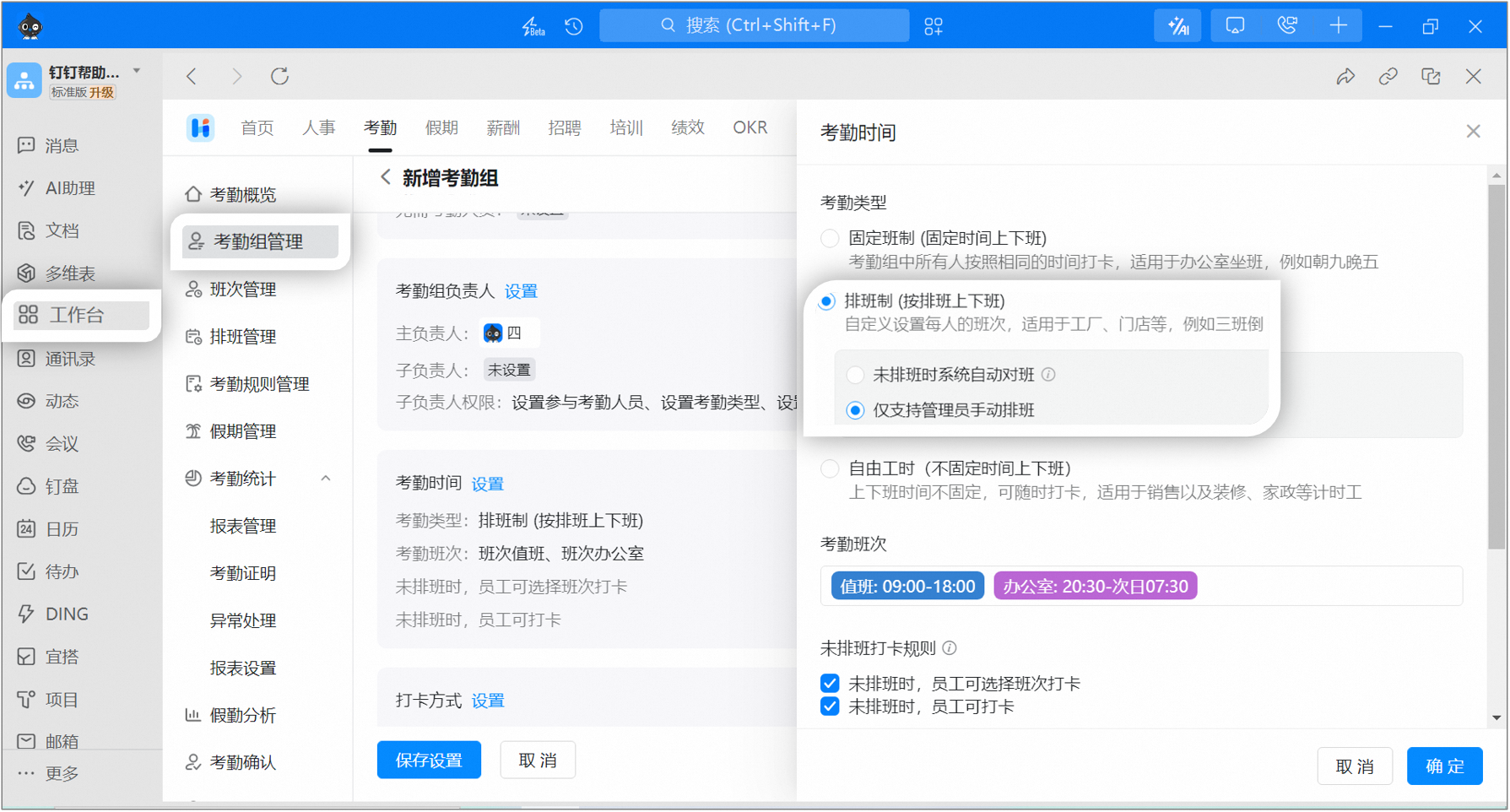
Go to Attendance time setting > Shift-based attendance (Scheduled shifts). Configure the remaining settings as needed. After creating the attendance group, go to Schedule Management to schedule shifts for it.
Page example
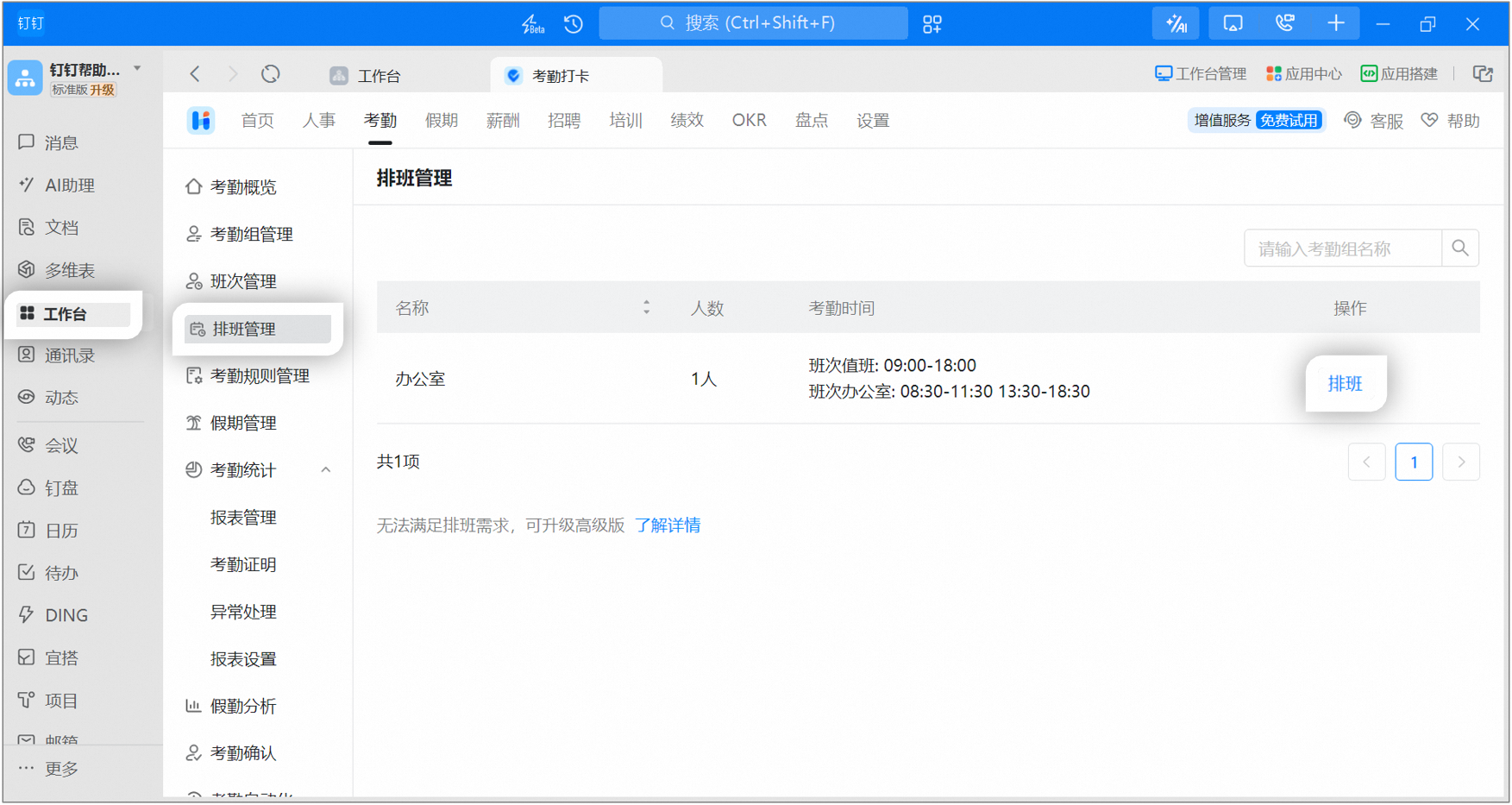
If a shift-based attendance group already exists, go to Schedule Management, select the attendance group, and edit the schedule.
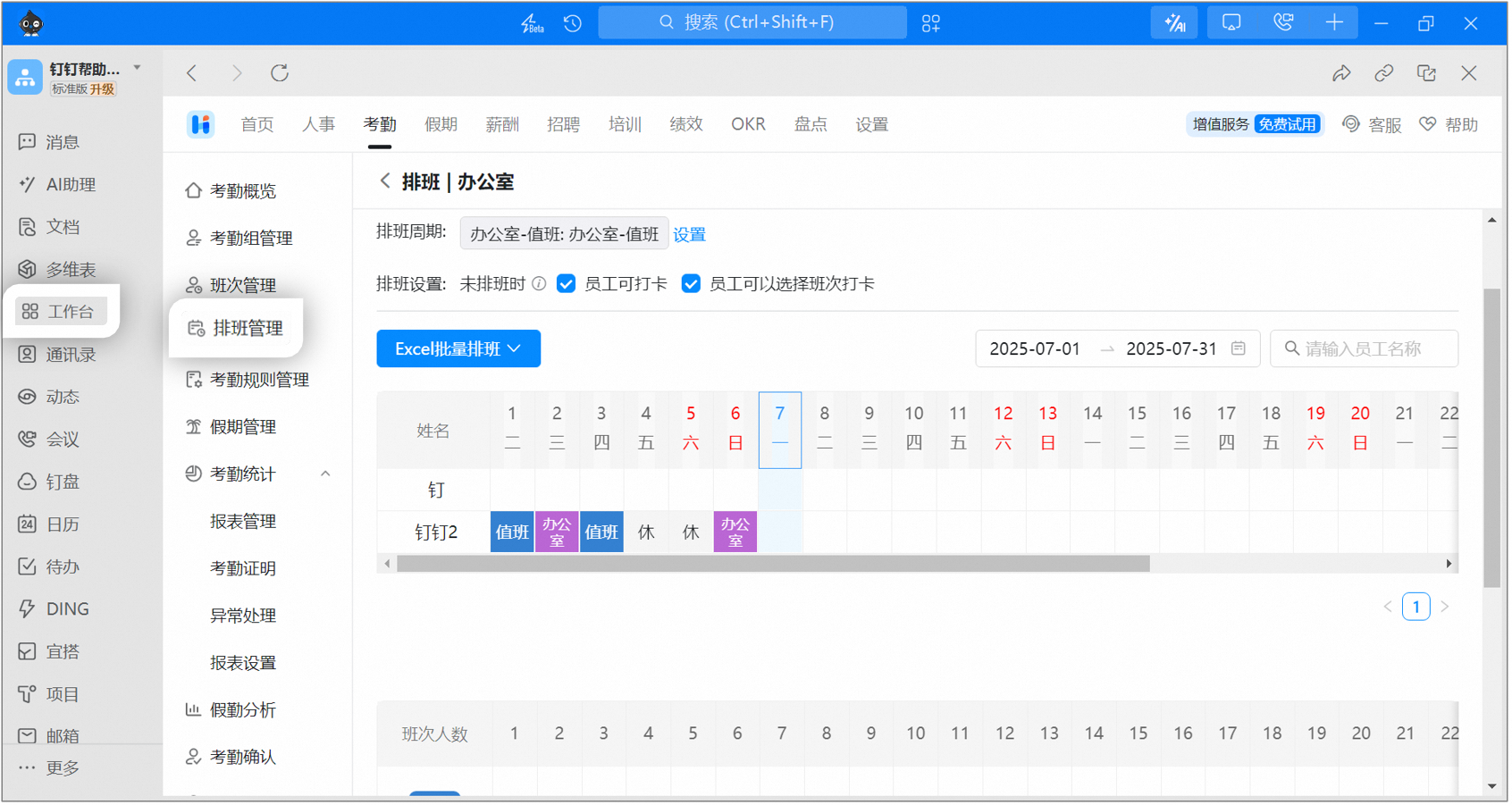
On the Schedule Management page, configure the attendance shifts, scheduling cycle, and whether employees can select their own shift for clock-in.
1
Attendance shifts: Click the input box and select the existing shifts in the pop-up window.
2
Scheduling cycle: Enables quick scheduling based on a fixed cycle. Suitable for industries such as catering, manufacturing, logistics and trade, customer service, and hospitals. Click Create scheduling cycle, set the cycle name, the number of days, and the shift for each day, then click Confirm.
3
Allow employees to select their own shift for clock-in when no shift is assigned: When enabled, employees can choose their own shift for clock-in if the Admin has not assigned one. Once the Admin assigns a shift, employees can no longer select or change it on their own.
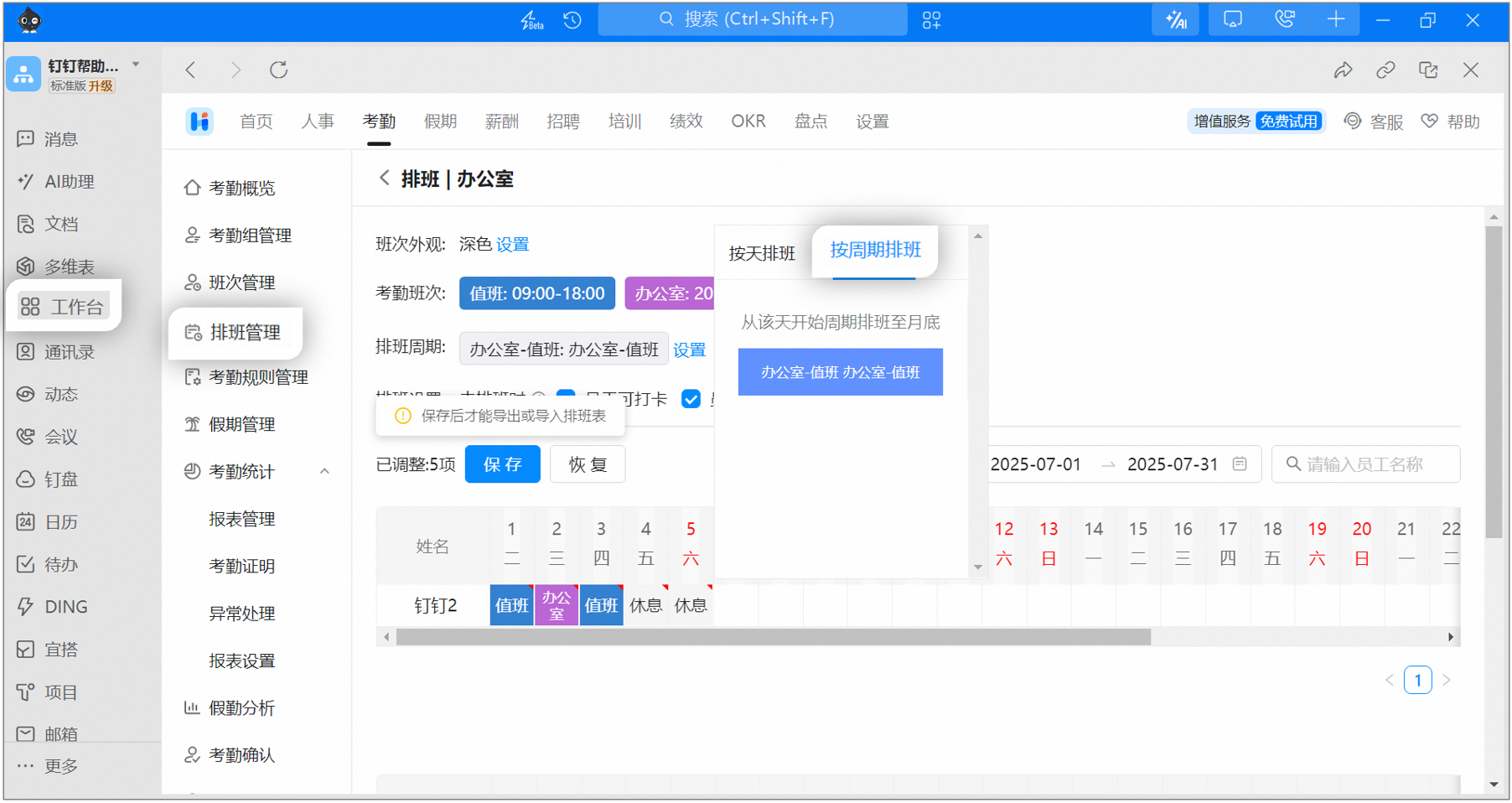
Click a cell in the schedule area, select Cyclical scheduling, then click the corresponding cycle. The schedule is applied cyclically from that day through the last day of the month.
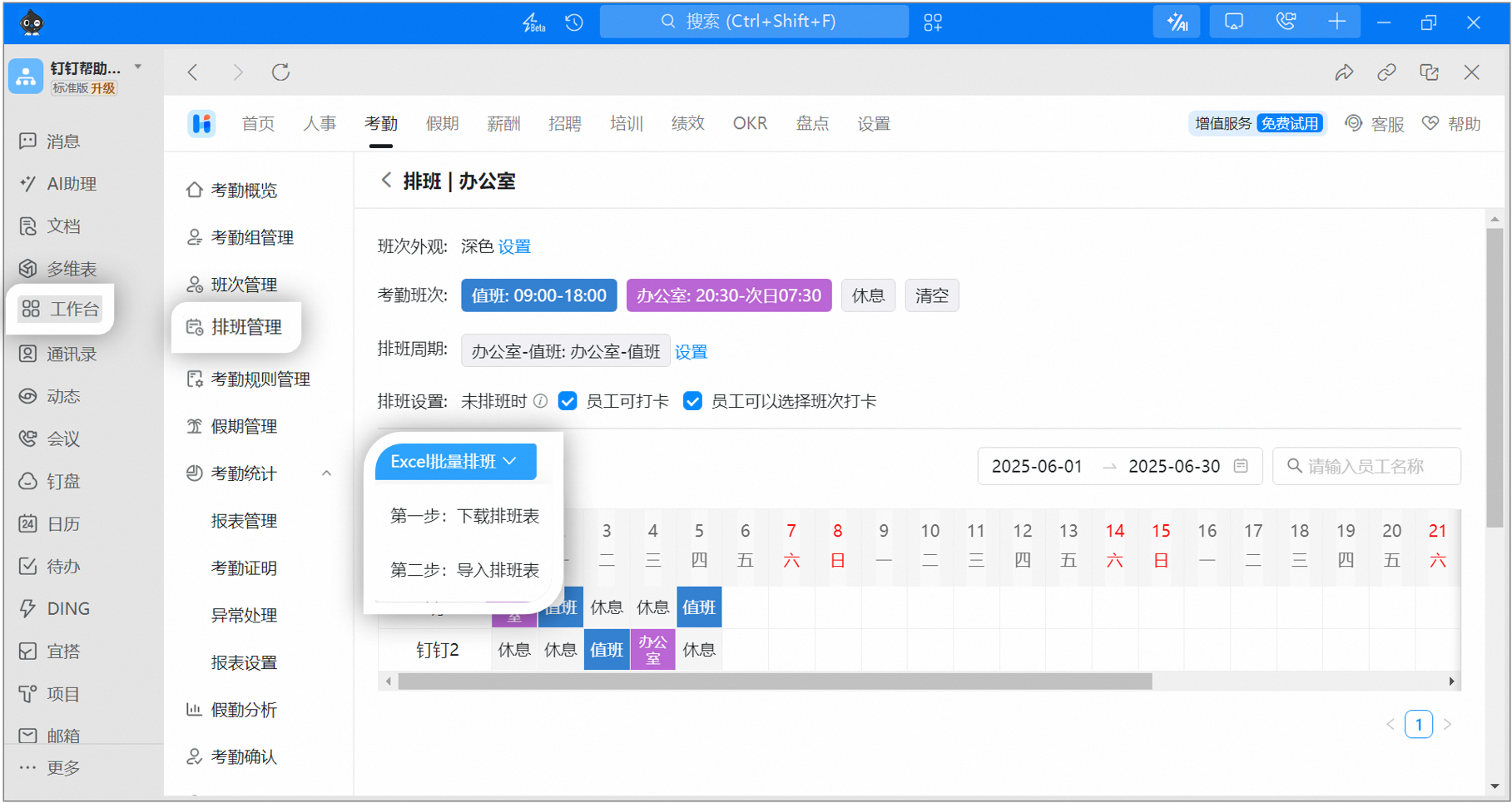
Click Excel batch scheduling > Download schedule template, assign shifts to employees in the exported Excel file, then click Import schedule after completing the schedule.
Add attendance shifts first so that the corresponding shift options appear in the downloaded Excel file.
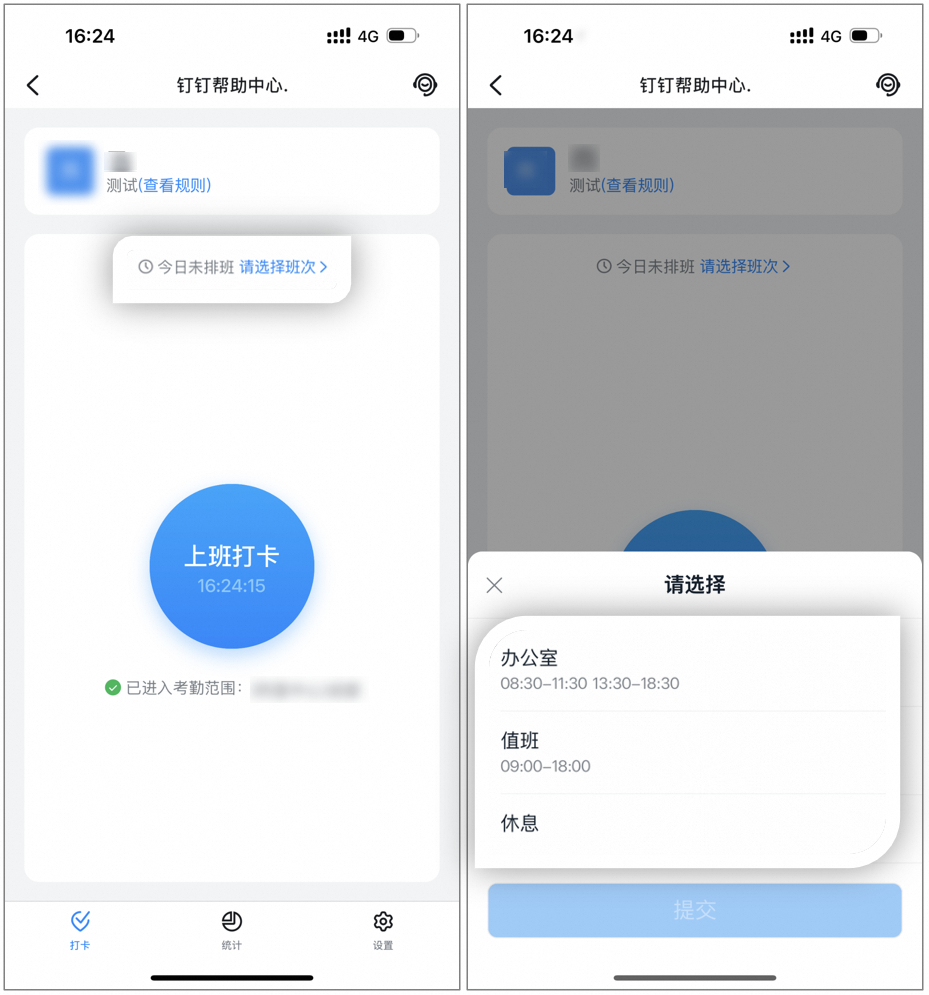
If the Admin has enabled Allow employees to select their own shift for clock-in when no shift is assigned on the Schedule Management page, employees can open Mobile DingTalk > Workbench > Attendance > Select shift when the Admin has not assigned a shift. Tap Submit after selecting a shift, then complete the clock-in.
The automatic shift matching feature under Scheduled shifts is a new, simple, and flexible attendance scheduling method. It does not require the attendance administrator to schedule shifts manually in advance. Instead, the DingTalk Attendance system automatically matches the closest shift based on the matching method set by the Admin and the actual clock-in time of employees. Admins can also review and modify the results flexibly. For details, see Automatic shift matching.
How do I adjust the system if an employee temporarily swaps shifts?
For temporary shift swaps, you can either adjust the attendance schedule manually in DingTalk or use the leave request or compensatory leave feature.
Why does the Schedule Management page show 'No content' with no scheduling entry?
If no shift-based attendance group exists, create one first. Path: Open Desktop DingTalk and click Workbench > Attendance > Attendance Group Management > Create attendance group > Attendance time setting > Shift-based attendance (Scheduled shifts). Configure the remaining settings as needed.
Are attendance shifts required?
Yes, attendance shifts are required. They are used to edit schedules, configure shifts within scheduling cycles, and provide shift options for employees to choose from.
Can an employee select multiple attendance shifts in one day?
An employee can select only one shift per day.
Can employees still select or change their shift after the Admin has assigned one?
Once the Admin has assigned a shift, employees must clock in according to it and cannot select or change the shift on their own.
Can the Admin still change an employee's shift after the employee has selected one?
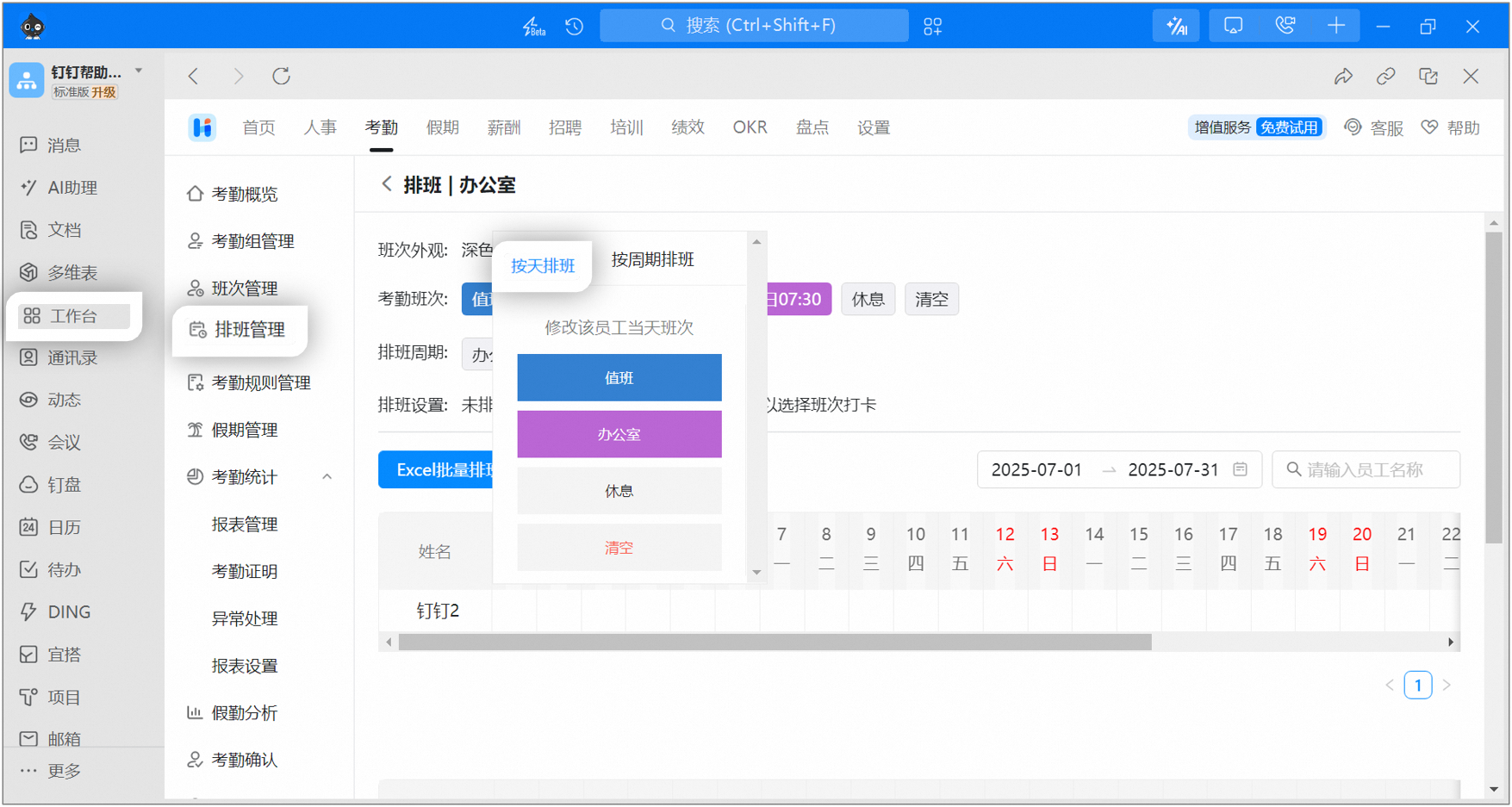
After an employee selects a shift, the Admin can still change it in Schedule Management. Once the Admin makes the change, the employee can no longer modify it.Path for the Admin to change the schedule: Click a cell in the schedule area, select Daily scheduling, then click to select a shift or Rest.


 Chats
Chats Calendar
 Meetings
 Contacts
 Mail
Mail Docs
Docs Drive
Drive AI Table
 AI Minutes
 Attendance
 Approval
 YiDA
YiDA Admin Console