Once you understand what integration & automation is, follow this article to create one.
Create an Integration & Automation from Scratch
Follow these steps to create an integration & automation with the Form event trigger type.
-
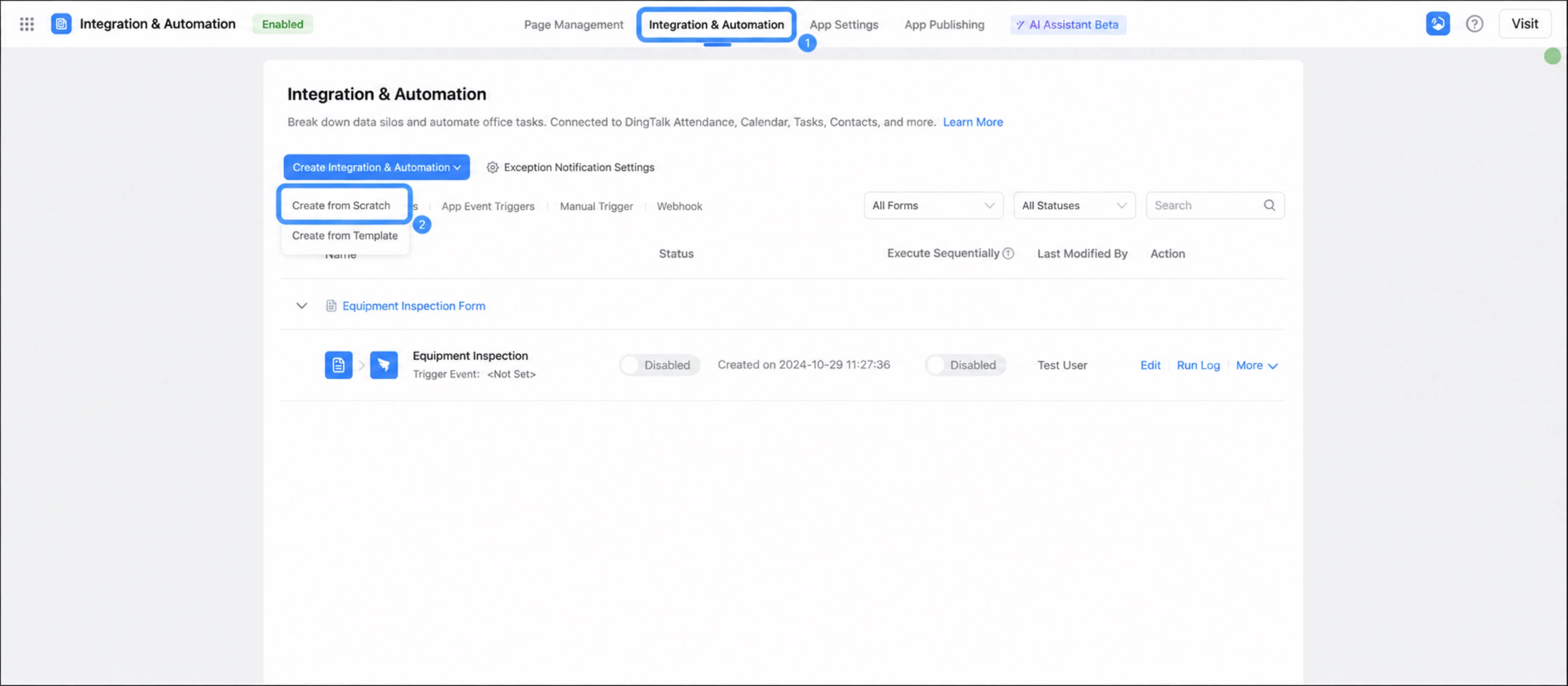
Sign in to the YiDA workbench and click My apps.
-
Select the app for which you want to create an integration & automation to open the App settings page.
-
Click Integration & Automation, then choose Create integration & automation > Create from scratch.
-
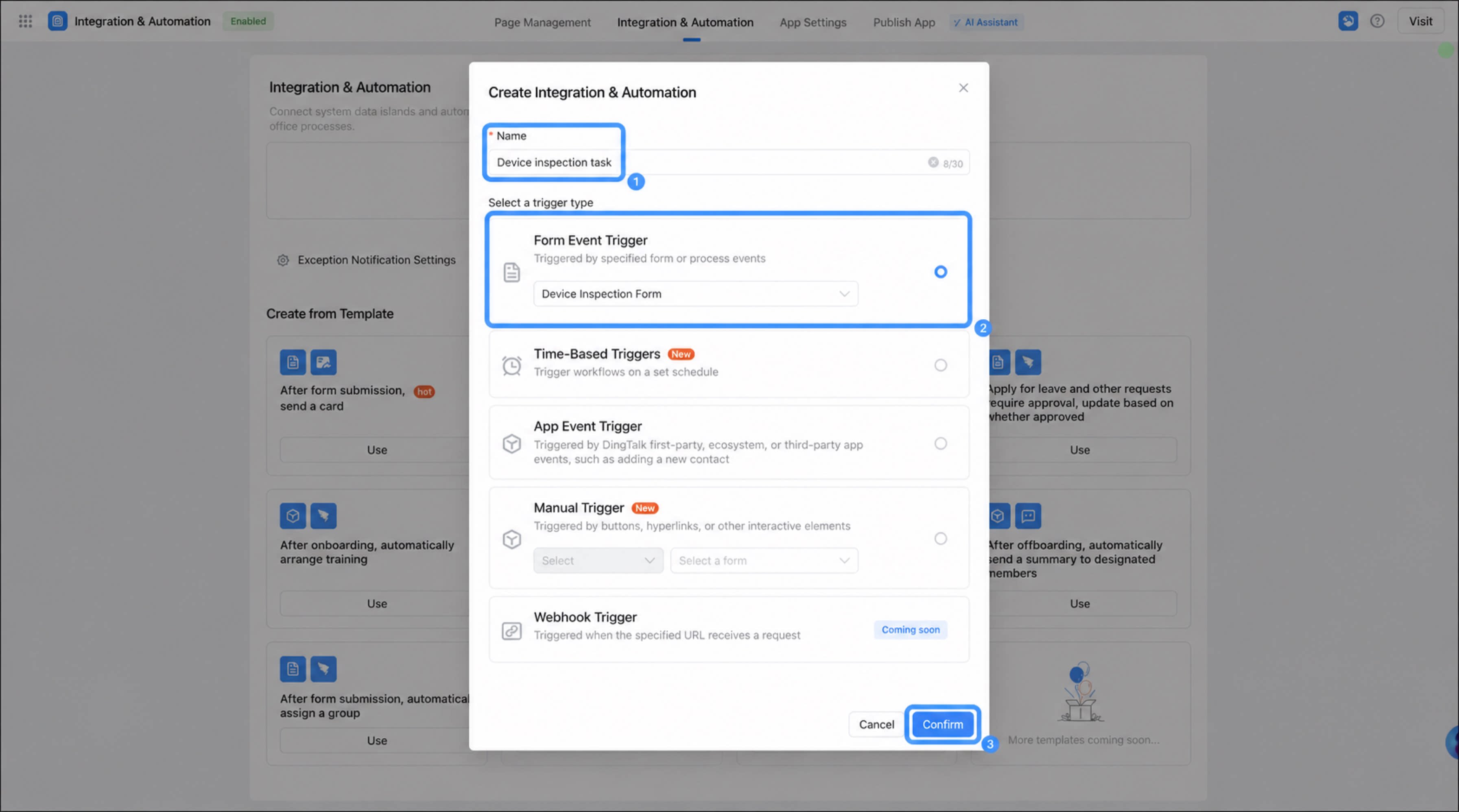
In the pop-up, enter a name for the integration & automation, select a trigger type, and click Confirm to finish.
Create an Integration & Automation from a Template
Follow these steps to create an integration & automation flow from a template.
- Sign in to the YiDA workbench and click My apps.
- Select the app for which you want to create an integration & automation to open the App settings page.
- Click Integration & Automation, then choose Create integration & automation > Create from template.
- Select the template you want to use and click Use.
FAQ
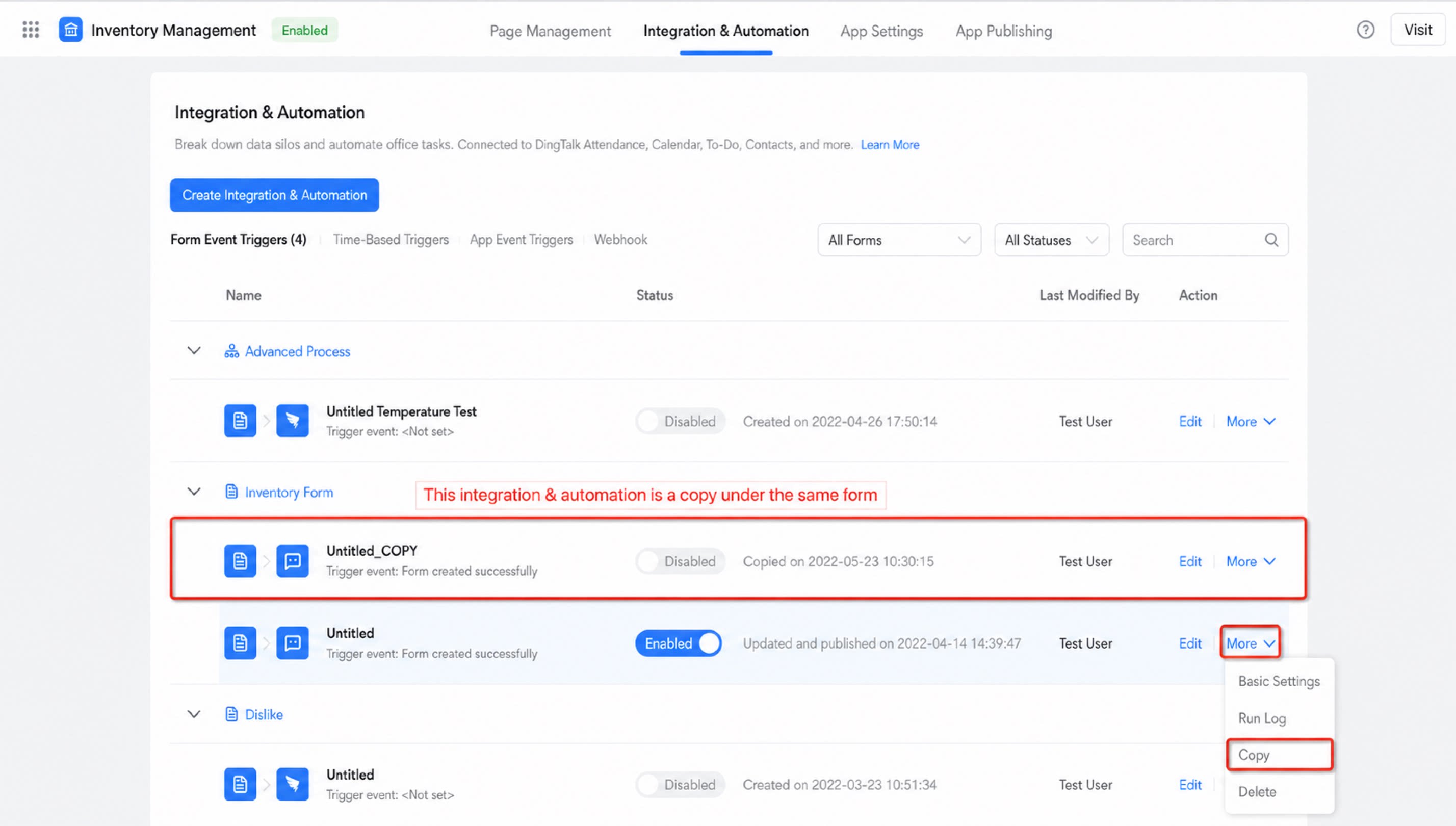
Q: Can I copy a trigger event across forms?
Copying trigger events is only supported within the same form. Cross-form copying is not supported.
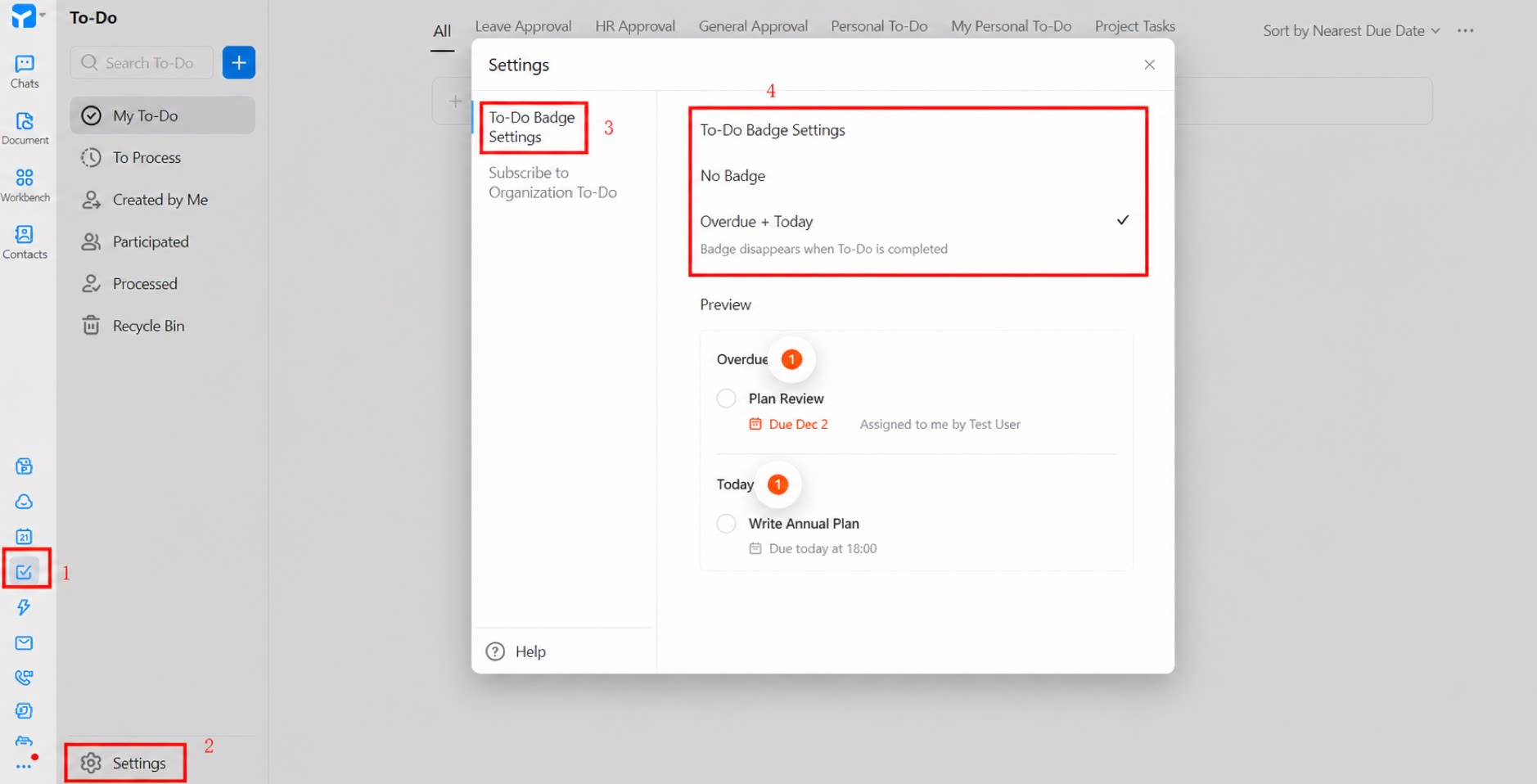
Q: When I use a connector to create a DingTalk To-Do 1.0 task, the task is created successfully, but no red dot notification appears. Why?
First, check whether the DingTalk To-Do red dot notification is turned off. If it is turned off, the absence of a red dot is expected. Adjust the DingTalk To-Do red dot settings as shown below:
PC settings
Mobile settings
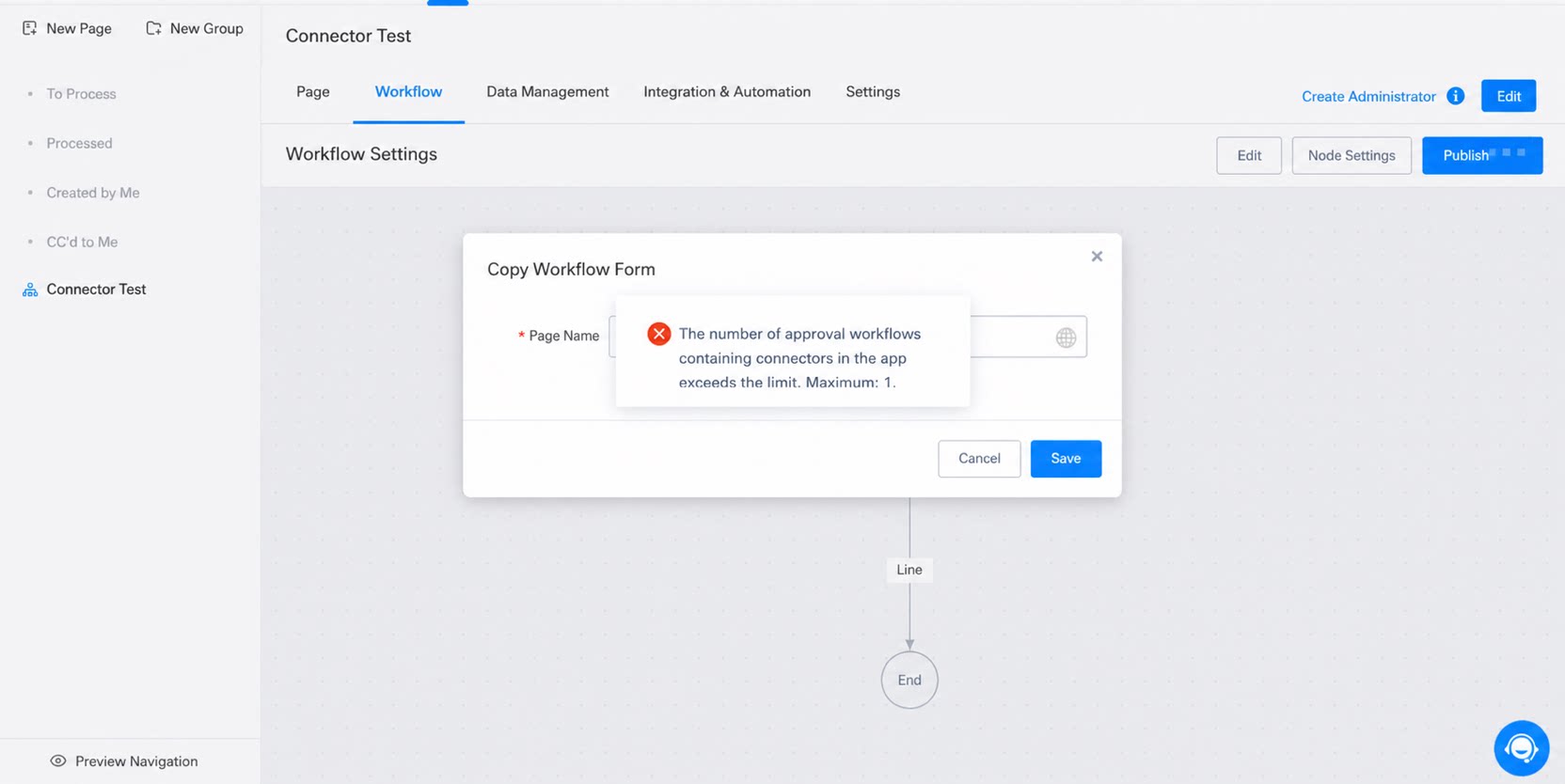
Q: I set up a connector on a step in a simple workflow. After upgrading to an advanced workflow, the connector no longer works. When I copy the form, I get the error: “The number of approval flows containing multiple connectors in the app exceeds the limit of one.”
Advanced workflows do not yet include a connector component, so the connector feature is not supported.
When you copy the workflow form, the “connector count exceeds limit” error is a known issue that will be resolved in a future product iteration. As a workaround, remove the connector from the simple workflow before upgrading to an advanced workflow.
Q: In what order are multiple business association rules on a single node executed?
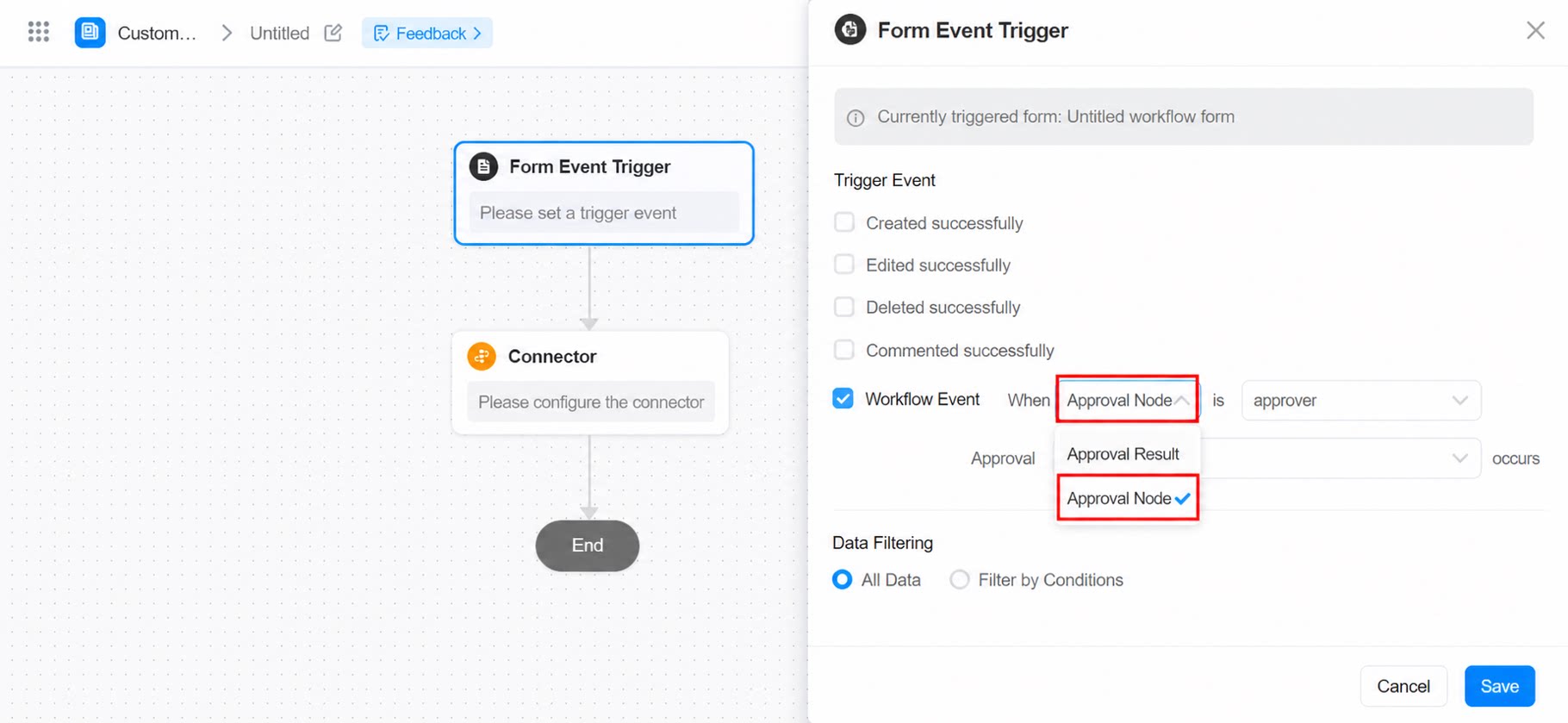
Business association rules support multiple rules, which are executed in the order of their sequence numbers. You can also sort them using the following method:
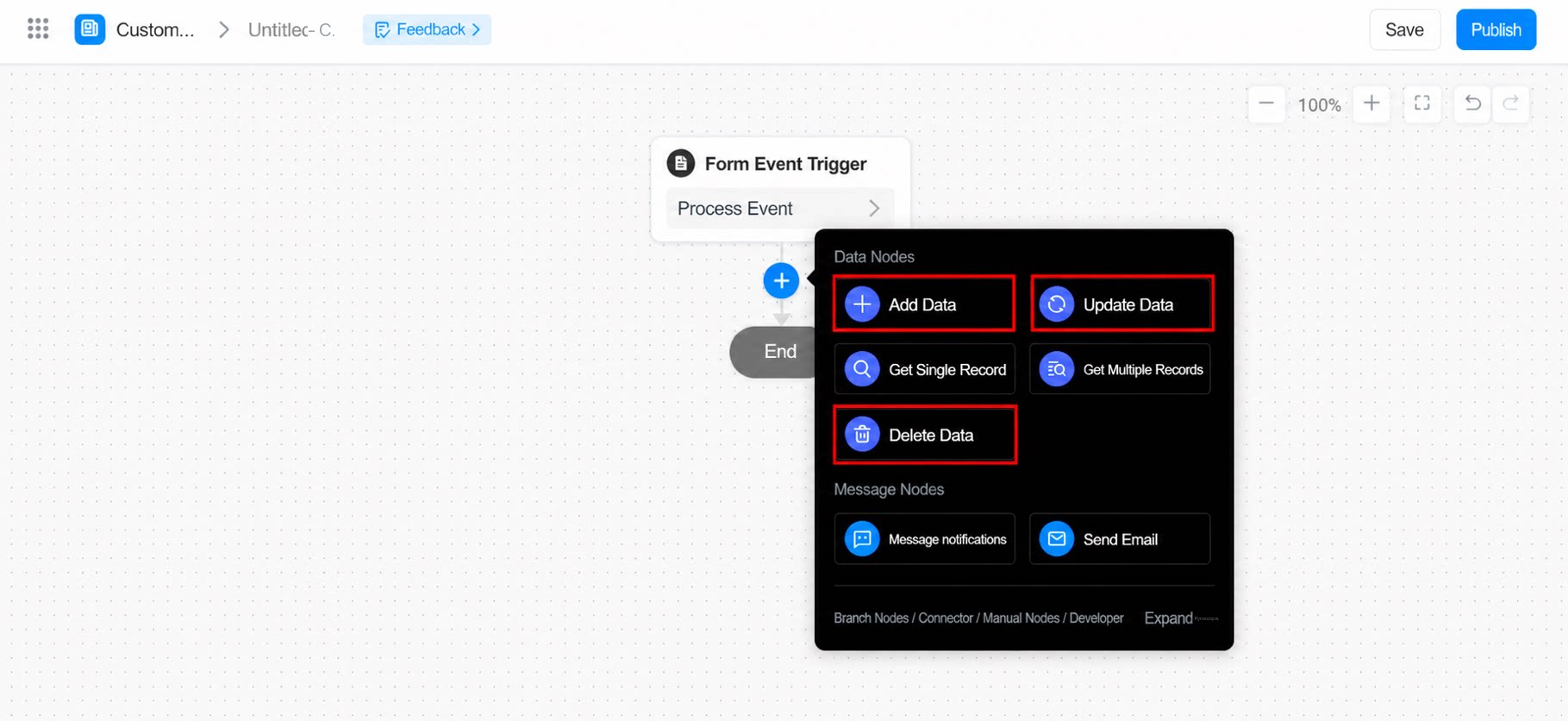
Use Data nodes in integration & automation (such as Create, Update, and Delete) as an alternative. These nodes support execution order arrangement and let you review execution details in the Run logs.
Refer to the screenshots below for setup details:
Q: For a silent-login form, is there a way to pass a value to the member component?
Yes. Pass the user ID to a field to populate the member component on the target form.
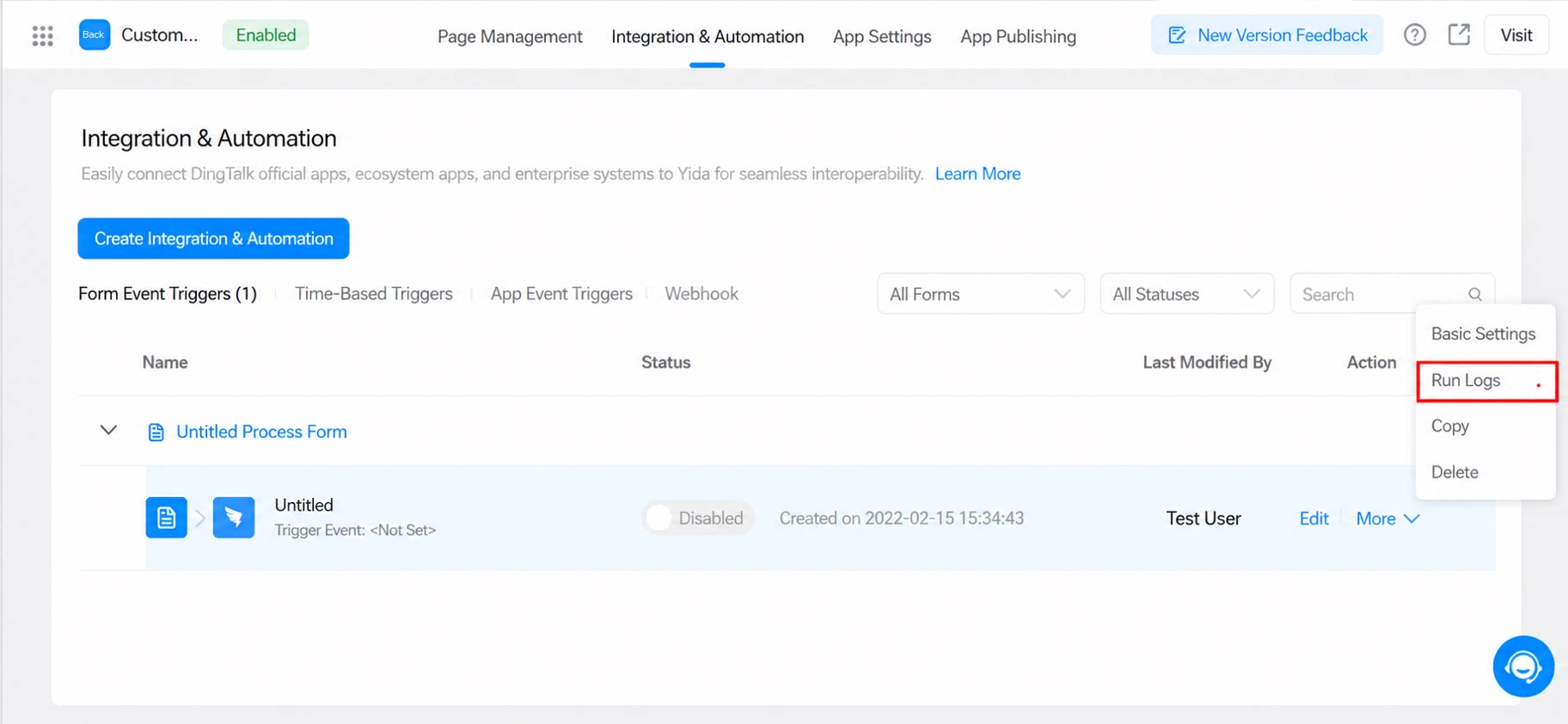
Q: How do I troubleshoot when an integration & automation does not run as expected?
First, check the run information recorded in the integration & automation run logs.
Q: After modifying a form component’s configuration, the condition operators configured in the automation stop working.
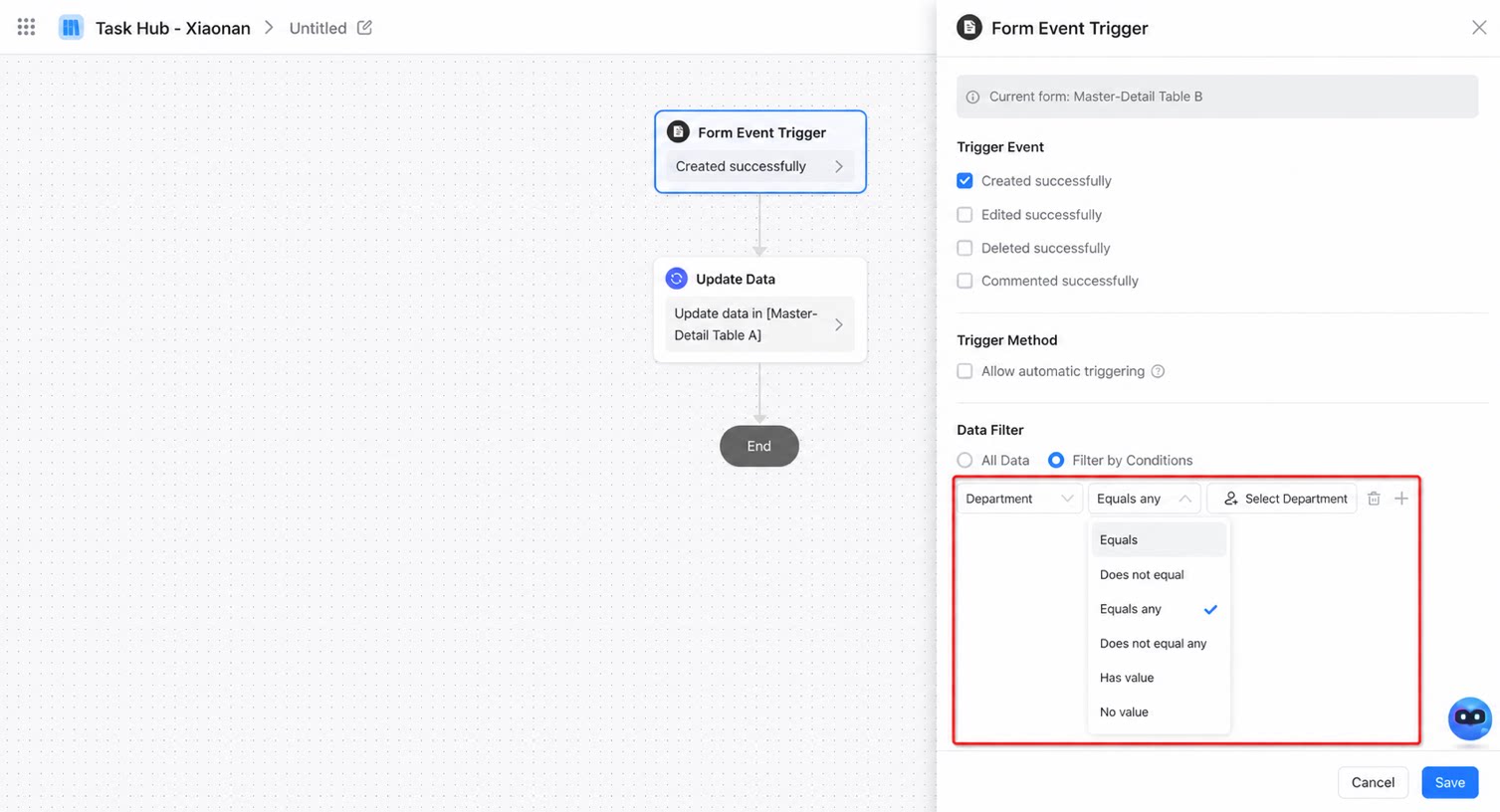
In an integration & automation flow, you can configure data filter conditions. For each form component, you can choose different operators.
If a form component’s configuration changes, previously configured condition operators may become invalid. Update the operators and republish the flow.
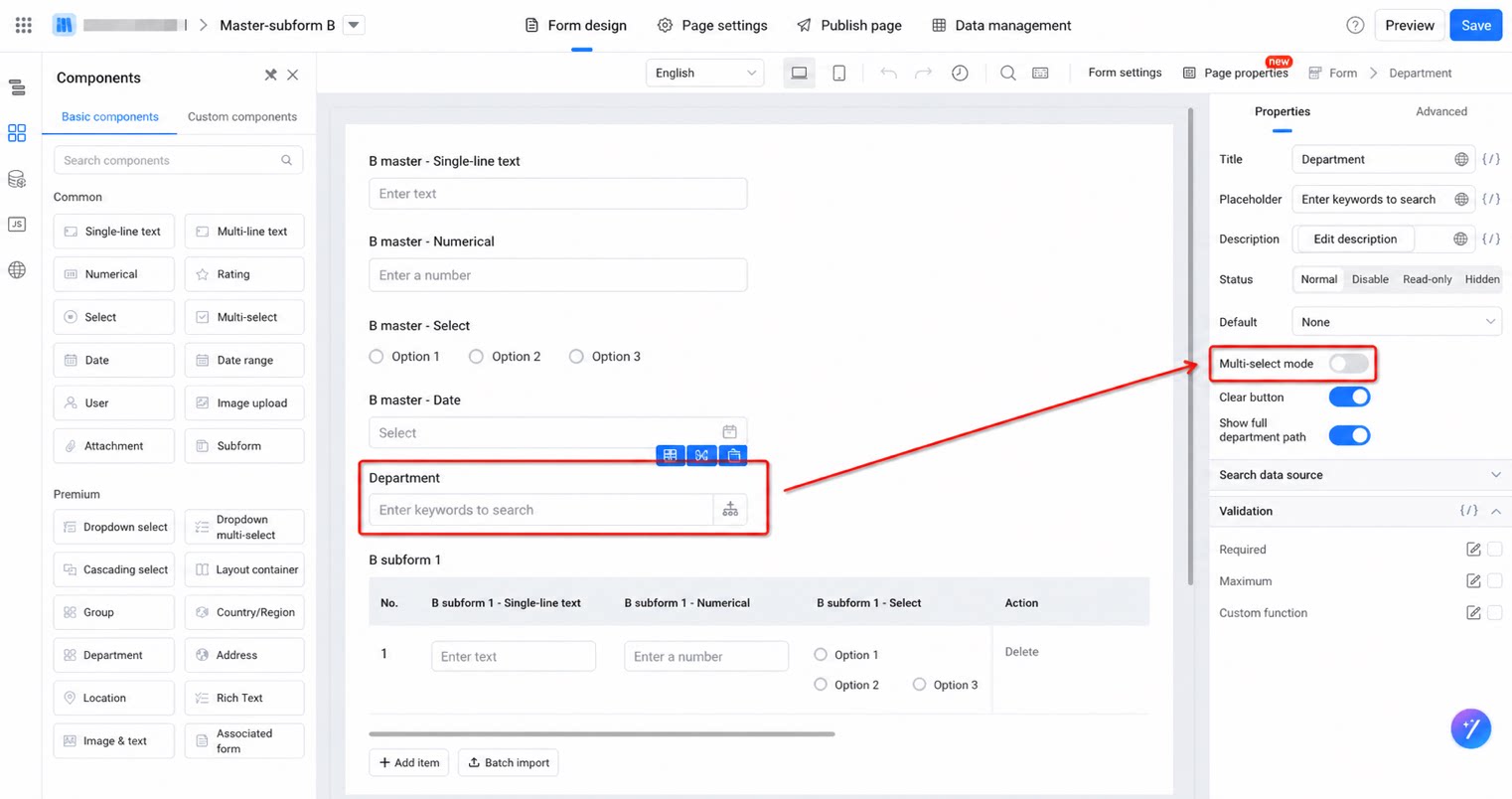
For example, if a department component is set to Select (single-selection) mode, the operator “equals any of” can be used. If Multiselect is enabled, the “equals any of” operator becomes invalid and must be changed to “contains”.
Q: Does integration & automation allow automatic triggering?
An integration & automation flow can be configured to allow automatic triggering. When enabled, the current flow is triggered whenever another automation flow or workflow satisfies its trigger event.
Automatic triggering supports up to three consecutive levels: flow A => triggers => flow B, flow B => triggers => flow C, and flow C => cannot trigger ≠> flow D.
- For an OA approval initiated by integration & automation, the App event trigger configured for the OA approval completion event does not take effect. In this case, only manually submitted OA approvals can trigger the automation flow.
- For an approval initiated by integration & automation, the workflow Create trigger configured on the corresponding workflow form does not take effect.
- When data is created or updated by a business association rule, the Form event trigger configured on the target form does not take effect.
- When integration & automation creates or updates data across apps, the automation flow configured on the target form does not take effect.
Q: Why don’t change logs show records of subtable rows deleted by integration?
A: Integration & automation change logs do not yet support viewing subtable data changes. Stay tuned for future product updates.
Q: After assigning a value to an associated form component via integration & automation, the associated form does not auto-populate. Why?
Updating or creating form instances through integration & automation does not trigger any component events, including data linkage, formula calculation, and onChange events. It also does not trigger the auto-population capability of associated forms. 

 Chats
Chats Calendar
 Meetings
 Contacts
 Mail
Mail Docs
Docs Drive
Drive AI Table
 AI Minutes
 Attendance
 Approval
 YiDA
YiDA Admin Console